


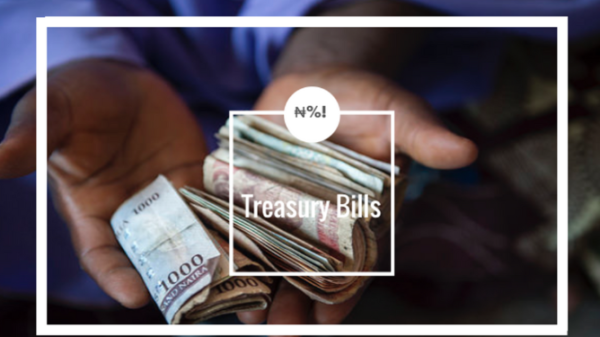






























The naira closed the mid-week trading session at N1,423 per dollar at the official foreign exchange market, extending a mixed performance that contrasts sharply with continued weakness in the parallel market.
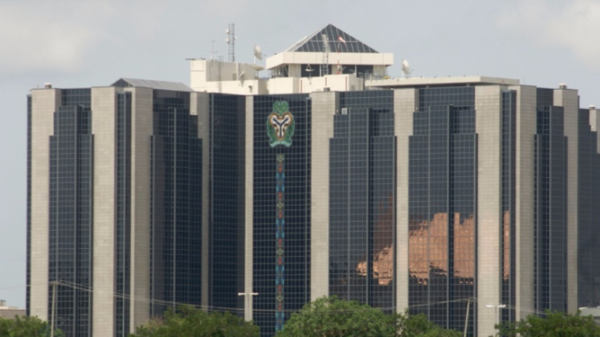
Data from the Central Bank of Nigeria (CBN) and Nairametrics Research shows that while the official market remains relatively stable, significant pressure persists outside the regulated window.
The gap between the two FX windows has narrowed slightly but remains wide, highlighting the impact of ongoing market reforms alongside deep-seated structural constraints in Nigeria’s foreign exchange market.
What the data is saying
At the Nigerian Foreign Exchange Market (NFEM), the naira traded at N1,420.5/$ on Monday, strengthened marginally to N1,420/$ on Tuesday, before depreciating to N1,423/$ on Wednesday.
Last week, the currency opened at N1,425/$ on Monday and appreciated gradually to close at N1,417.95/$, reflecting intermittent gains at the official window.
In the parallel market, the naira opened at N1,483/$ on Monday, remained unchanged on Tuesday, and weakened slightly to N1,486/$ on Wednesday.
The exchange-rate gap between the official and parallel markets stood at N63, narrowing from N73 recorded last week, which was the widest margin since February 2025.
On a year-to-date basis, the naira opened 2026 at N1,428/$, indicating sustained pressure despite periods of relative stability at the official market.
Overall, the data suggests that while official rates show modest convergence, intense foreign exchange demand continues to drive volatility in the parallel market.
More insights
The figures show that the current parallel-market rally is the worst since mid-December 2025, when the naira fell to N1,492/$ on December 17, 2025.
Between December 11 and 22, 2025, the currency traded consistently above the N1,480/$ psychological threshold, underscoring recurring stress in the informal FX market.
The persistence of wide differentials reflects structural bottlenecks that continue to shape the naira’s performance. Meanwhile, relative stability at the official market mirrors the Central Bank’s ongoing reforms and targeted interventions to manage currency flows.
This contrast suggests that despite brief episodes of strength at the official window, deeper structural pressures continue to dominate parallel-market trading.
What you should know
Global currency trends are also influencing Nigeria’s FX dynamics. The U.S. dollar held firm against major currencies after President Donald Trump withdrew threats to impose tariffs on several European NATO countries.
Trump cited a framework agreement with NATO over Greenland as the basis for dropping the tariff plans, easing investor concerns after earlier threats triggered widespread sell-offs in U.S. assets.
The dollar traded at $1.1685 per euro and was flat at 0.7953 Swiss franc, while the Australian dollar climbed to a 15-month high on the back of strong employment data and improved risk sentiment.
Analysts note that sustained improvement in the naira will depend on stronger foreign exchange inflows, improved investor confidence, and reduced dependence on the parallel market.
Earlier this week, the naira slipped marginally at the official market, closing at N1,420.5/$ on Monday, as global dollar sentiment softened amid renewed concerns over U.S. economic and geopolitical risks.

Emmanuel Bassey is a Financial Expert that has worked in the Banking and Finance Industry for over 15+ years across different banks in Nigeria


