




Creator
  • Type:
  • Genre:
  • Duration:
  • Average Rating:
Log In
 
  • Marketplace
Log In
 
  • Type:
  • Genre:
  • Duration:
  • Average Rating:
  • Marketplace

Currencies

Currency Outside Nigeria’s Banking System Hits Record N5.4 Trillion at End of 2025

  • dollaers
  • January 25, 2026
  • Currencies, Finance
  • 0 comments

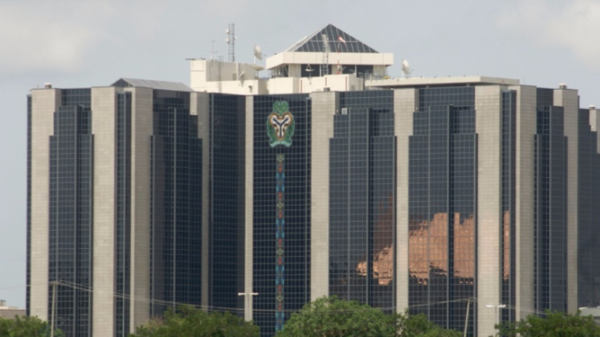
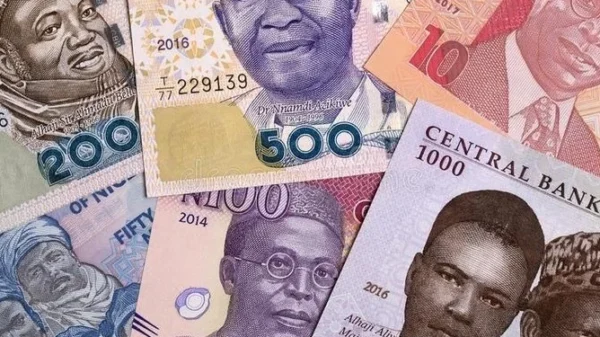
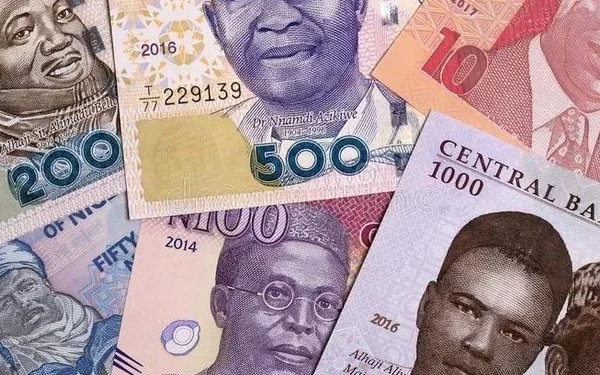
Nigeria’s currency held outside the formal banking system rose to an all-time high of N5.4 trillion by the end of 2025, highlighting a significant increase in the volume of physical cash retained by individuals and businesses across the country. The latest figures underscore a growing reliance on cash, despite long-standing policy efforts aimed at promoting digital payments and reducing the economy’s dependence on physical currency.

The data, released as part of the Central Bank of Nigeria’s (CBN) money supply statistics, provides insight into liquidity conditions and cash usage patterns within the economy. The sharp rise in currency outside banks occurred alongside a broader expansion in money supply, with total money supply closing the year at approximately N124.4 trillion. This combination has raised fresh questions about the effectiveness and pace of Nigeria’s transition toward a cashless economy.

Currency in circulation also reached a historic high of N5.7 trillion in December 2025, indicating that only a relatively small portion of total cash remained within commercial bank vaults. The figures suggest that a significant share of naira notes continues to circulate directly among households, traders, and businesses rather than being held in deposit accounts.

What the Data Shows

Currency outside banks represents physical cash that is not deposited within the formal banking system. As of December 2025, this figure stood at N5.4 trillion, the highest level ever recorded. This surpassed the previous record of N5.125 trillion observed in December 2024.

While currency outside banks typically rises toward the end of each year due to increased spending during the festive season, the scale of the increase in 2025 was particularly notable. Throughout the year, currency outside banks averaged about N4.5 trillion, before accelerating sharply in the final months and crossing the N5 trillion threshold.

Total currency in circulation followed a similar trajectory, climbing steadily and closing the year at N5.7 trillion. The sustained growth in physical cash usage appears to contrast with the CBN’s long-standing objective of reducing cash transactions through digital payment systems, electronic transfers, and financial technology platforms.

Although the current CBN leadership continues to support digital financial inclusion, recent monetary policy actions suggest a greater reliance on orthodox tools—such as interest rate adjustments and liquidity management—rather than direct restrictions on cash availability.

Policy Context and Historical Background

The current rise in currency outside the banking system marks a significant shift from the approach adopted by the previous CBN leadership. In the period leading up to Nigeria’s 2023 general elections, the central bank pursued an aggressive strategy to limit cash availability, culminating in one of the sharpest contractions in currency circulation in recent history.

In January 2023, currency outside banks fell to a record low of N792.1 billion following the introduction of the naira redesign policy. The initiative significantly restricted access to physical cash, triggering widespread economic disruption, supply chain challenges, and public dissatisfaction. Although the policy was officially framed as a measure to improve monetary control and curb illicit financial activities, many observers believed it was also intended to limit the use of cash during the election period—an allegation the CBN denied.

Since the appointment of the current CBN Governor, Yemi Cardoso, the Bank has recalibrated its approach. Policy focus has shifted toward stabilising prices, strengthening the currency, and restoring confidence in the financial system, while allowing cash to circulate more freely alongside digital payment options.

Implications for the Financial System

The increased availability of cash outside the banking system has contributed to the rapid expansion of Nigeria’s agency banking network, particularly Point-of-Sale (PoS) operations. Access to cash has become a major source of income for thousands of PoS operators nationwide, especially in areas with limited bank branch coverage.

However, rising demand for cash services has also driven up operating costs. The price of PoS terminals has increased significantly between 2023 and 2025, influenced by inflation, foreign exchange pressures, and higher logistics expenses. Entry-level terminals that once sold for N15,000 to N20,000 now cost around N21,500, while more advanced smart devices have more than doubled in price.

At the same time, the CBN has tightened regulatory oversight of agent banking activities. New rules require geo-tagging of PoS terminals and impose penalties starting from N5 million, with additional daily fines for continued non-compliance. These measures reflect growing efforts to formalise and monitor cash distribution channels, even as physical cash remains deeply embedded in Nigeria’s economic activity.

Overall, the record level of currency outside banks highlights the complex balance Nigeria faces between promoting digital finance, ensuring liquidity, and maintaining monetary stability in an economy where cash continues to play a central role.

Naira Closes Mid-Week at N1,423/$ Officially as Parallel Market Hits N1,486/$

  • dollaers
  • January 22, 2026
  • Currencies
  • 0 comments

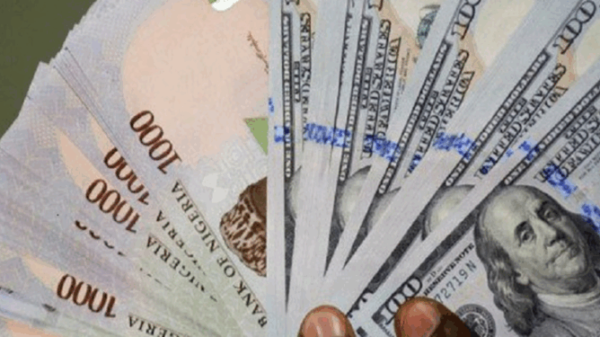
The naira closed the mid-week trading session at N1,423 per dollar at the official foreign exchange market, extending a mixed performance that contrasts sharply with continued weakness in the parallel market.

Data from the Central Bank of Nigeria (CBN) and Nairametrics Research shows that while the official market remains relatively stable, significant pressure persists outside the regulated window.

The gap between the two FX windows has narrowed slightly but remains wide, highlighting the impact of ongoing market reforms alongside deep-seated structural constraints in Nigeria’s foreign exchange market.

What the data is saying

At the Nigerian Foreign Exchange Market (NFEM), the naira traded at N1,420.5/$ on Monday, strengthened marginally to N1,420/$ on Tuesday, before depreciating to N1,423/$ on Wednesday.

Last week, the currency opened at N1,425/$ on Monday and appreciated gradually to close at N1,417.95/$, reflecting intermittent gains at the official window.

In the parallel market, the naira opened at N1,483/$ on Monday, remained unchanged on Tuesday, and weakened slightly to N1,486/$ on Wednesday.

The exchange-rate gap between the official and parallel markets stood at N63, narrowing from N73 recorded last week, which was the widest margin since February 2025.

On a year-to-date basis, the naira opened 2026 at N1,428/$, indicating sustained pressure despite periods of relative stability at the official market.

Overall, the data suggests that while official rates show modest convergence, intense foreign exchange demand continues to drive volatility in the parallel market.

More insights

The figures show that the current parallel-market rally is the worst since mid-December 2025, when the naira fell to N1,492/$ on December 17, 2025.

Between December 11 and 22, 2025, the currency traded consistently above the N1,480/$ psychological threshold, underscoring recurring stress in the informal FX market.

The persistence of wide differentials reflects structural bottlenecks that continue to shape the naira’s performance. Meanwhile, relative stability at the official market mirrors the Central Bank’s ongoing reforms and targeted interventions to manage currency flows.

This contrast suggests that despite brief episodes of strength at the official window, deeper structural pressures continue to dominate parallel-market trading.

What you should know

Global currency trends are also influencing Nigeria’s FX dynamics. The U.S. dollar held firm against major currencies after President Donald Trump withdrew threats to impose tariffs on several European NATO countries.

Trump cited a framework agreement with NATO over Greenland as the basis for dropping the tariff plans, easing investor concerns after earlier threats triggered widespread sell-offs in U.S. assets.

The dollar traded at $1.1685 per euro and was flat at 0.7953 Swiss franc, while the Australian dollar climbed to a 15-month high on the back of strong employment data and improved risk sentiment.

Analysts note that sustained improvement in the naira will depend on stronger foreign exchange inflows, improved investor confidence, and reduced dependence on the parallel market.

Earlier this week, the naira slipped marginally at the official market, closing at N1,420.5/$ on Monday, as global dollar sentiment softened amid renewed concerns over U.S. economic and geopolitical risks.

Naira Edges Up to N1,417.95/$ as External Reserves Climb to $45.8bn

  • dollaers
  • January 18, 2026
  • Currencies
  • 0 comments

The naira recorded a mild appreciation at the official market, closing at N1,417.95 to the US dollar on Friday, marking a modest gain in the third trading week of January 2026.

Data from the Central Bank of Nigeria (CBN) shows the local currency improved slightly from N1,424.5/$ at the close of trading the previous week, reflecting a gradual but steady strengthening trend.

How the naira traded during the week

The naira maintained relative stability throughout the week, with only narrow movements in the official market. It opened the week at N1,425/$ on Monday, appreciated to N1,420.25/$ on Tuesday, strengthened further to N1,419.5/$ on Wednesday, slipped marginally to N1,420/$ on Thursday, and finally closed stronger at N1,417.95/$ on Friday.

This pattern suggests a calm trading environment, with limited volatility despite sustained demand for foreign exchange.

What the data is saying

The slight appreciation coincided with a modest improvement in Nigeria’s external buffers. According to the CBN, foreign exchange reserves rose to $45.8 billion, up from $45.6 billion the previous week.

Analysts attribute the gradual reserve build-up to a combination of oil export receipts and portfolio investment inflows. The steady reserves position appears to have supported confidence in the official forex market, helping to stabilise the naira even as pressures persist.

Despite the gains, analysts caution that foreign exchange demand remains strong across both the official and parallel markets, limiting the pace at which the naira can strengthen.

Why it matters

Exchange rate stability remains critical for Nigeria’s broader macroeconomic outlook. A firmer naira helps to reduce the cost of imports, easing inflationary pressures and supporting businesses with foreign currency obligations.

Conversely, sharp volatility could undermine investor confidence, increase import costs, and raise the burden of servicing external debt. The CBN’s measured interventions are therefore aimed at striking a balance between exchange rate stability and reserve conservation.

Market watchers note that while the naira’s performance this week reflects cautious optimism, sustaining these gains will depend on consistent forex inflows and prudent macroeconomic management.

What you should know

  • Nigeria’s external reserves have stayed above $45 billion since the start of 2026, providing a buffer against external shocks.

  • The CBN’s official exchange rate guides transactions for banks and authorised dealers, while parallel market movements continue to influence sentiment.

  • Recent CBN measures have focused on supplying forex to end-users and curbing speculative activity.

  • Nigeria’s inflation outlook has also improved, with headline inflation easing to 15.15% in December 2025, following a CPI methodology review by the National Bureau of Statistics.

Overall, the naira’s slight appreciation points to short-term stability, but economists stress that longer-term strength will require deeper structural reforms, stronger export earnings, and sustained confidence in Nigeria’s economic policy direction.

Naira Slips to N1,421/$ Mid-Week as Market Eyes Stronger Fundamentals in 2026

  • dollaers
  • January 8, 2026
  • Currencies
  • 0 comments

The Nigerian naira recorded a mild depreciation at the official foreign exchange market in the second week of January 2026, closing at N1,421 per US dollar on Wednesday, according to data published by the Central Bank of Nigeria (CBN). The mid-week movement, while notable, remains relatively modest and is being interpreted by analysts as part of routine market adjustments rather than a reversal of the broader stabilisation trend expected in 2026.

The latest close follows a week of mixed trading for the currency. Official market data shows that the naira traded at N1,428/$ on Monday before firming slightly to N1,416/$ on Tuesday, making Wednesday’s N1,421/$ close the first clear mid-week slip in the second week of the year. Market participants say the narrow trading band reflects moderated volatility compared with the sharp swings that characterised Nigeria’s FX market in previous years.

Earlier in the month, the naira had already shown signs of early-year pressure. On January 2, 2026, the first trading day of the year, the currency weakened to N1,431/$, largely due to pent-up demand following the New Year holiday and short-term supply adjustments. Analysts note that such pressures are common at the start of the year, especially as businesses resume imports and individuals seek foreign currency for travel and school fees.

Parallel market still under pressure

At the parallel market, the naira continued to trade weaker than at the official window. On Wednesday, rates hovered between N1,490 and N1,495 per dollar, compared with around N1,470/$ the previous day. The persistent gap between official and informal market rates highlights unmet demand for FX, particularly for travel allowances, imports, medical expenses, and other invisible transactions that often struggle to access the official market.

Despite the spread, analysts point out that the scale of volatility has reduced significantly. Compared with the sharp dislocations seen in 2023 and early 2024, movements in both markets have been more contained, suggesting improving confidence in Nigeria’s evolving FX framework and the CBN’s market-oriented reforms.

Reserves provide growing support

One of the strongest anchors for the naira remains Nigeria’s external reserves. Data from the apex bank shows that reserves edged up to $45.62 billion on Tuesday, from $45.60 billion on Monday, providing additional short-term support for the currency. More importantly, the CBN projects that reserves could rise to about $51.04 billion in 2026, up from an estimated $45.01 billion in 2025.

The projected improvement is expected to be driven by easing FX pressures, higher oil earnings, planned sovereign bond issuances, and increased diaspora remittance inflows. Stronger reserves, economists argue, enhance the CBN’s ability to manage liquidity shocks and smooth excessive volatility without resorting to rigid controls.

Structural reforms strengthen outlook

Beyond reserves, structural developments in the energy sector are increasingly viewed as supportive of FX stability. The expansion of Dangote Refinery, which raised its nameplate capacity to 700,000 barrels per day from 650,000 bpd in 2025, is expected to significantly reduce Nigeria’s reliance on imported refined petroleum products. With a medium-term target of 1.4 million bpd, the refinery’s output could materially lower FX demand for fuel imports, supporting reserve accumulation and easing pressure on the naira.

Speaking to Nairametrics, Dr. Muda Yusuf, Chief Executive Officer of the Centre for the Promotion of Private Enterprise (CPPE), described the outlook for the naira in 2026 as largely positive.

“The prospects for the stability of the naira are quite bright. This is largely because our foreign reserves are very strong, and reserves play a critical role in determining the strength and stability of any currency,” Yusuf said.

What you should know

Market projections also remain broadly supportive. In its 2026 macroeconomic outlook, CardinalStone projected that the naira could trade within a N1,350 to N1,450 per dollar range in 2026, assuming continued policy consistency and improved FX inflows.

While short-term fluctuations are likely to persist—driven by seasonal demand, global financial conditions, and investor sentiment—analysts agree that Nigeria’s FX fundamentals are stronger than they were a year ago. With rising reserves, reduced import dependence, and sustained reforms, the naira’s mid-week slip to N1,421/$ is widely seen as a temporary adjustment rather than a signal of renewed instability heading into 2026.

Forgot Password
Please enter your email address or username below.
*
 
Login
*
*
Lost Your Password
Dont have account? Signup