


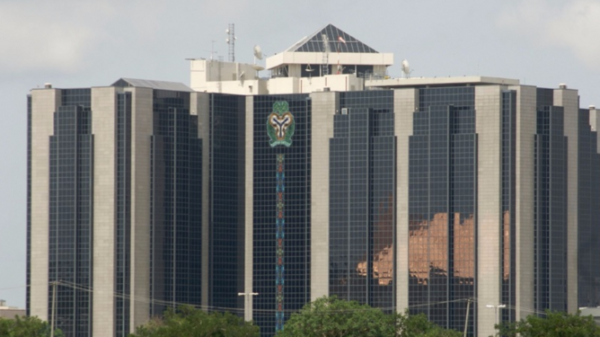





















Business Development and Marketing Lead at YDPay, a Nigerian cryptocurrency exchange, Chike Okonkwo, has stated that ongoing efforts to regulate digital assets in Nigeria may fall short unless there is full alignment between the Central Bank of Nigeria (CBN) and the Securities and Exchange Commission (SEC). According to him, both institutions must harmonise their regulatory positions to ensure coherence, market confidence, and sustainability in the emerging crypto sector.
In an interview with Nairametrics, Okonkwo acknowledged that the SEC has played an early and proactive role in engaging operators, developing preliminary regulatory frameworks, and establishing licensing models—particularly the Virtual Asset Service Provider (VASP) framework. However, he emphasised that the Commission cannot effectively regulate such a dynamic ecosystem without input from the apex bank and other financial regulators.
“The SEC has been at the forefront of bringing the industry closer to government. But so much about the crypto industry is tied to finance. The CBN and other financial regulators cannot leave the SEC alone,” Okonkwo said, noting that YDPay is also in the process of seeking a SEC licence.
Regulatory Uncertainty Still Clouds the Sector
Nigeria’s crypto industry continues to grapple with lingering uncertainty following the CBN’s 2021 directive restricting commercial banks from facilitating crypto-related transactions. Despite the CBN’s partial reversal of that stance in December 2023, when it issued guidelines for virtual asset operations and permitted banks to open accounts for VASPs, Okonkwo argued that the lack of explicit operational rules remains a significant barrier.
According to him, while the guidelines represent progress, the absence of clear-cut directives that authorise structured cooperation between banks and crypto exchanges prevents the industry from fully integrating with the traditional financial system.
“There hasn’t been a clear directive allowing direct partnerships between banks and crypto companies. Since the CBN regulates the financial institutions, when they cough, everybody listens,” he explained.
This regulatory gap has left banks cautious, limiting opportunities for crypto companies to expand liquidity networks, improve fiat on- and off-ramp channels, and build the level of user trust that is essential for mass adoption. Okonkwo believes that the SEC’s licensing initiatives will not have the desired impact unless the CBN formalises its position through robust operational frameworks for banks.
Crypto’s Growing Link to Monetary Policy
Beyond financial access, Okonkwo pointed out that digital assets—especially stablecoins—now intersect with monetary policy considerations, making the involvement of the CBN even more critical. He noted that global financial markets are steadily integrating stablecoins into mainstream financial structures, and Nigeria remains one of the world’s most active adopters.
He argued that Nigeria’s economic environment—marked by inflationary pressures, currency depreciation, and declining real savings—has encouraged many citizens to adopt dollar-backed digital assets as a store of value.
“People now understand that they can hold their savings in stablecoins. Whenever they want to convert it to fiat, they can do that instantly,” he added.
Okonkwo said platforms such as YDPay make this possible by giving users the ability to hold stablecoin balances, convert them seamlessly to naira, or spend through withdrawals—offering more flexibility than traditional banking infrastructure under current restrictions.
Drivers of Stablecoin Adoption
Nigeria’s stablecoin market, he observed, is expanding faster than most traditional financial products due to macroeconomic instability, challenges with international transactions, and the country’s young, technologically aware population. These conditions have combined to make Nigeria the second-largest stablecoin market globally, supported by high levels of digital literacy and strong remittance flows.
Although Nigeria’s local banking network effectively manages domestic payments and transfers, Okonkwo noted that cross-border transactions remain slow and costly, making crypto-powered alternatives attractive for businesses and individuals seeking faster settlements.
Efforts Toward Regulatory Clarity
To foster a regulated environment, the SEC took steps in August 2024, granting Approvals-in-Principle (AIP) to two domestic exchanges — Quidax and Busha — under its Accelerated Regulatory Incubation Program (ARIP). This marked a milestone in recognising licensed crypto platforms within Nigeria. At the time, the Commission confirmed that other applicants were undergoing assessment and would receive approvals individually as they satisfied the necessary compliance criteria.
However, more than a year after the initial approvals, the SEC has not granted AIP to any additional exchange, despite a growing queue of interested operators awaiting regulatory clearance. Industry participants see this as further evidence that a coordinated, unified stance between the SEC and the CBN is required to unlock broader regulatory progress.

Emmanuel Bassey is a Financial Expert that has worked in the Banking and Finance Industry for over 15+ years across different banks in Nigeria


