









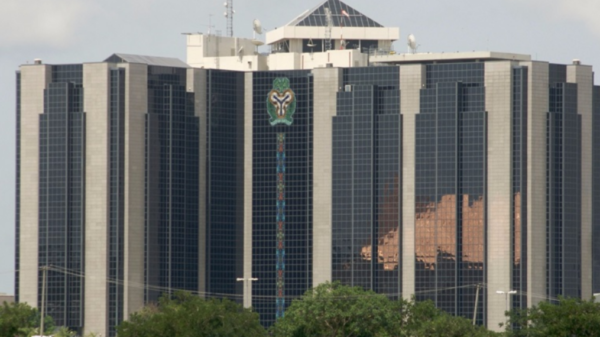




















Liquidity conditions in Nigeria’s financial markets strengthened significantly in the third week of January 2026, even as the Central Bank of Nigeria (CBN) intensified efforts to withdraw excess funds from the banking system. Data from market analysts show that average system liquidity climbed to N2.78 trillion as of Friday, January 23, 2026, representing a 31.75% increase compared to the N2.11 trillion recorded the previous week.
Analysts at Cowry Assets Management Limited attributed the sharp rise in liquidity to substantial maturity inflows and sustained investor participation across money market instruments. This expansion occurred despite aggressive monetary operations by the CBN aimed at tightening financial conditions and curbing surplus liquidity.
According to the analysts, the primary driver of the liquidity surge was the repayment of approximately N2.2 trillion in Nigerian Treasury Bills (NTB) maturities during the week. These inflows outweighed significant liquidity debits arising from both Treasury Bills auctions and Open Market Operations (OMO) settlements conducted by the central bank.
Specifically, liquidity was reduced by about N1.06 trillion from NTB auction sales held midweek, alongside an additional N1.3 trillion debited through OMO bill settlements earlier in the week. Despite these sizable withdrawals, the volume of maturing instruments ensured that the overall system liquidity remained elevated.
Market data further revealed that the CBN conducted multiple liquidity mop-up operations, withdrawing over N3 trillion through two separate auctions. However, the scale of inflows from maturing instruments proved sufficient to offset the tightening measures, allowing excess liquidity to persist within the financial system.
Interest Rates and Money Market Conditions
The central bank’s tightening stance translated into upward pressure on money market rates. Interbank Offered Rates (NIBOR) rose across all tenors, reflecting the costlier funding environment faced by financial institutions.
The overnight NIBOR increased by 2 basis points to 22.84% by the close of the week, while the one-month, three-month, and six-month tenors also recorded moderate increases. Funding conditions remained tight, with the overnight funding rate rising by 10 basis points to 22.79%, while the Open Repo Rate remained unchanged at 22.50%.
Similarly, Nigerian Treasury Index (NITTY) yields trended higher across most maturities. While the one-month NITTY declined slightly by 6 basis points to 16.64%, longer tenors recorded increases, with yields reaching 16.69% for three months, 17.88% for six months, 19.33% for nine months, and 21.18% for twelve months.
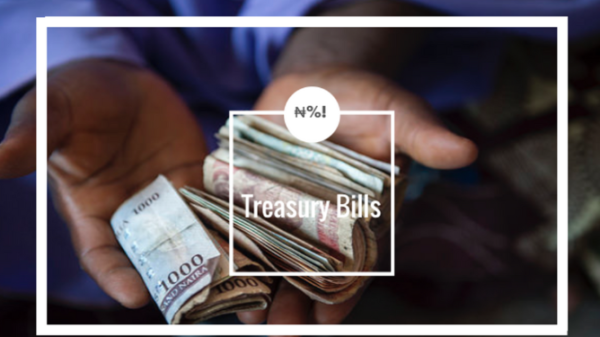
Treasury Bills Market Activity
Activity in the Treasury Bills market reflected a cautious investor sentiment, as rising yields triggered selective sell-offs in the secondary market. Average secondary market yields increased by 37 basis points week-on-week to 18.50%, indicating a bearish trading tone.
At the primary market auction, the CBN offered N1.15 trillion in Treasury Bills, attracting strong investor interest with total subscriptions of approximately N3.4 trillion. Nearly 98% of bids were concentrated in the 364-day tenor, highlighting investor preference for longer-dated instruments amid expectations of sustained high yields.
The central bank allotted about N1.1 trillion, with stop rates on the 91-day and 182-day bills rising to 15.84% and 15.65%, respectively. In contrast, the 364-day bill eased marginally to 18.36%, reflecting slight moderation at the long end of the curve.
Earlier in the week, the CBN also conducted an OMO auction, offering N600 billion across the 203-day and 245-day tenors. The auction attracted robust demand, with subscriptions totaling N2.9 trillion, resulting in N2.6 trillion in allotments. Stop rates settled at 19.38% for the 203-day bill and 19.39% for the 245-day bill.
Outlook for the Coming Week
Analysts expect system liquidity to remain positive in the near term, supported by an estimated N900 billion in OMO maturities and anticipated inflows from the Federation Accounts Allocation Committee (FAAC). However, upcoming liquidity pressures could limit the pace of rate moderation.
Notably, a planned N900 billion Federal Government of Nigeria bond auction scheduled for January 26, alongside repayments exceeding N900 billion, may partially offset inflows and keep funding rates elevated.
Cowry Assets noted that while liquidity conditions are expected to remain supportive, funding costs may stay above recent averages as investors position ahead of full-year 2025 earnings releases and navigate evolving monetary conditions.
Overall, the latest data underscores the complex balance facing Nigeria’s monetary authorities, as liquidity continues to expand despite tightening measures, reflecting deeper structural dynamics within the financial system and the broader economy.

Emmanuel Bassey is a Financial Expert that has worked in the Banking and Finance Industry for over 15+ years across different banks in Nigeria


