




































The Federal Government has earmarked N1.764 billion in the 2026 Appropriation Bill for the award of 300 new Bilateral Education Agreement (BEA) scholarships, despite officially discontinuing the programme in 2025.
The allocation is contained under the Federal Ministry of Education in the proposed budget and is intended to cover the full cost of the new scholarships, including student allowances, health insurance, travel expenses, and other essential welfare needs.
This provision forms part of the Ministry of Education’s total proposed expenditure of N2.39 trillion for the 2026 fiscal year.
The inclusion of funding for new BEA scholarships has drawn attention because the programme was formally suspended last year, following concerns by the Federal Government over its cost-effectiveness and the availability of similar academic programmes within Nigerian universities.
What the budget document shows
Details from the 2026 Appropriation Bill indicate that the N1.764 billion allocation is specifically designated for the implementation of 300 fresh BEA scholarships under budget item ERGP24230073. The scholarships are targeted at Nigerians seeking to study in countries that maintain bilateral education agreements with Nigeria.
In addition to funding for new awards, the budget provides N105 million under item ERGP24230092 for the verification of BEA-accredited institutions in 12 countries. This verification exercise is to be carried out by officials of the Federal Ministry of Education to ensure compliance with programme standards.
The budget also makes substantial provisions for existing BEA beneficiaries. A separate allocation of N5.6 billion, listed under item ERGP24230060, has been set aside to service 1,532 ongoing scholars currently studying in donor countries. This funding will cover supplementation allowances, medical and health insurance, warm clothing, and postgraduate allowances.
The affected countries include Russia, China, Cuba, Romania, Turkey, Tunisia, Algeria, Morocco, Serbia, Hungary, Ukraine, Mexico, Venezuela, and Kazakhstan.
Background and policy context
In April 2025, the Federal Government announced the discontinuation of the BEA scholarship programme, citing inefficient use of public funds and the fact that many of the courses offered abroad were already available in Nigerian higher institutions.
The decision followed years of complaints from beneficiaries over delayed and reduced stipends, with payments reportedly suspended entirely between September 2023 and August 2024, and subsequent disbursements reduced by more than 50%.
At the time, the government stated that funds previously allocated to the BEA scheme would be redirected toward domestic scholarship programmes, allowing more Nigerian students to benefit while ensuring that existing BEA scholars were supported to complete their studies.
However, the programme has remained in public discourse following recent allegations by Nigerian BEA students in Morocco, who claimed delays in stipend payments and reported hardship, including difficulties accessing accommodation and medical care.
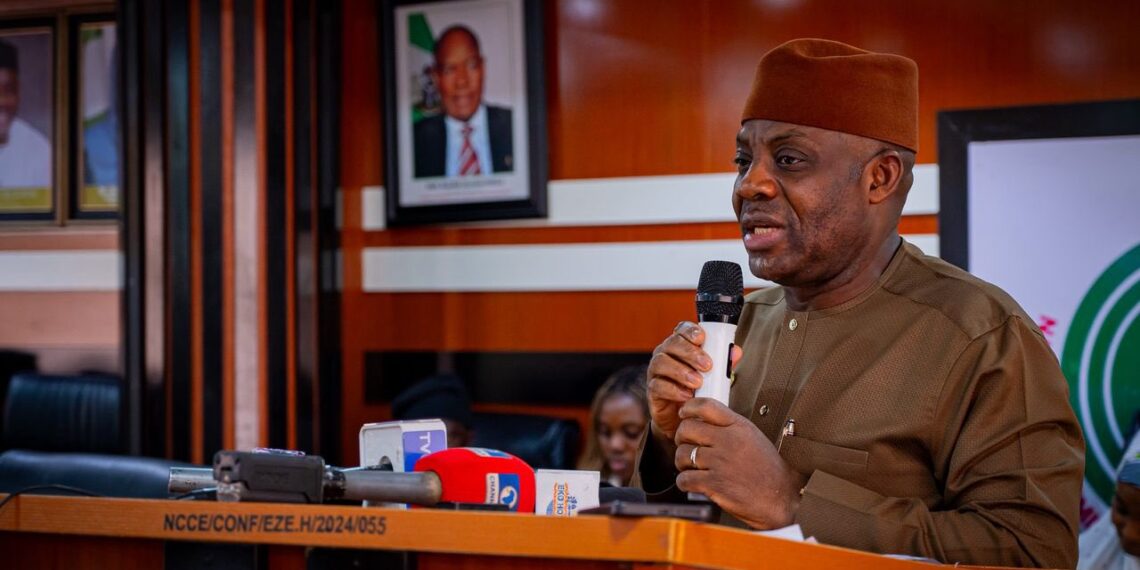
Responding to the allegations, the Minister of Education, Dr Tunji Alausa, stated that all Nigerian students enrolled under federal scholarship programmes before 2024 had received payments up to the 2024 budget year. He further clarified that no new bilateral scholarship awards were issued from October 2025 onward, in line with government policy.
Why this matters
The decision to allocate funds for 300 new BEA scholarships in the 2026 budget is notable, as it appears to contradict the government’s earlier position on discontinuing the programme. The provision raises questions about policy consistency, funding priorities, and whether the BEA scheme is being partially reinstated or restructured.

Emmanuel Bassey is a Financial Expert that has worked in the Banking and Finance Industry for over 15+ years across different banks in Nigeria


