



Creator
  • Type:
  • Genre:
  • Duration:
  • Average Rating:
Log In
 
  • Marketplace
Log In
 
  • Type:
  • Genre:
  • Duration:
  • Average Rating:
  • Marketplace

Budget

Oborevwori Seeks Delta Assembly Approval for N200 Billion Supplementary Budget

  • dollaers
  • January 21, 2026
  • Budget
  • 0 comments

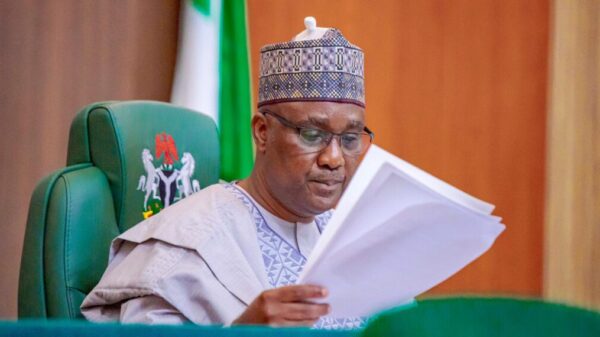
Delta State Governor Sheriff Oborevwori has requested the State House of Assembly’s approval for a N200 billion supplementary budget to revise the state’s 2025 spending framework amid mounting fiscal pressures.

The request was formally conveyed in a letter read on the floor of the House by the Speaker, Dennis Guwor, during plenary in Asaba on Tuesday.

According to the governor, the supplementary appropriation has become necessary as Delta State continues the implementation of its 2025 Appropriation Act while grappling with additional expenditure demands linked to pensions, healthcare funding, debt servicing, and urgent community interventions.

If approved, the supplementary budget will increase the overall size of Delta State’s 2025 budget and allow the government to realign spending priorities to accommodate obligations that were not fully anticipated when the original budget was passed.

What the governor is saying

Governor Oborevwori told lawmakers that the supplementary budget is critical to sustaining his administration’s development agenda and ensuring that key obligations are met before the close of the fiscal year.

He explained that the structure and timing of the 2025 budget, which runs until January 31, 2026, made a review unavoidable in light of emerging expenditure needs.

“The need became necessary to address expenditures, bearing in mind that the 2025 budget runs till Jan. 31, 2026,” the governor said.

He added that the supplementary budget includes lump-sum pension payments aimed at easing the hardship faced by retirees who served the state. According to him, these payments are intended to “ameliorate the plight of pensioners who served the state meritoriously.”

The governor also highlighted rising costs under the state’s health insurance scheme, noting that increased enrolment has resulted in higher equity contribution requirements, thereby placing additional strain on public finances.

Get up to speed

Delta State is currently operating under the 2025 Appropriation Act, which was originally approved with a total budget size of N979.2 billion.

Under the proposed supplementary budget, N140.6 billion is allocated to recurrent expenditure, while N59.4 billion is set aside for capital expenditure.

Governor Oborevwori said rising debt service obligations on foreign loans have pushed spending beyond initial projections. He also cited higher statutory allocations to local governments and the need to fund urgent community-based projects across the state.

According to the governor, these pressures made a formal adjustment to the 2025 fiscal plan necessary to prevent disruptions to governance and service delivery.

What you should know

If the House of Assembly approves the supplementary appropriation, Delta State’s revised 2025 budget will rise to N1.179 trillion.

Under the adjusted structure, N489.4 billion will be devoted to recurrent expenditure, while N689.8 billion will go to capital expenditure.

Recurrent spending pressures are being driven largely by pension obligations, increased health insurance contributions, and higher debt servicing costs. Meanwhile, capital expenditure remains focused on infrastructure development and urgent community projects identified across the state.

The supplementary appropriation bill has already passed its first reading at the Delta State House of Assembly, clearing the way for further legislative scrutiny in the coming days.

For context, in November 2025, Governor Oborevwori presented a N1.664 trillion Appropriation Bill for the 2026 fiscal year to the House. The proposal allocates N499 billion, or 30% of the total estimate, to recurrent expenditure, while N1.165 trillion, representing 70%, is earmarked for capital spending.

In addition, the governor announced in May that Delta State’s Internally Generated Revenue (IGR) rose sharply from N83 billion in 2023 to N158 billion in 2024, reflecting efforts to strengthen the state’s revenue base.

FG Allocates N1.764 Billion for Fresh BEA Scholarships in 2026 Budget

  • dollaers
  • January 12, 2026
  • Budget, Scholarships / Financial Aid
  • 0 comments

The Federal Government has earmarked N1.764 billion in the 2026 Appropriation Bill for the award of 300 new Bilateral Education Agreement (BEA) scholarships, despite officially discontinuing the programme in 2025.

The allocation is contained under the Federal Ministry of Education in the proposed budget and is intended to cover the full cost of the new scholarships, including student allowances, health insurance, travel expenses, and other essential welfare needs.

This provision forms part of the Ministry of Education’s total proposed expenditure of N2.39 trillion for the 2026 fiscal year.

The inclusion of funding for new BEA scholarships has drawn attention because the programme was formally suspended last year, following concerns by the Federal Government over its cost-effectiveness and the availability of similar academic programmes within Nigerian universities.

What the budget document shows

Details from the 2026 Appropriation Bill indicate that the N1.764 billion allocation is specifically designated for the implementation of 300 fresh BEA scholarships under budget item ERGP24230073. The scholarships are targeted at Nigerians seeking to study in countries that maintain bilateral education agreements with Nigeria.

In addition to funding for new awards, the budget provides N105 million under item ERGP24230092 for the verification of BEA-accredited institutions in 12 countries. This verification exercise is to be carried out by officials of the Federal Ministry of Education to ensure compliance with programme standards.

The budget also makes substantial provisions for existing BEA beneficiaries. A separate allocation of N5.6 billion, listed under item ERGP24230060, has been set aside to service 1,532 ongoing scholars currently studying in donor countries. This funding will cover supplementation allowances, medical and health insurance, warm clothing, and postgraduate allowances.

The affected countries include Russia, China, Cuba, Romania, Turkey, Tunisia, Algeria, Morocco, Serbia, Hungary, Ukraine, Mexico, Venezuela, and Kazakhstan.

Background and policy context

In April 2025, the Federal Government announced the discontinuation of the BEA scholarship programme, citing inefficient use of public funds and the fact that many of the courses offered abroad were already available in Nigerian higher institutions.

The decision followed years of complaints from beneficiaries over delayed and reduced stipends, with payments reportedly suspended entirely between September 2023 and August 2024, and subsequent disbursements reduced by more than 50%.

At the time, the government stated that funds previously allocated to the BEA scheme would be redirected toward domestic scholarship programmes, allowing more Nigerian students to benefit while ensuring that existing BEA scholars were supported to complete their studies.

However, the programme has remained in public discourse following recent allegations by Nigerian BEA students in Morocco, who claimed delays in stipend payments and reported hardship, including difficulties accessing accommodation and medical care.

Responding to the allegations, the Minister of Education, Dr Tunji Alausa, stated that all Nigerian students enrolled under federal scholarship programmes before 2024 had received payments up to the 2024 budget year. He further clarified that no new bilateral scholarship awards were issued from October 2025 onward, in line with government policy.

Why this matters

The decision to allocate funds for 300 new BEA scholarships in the 2026 budget is notable, as it appears to contradict the government’s earlier position on discontinuing the programme. The provision raises questions about policy consistency, funding priorities, and whether the BEA scheme is being partially reinstated or restructured.

FG Proposes N102.3 Billion for Lagos Green Line Rail in 2026 Budget

  • dollaers
  • January 12, 2026
  • Budget, Infrastructure
  • 0 comments

The Federal Government has proposed a total allocation of N102.3 billion as counterpart funding for the Lagos Green Line rail project in the 2026 fiscal year, reinforcing its commitment to expanding Nigeria’s urban rail infrastructure. The proposed allocation is contained in the 2026 Appropriation Bill under the Ministry of Transportation.

The Lagos Green Line is a major rail infrastructure project designed to improve mobility across key commercial and residential districts in Lagos. The proposed rail corridor spans approximately 68 kilometres, running from the Lekki Free Zone to Marina, and is expected to serve high-density areas such as Victoria Island, Lekki, Ajah, and Sangotedo.

According to budget details, the 2026 allocation is specifically targeted at Phase One of the Lagos Green Line Metro Rail project. The funds are to be transferred to the Ministry of Finance Incorporated (MOFI), an agency responsible for managing federal equity participation, counterpart funding, and structured financing arrangements for large-scale infrastructure developments.

The funding model indicates continued reliance on structured financing frameworks that are expected to involve collaboration between the Federal Government, the Lagos State Government, and other domestic or international financiers. This approach reflects the scale and capital-intensive nature of the Green Line project, which has been estimated to cost around $3 billion upon completion.

In comparison, the Federal Government proposed a higher counterpart funding of N146.14 billion for the same project in the 2025 budget, suggesting a recalibration of funding requirements as project planning progresses. Despite the reduction, the sustained allocation signals ongoing federal backing while implementation plans are being finalised.

Beyond the Lagos Green Line, the 2026 budget outlines additional investments across Nigeria’s rail sector. The Federal Government plans to spend N68.5 billion on consultancy services related to the proposed Lekki–Ijebu Ode–Ore–Kajola railway as well as the coastal rail corridor linking Badagry, Apapa, and Tin Can ports. These consultancy services are expected to cover feasibility assessments, design reviews, and project structuring activities.

The budget also earmarks N29.04 billion for various ongoing and planned railway modernisation projects nationwide. These include the completion of the Abuja–Kaduna railway, further development works on the Lagos–Ibadan rail line, and the rehabilitation of the Itakpe–Ajaokuta rail corridor. Additional provisions cover the construction of 12 railway station buildings and track-laying works at ancillary rail facilities in Agbor.

Further allocations under the same budget line include funding for the design, manufacture, and installation of rolling stock, alongside the supply of spare parts and maintenance equipment. The proposal also includes investments in signalling and telecommunications systems on the Itakpe–Ajaokuta–Warri rail line, as well as the deployment of acoustic sensing security surveillance systems on the Abuja–Kaduna corridor to enhance rail safety.

The 2026 budget additionally makes room for feasibility studies for new standard-gauge rail lines and the engagement of transaction advisers for the planned concession of major routes such as the Abuja–Baro–Itakpe, Aladja–Warri Port, and Kano–Maradi rail projects.

The Lagos Green Line itself is envisioned as a modern, high-capacity urban transit system featuring 17 stations along a mix of elevated and at-grade tracks. Planned amenities include pedestrian bridges, elevators, escalators, and a dedicated depot near Sangotedo. Trains are expected to operate in eight-car sets, reach speeds of up to 100 km/h, and move up to 35,000 passengers per hour per direction at peak capacity.

While construction was initially scheduled to begin in December 2025 following extensive feasibility studies and stakeholder consultations along the Lekki–Epe corridor, work had not commenced as of January 2026. However, planning and coordination activities remain ongoing.

Some transport experts have expressed concerns over station spacing and operational capacity, particularly in Victoria Island and along the Lekki axis. They have recommended the addition of more stations in high-traffic areas and stronger integration with existing rail lines to maximise ridership and efficiency.

Overall, the proposed 2026 allocation underscores the Federal Government’s continued interest in expanding rail infrastructure, even as timelines and funding structures evolve.

2026 Budget shows FG to spend N92.9 billion on electricity and diesel across MDAs

  • dollaers
  • January 12, 2026
  • Budget
  • 0 comments

The Federal Government has budgeted a total of N92.9 billion for electricity and diesel expenses across ministries, departments, and agencies (MDAs) in the 2026 fiscal year, underscoring the persistent financial burden of Nigeria’s unreliable power supply on public sector operations.

Details contained in the 2026 Appropriation Bill reveal that energy-related recurrent expenditure remains a major cost item for federal institutions, despite years of reforms aimed at improving electricity generation, transmission, and distribution. The proposed allocations indicate that MDAs continue to rely heavily on a combination of grid electricity and diesel-powered generators to sustain daily operations.

The scale of the planned spending reflects a reality in which public institutions are still preparing for power shortfalls rather than depending on stable electricity supply from the national grid. Analysts note that this trend highlights the slow pace of improvement in grid reliability and the enduring dependence on alternative power sources.

Electricity spending concentrated in key sectors

A breakdown of the proposed budget shows that electricity allocations are spread across nearly all MDAs, with the defence, health, and education sectors accounting for the largest shares. These sectors operate energy-intensive facilities that require uninterrupted power to function effectively.

The Ministry of Defence tops the list with an allocation of N16.16 billion for electricity. The provision is intended to cover the energy needs of military formations, barracks, training facilities, and operational bases across the country, many of which require round-the-clock power for security and logistics.

The Federal Ministry of Health and Social Welfare follows with N9.43 billion earmarked for electricity expenses. This allocation reflects the significant power requirements of teaching hospitals, federal medical centres, and other healthcare institutions, where electricity is critical for medical equipment, laboratories, and emergency services.

The Federal Ministry of Education is projected to spend N8.23 billion on electricity, covering federal universities, colleges of education, unity schools, and other educational institutions under federal control. Rising enrolment levels and expanding campus infrastructure have further increased energy demand within the education sector.

Other MDAs with notable electricity allocations include the Ministry of Police Affairs, with N3.69 billion, the Office of the National Security Adviser at N3.59 billion, and the Ministry of Foreign Affairs at N3.49 billion, largely linked to the operation of Nigeria’s diplomatic missions and facilities both locally and abroad.

The Presidency is expected to spend close to N2 billion on electricity, while ministries such as Agriculture, Transport, Interior, Budget and Economic Planning, and Science and Technology have allocations running into several hundreds of millions of naira.

Even regulatory and oversight bodies are not exempt. Institutions such as the Independent Corrupt Practices and Other Related Offences Commission, the Code of Conduct Bureau, the Office of the Auditor-General of the Federation, and the Revenue Mobilisation, Allocation and Fiscal Commission all made electricity provisions ranging from tens to hundreds of millions of naira.

Diesel dependence remains widespread

Beyond grid electricity costs, the budget highlights extensive spending on diesel, reflecting MDAs’ continued reliance on generators due to unstable power supply. Diesel expenditure alone accounts for a significant portion of the N92.9 billion energy allocation.

The Ministry of Health and Social Welfare again leads diesel spending with N8.29 billion, followed closely by the Ministry of Defence at N6.6 billion and the Ministry of Education at N5.75 billion. These figures underscore the high operational costs faced by institutions that cannot afford power disruptions.

Other major diesel spenders include the Office of the Secretary to the Government of the Federation, the Office of the National Security Adviser, and the Ministry of Foreign Affairs, which together account for over N3.6 billion. Ministries such as Interior, Justice, Police Affairs, Agriculture and Food Security, Budget and Economic Planning, and Information and National Orientation each budgeted between several hundreds of millions and over N1 billion for diesel.

Smaller agencies, including the Code of Conduct Tribunal, Police Service Commission, and Federal Character Commission, also made diesel provisions, though at comparatively lower levels.

Why this matters

The magnitude of electricity and diesel spending in the 2026 budget reinforces concerns about the fiscal cost of Nigeria’s longstanding power challenges. Heavy reliance on diesel not only strains public finances but also exposes MDAs to fuel price volatility and environmental concerns.

Despite repeated assurances of progress in the power sector, the budget figures suggest that public institutions are still planning for unreliable electricity supply. Analysts argue that without significant improvements in grid stability, energy costs will continue to divert resources away from service delivery, infrastructure development, and social programmes.

Background on power sector reforms

In 2025, the Federal Government issued the first bond under the Presidential Power Sector Debt Reduction Programme, aimed at clearing long-standing payment arrears owed to power generation companies and gas suppliers. While the initiative marked a major step toward stabilising the sector financially, operational challenges persist.

Nigeria’s power sector has long struggled with limited generation capacity, transmission bottlenecks, and distribution inefficiencies. Although recent reforms have expanded private sector participation and state-level involvement in electricity generation and distribution, grid reliability remains weak, particularly for large public institutions.

The 2026 budget figures suggest that meaningful structural improvement in electricity supply may still take time, with MDAs continuing to bear the cost of power sector shortcomings through rising energy expenditure.

Tinubu, Shettima Budgeted to Spend N11 Billion on State House Operations in 2026

  • dollaers
  • January 11, 2026
  • Budget
  • 0 comments

President Bola Ahmed Tinubu and Vice-President Kashim Shettima are collectively allocated N11.03 billion for State House operations in the 2026 fiscal year, according to details contained in the 2026 Appropriation Bill presented to the National Assembly. The figures, analysed by Nairametrics, provide insight into the cost structure of running Nigeria’s Presidency amid ongoing fiscal consolidation efforts.

Budget data extracted from the Appropriation Bill show that the State House Headquarters remains the single largest cost centre within the Presidency. In total, N43.191 billion has been earmarked for the headquarters, which houses the offices of the President, Vice-President, and other key units that support executive governance.

A closer look at the allocation reveals that capital expenditure dominates the State House budget. Out of the N43.191 billion total, capital spending accounts for N30.487 billion, reflecting ongoing investments in infrastructure, rehabilitation, and upgrades within the Presidential Villa and associated facilities. Personnel costs are estimated at N2.643 billion, while overhead expenses are projected at N10.060 billion.

Specifically, the President’s State House Operations vote is allocated N8.386 billion for 2026. This covers a wide range of administrative and operational expenses tied to the Office of the President, including travel, logistics, and day-to-day running costs. The Office of the Vice-President, on the other hand, received an allocation of N2.642 billion to support its own operations during the fiscal year.

Further disaggregation of the Presidency’s budget shows that the Office of the Chief of Staff to the President is allocated N1.360 billion. Notably, N1.00 billion of this amount is set aside for overhead costs alone, highlighting the administrative intensity of the role. Additional provisions under this office include N312.91 million for local training, N24.90 million for meals and refreshments, and N199.50 million for the purchase of motor vehicles.

The Office of the Chief Security Officer to the President is budgeted N371.240 million, while the State House Lagos Liaison Office received an allocation of N298.328 million, completing the core spending framework of the Presidency for 2026.

A breakdown of presidential expenditures indicates that recurrent and related expenses amount to N7.61 billion. Of this, international travel and associated costs account for N6.14 billion, reflecting Nigeria’s diplomatic and foreign engagement priorities. Local travel and transportation are allocated N873.89 million. Other line items include N79.67 million for drugs and medical supplies, N56.43 million for meals and refreshments, and N65.78 million for honorarium and sitting allowances. Publicity and advertisement activities linked to the President’s office are budgeted at N14.63 million.

The Vice-President’s allocation places notable emphasis on maintenance and renovations. Of the N2.64 billion budgeted, N171.03 million is earmarked for foodstuffs and catering materials, while N14.99 million is set aside for meals and refreshments. Office stationery and computer consumables are expected to cost N5.23 million, with N21.80 million allocated for honorarium and sitting allowances.

Significant capital provisions include N615.51 million for the rehabilitation and repair of residential buildings, N208.87 million for the renovation of the Vice-President’s quarters at the Presidential Villa, and another N208.87 million for the renovation of the Vice-President’s Guest House in Asokoro. An additional N25.88 million is provided for the procurement of printers, photocopiers, and media equipment.

President Tinubu presented the N58.18 trillion 2026 Appropriation Bill to a joint session of the National Assembly in December, describing it as the “Budget of Consolidation, Renewed Resilience and Shared Prosperity.” He said the budget aims to consolidate recent economic reforms and translate improving macroeconomic indicators into tangible gains for Nigerians.

The President also announced the end of the long-standing practice of running multiple overlapping budgets, noting that abandoned projects, inherited obligations, and repeated rollovers had weakened fiscal discipline. According to Tinubu, all outstanding capital liabilities from previous years are expected to be fully funded and closed by March 31, 2026, paving the way for a single budget cycle from April 2026 and tighter control over public spending.

2026 Budget: FG Allocates ₦367.9 Billion Loan for Lafia, 9th Mile–Makurdi Road Project

  • dollaers
  • January 10, 2026
  • Budget
  • 0 comments

The Federal Government has earmarked ₦367.9 billion in loan financing for the construction and dualisation of the Lafia Road and the 9th Mile (Enugu)–Otukpo–Makurdi corridor in the proposed ₦58.47 trillion 2026 budget, underscoring its continued reliance on external funding to advance capital-intensive road infrastructure. The allocation, captured in the 2026 Appropriation Bill (Details), ranks among the largest single items under the Federal Ministry of Works, reflecting the strategic importance of the corridor to interregional trade and mobility.

According to the budget documents, the Ministry of Works received a total allocation of ₦3.49 trillion for 2026, with ₦3.44 trillion dedicated to capital expenditure. This heavy tilt toward capital spending signals the government’s priority to accelerate ongoing road construction, rehabilitation, and dualisation projects nationwide, even as fiscal pressures persist.

What the Appropriation Bill shows

The Lafia Road and 9th Mile–Otukpo–Makurdi project appears in the bill under project code ERGP12234171 as a multilateral/bilateral tied loan, with a proposed allocation of ₦367,902,737,115. The scope covers the construction of Lafia Road and the dualisation of the 9th Mile (Enugu)–Otukpo–Makurdi route under Keffi Phase II, a vital artery linking the North-Central and South-East regions.

The size and structure of the allocation indicate that the project will be funded predominantly through external borrowing rather than direct treasury releases. This approach has become a standard model for large federal highways, where budgetary allocations alone are insufficient to meet rising construction costs driven by inflation, currency pressures, and security-related disruptions. The project is classified as ongoing, placing it among a cluster of long-term works being supervised by the Ministry of Works.

Other major road projects in the 2026 budget

Beyond the Lafia–Makurdi corridor, the 2026 budget contains sizeable provisions for several high-impact road projects. These include ₦52.5 billion for Phase II of the Kano–Katsina Road dualisation and ₦23.8 billion for Phase I of the same corridor. Multinational counterpart projects—such as the Lafia Bypass and components of the 9th Mile–Otukpo–Makurdi Road—also received ₦23.8 billion, reflecting the co-financing structure often required by development lenders.

Additional allocations include ₦13.3 billion for the Kano–Maiduguri Road (Kano–Wudil–Shuarin section), ₦12.6 billion for the Ikorodu–Itoikin Road in Lagos State, and ₦7.7 billion for the Abuja–Lokoja Road (Zuba–Abaji section). The Ikot Ekpene border–Aba–Owerri dualisation was allotted ₦7.7 billion, while the Numan–Jalingo Road rehabilitation received ₦7.0 billion.

Further details show ₦7.0 billion for the Damaturu–Maiduguri section of the Kano–Maiduguri Road and ₦7.01 billion for Section 3 of the Mubi–Maiduguri Road. The ministry also set aside ₦100 billion for a contingency fund and ₦600 billion for proposed new projects across the six geopolitical zones, though specific project details were not disclosed in the bill.

Why this matters

Nigeria’s federal road network—estimated at over 35,000 kilometres—has long suffered from underfunding and deferred maintenance. Officials have repeatedly acknowledged that annual budgets cannot, on their own, close the infrastructure gap. In this context, loan-backed financing has become central to sustaining progress on strategic corridors that support agriculture, industry, and trade.

Projects financed through multilateral and bilateral loans are typically paired with cost-recovery mechanisms such as tolling to ensure long-term sustainability. The Lafia–9th Mile–Makurdi corridor fits this model, given its role in connecting key economic zones and easing logistics across regions.

What you should know

The Federal Government, under Bola Tinubu, has increasingly adopted blended financing—combining budgetary funds, loans, and private capital—to fast-track infrastructure delivery. Notable examples include the Benin–Asaba Superhighway, advanced through private-sector funding, and the Lagos–Calabar Coastal Highway, which secured $747 million in July 2025 and an additional $1.2 billion in December 2025.

Within this broader strategy, the ₦367.9 billion loan allocation for the Lafia Road and 9th Mile–Otukpo–Makurdi dualisation stands out as a cornerstone investment in 2026—one that highlights both the scale of Nigeria’s infrastructure ambitions and the growing role of external financing in turning those plans into reality.

FG Budgets N6.04 Billion for Ajaokuta Staff in 2026 Despite Decades of Zero Steel Output

  • dollaers
  • January 10, 2026
  • Budget
  • 0 comments

The Federal Government has proposed a ₦6.04 billion personnel budget for Ajaokuta Steel Company Limited in the 2026 fiscal year, once again spotlighting the long-running paradox of Nigeria’s most ambitious industrial project consuming public funds without producing steel. Details from the 2026 Appropriation Bill show that the steel complex, conceived more than four decades ago as the backbone of Nigeria’s industrialisation drive, remains non-operational while drawing the bulk of its funding for salaries and staff-related expenses.

According to the budget proposal, Ajaokuta Steel was allocated a total of ₦6.69 billion for 2026. Of this amount, ₦6.04 billion, or about 90.4%, is dedicated to personnel costs alone. The structure of the allocation once again reinforces the company’s long-established role as a non-producing public enterprise sustained primarily through wage payments rather than industrial activity or output.

What the 2026 budget breakdown shows

A closer look at the proposed spending reveals that ₦4.79 billion of the personnel allocation is earmarked for salaries and wages, while ₦1.25 billion is set aside for allowances and statutory social contributions. These include ₦479.42 million for employer pension contributions, ₦239.71 million for National Health Insurance Scheme (NHIS) payments, and ₦59.82 million for employees’ compensation insurance. Regular allowances alone account for ₦468.9 million.

Beyond personnel costs, the imbalance between recurrent and capital expenditure remains stark. Total recurrent spending for Ajaokuta in 2026 is projected at ₦6.28 billion, compared with just ₦410.8 million in capital expenditure. This means that less than 7% of the company’s total allocation is directed toward assets, rehabilitation, or infrastructure that could potentially support a return to steel production.

Even within the capital budget, spending is thinly spread across relatively minor items. Fixed asset purchases—such as computers, printers, and security equipment—are allocated ₦56.4 million. Construction and provision of facilities take ₦129.2 million, while ₦225.2 million is assigned to rehabilitation and repairs, largely focused on electricity-related works and office buildings. For a complex originally designed to anchor Nigeria’s steel and manufacturing value chain, these figures underscore how little funding is being channelled toward genuine industrial revival.

A pattern of persistence, not reform

Year-on-year budget trends suggest continuity rather than meaningful restructuring. In 2024, personnel costs at Ajaokuta stood at ₦4.29 billion. This rose sharply to ₦6.21 billion in 2025—a 44.8% increase—despite the absence of production. The proposed ₦6.04 billion for 2026 represents only a modest 2.7% reduction from the previous year.

While the slight decline may appear to signal restraint, it does little to change the underlying structure of spending. Salaries continue to dominate the budget, while capital investment remains compressed, confirming that staff remuneration—not steel output—remains the core priority.

Zero revenue, full dependence on federal funding

The 2026 budget documents indicate that Ajaokuta Steel is projected to generate zero independent revenue and will receive no grants, leaving it fully dependent on federal subventions. Despite this, the company continues to appear in constituency-style capital projects, including solar street lighting in parts of Niger East and Kwara North, water facilities, road repairs, security lighting, and grants to market women and youths.

While such projects may have local social value, they are not linked to steel production or industrial capacity and do little to alter the company’s non-operational status.

Separately, the proposed 2026 budget includes revival-related provisions under the Federal Ministry of Steel Development. The ministry allocated ₦150.99 million for the revitalisation of Ajaokuta Steel Company Limited and the National Iron Ore Mining Company (NIOMCO) as an ongoing capital project. An additional ₦1.06 billion was set aside for project preparation aimed at investment mobilisation, covering feasibility studies, environmental and social impact assessments, and financial modelling.

However, these figures are significantly lower than in 2025, when ₦2.41 billion was budgeted for project preparation and ₦250.98 million for revitalisation. The decline represents a 56% drop in project preparation spending year-on-year, even as the steel complex remains idle.

Why it matters

Conceived in 1979 as Nigeria’s flagship industrial project, the Ajaokuta Integrated Steel Complex was expected to reduce steel imports, drive industrialisation, and support economic diversification. More than 40 years later, budget allocations suggest it functions largely as a payroll institution, with successive administrations—including the current government under President Bola Tinubu—continuing to fund salaries while production remains at zero.

The company says it employs about 3,000 workers and claims that full commissioning could directly engage up to 10,000 staff, with upstream and downstream industries potentially supporting as many as 500,000 jobs nationwide. For now, however, the proposed 2026 budget paints a familiar picture: a steel plant sustained by recurrent spending, with revival still confined to studies and plans rather than actual output.

Lagos Assembly Passes ₦4.44 Trillion 2026 Budget, Sets Sights on Shared Prosperity

  • dollaers
  • January 9, 2026
  • Budget
  • 0 comments

The Lagos State House of Assembly has passed a ₦4.44 trillion budget for the 2026 fiscal year, formally approving the Lagos State Government’s proposed “Budget of Shared Prosperity.” The passage followed extensive deliberations during plenary and the adoption of the report of the House Committee on Economic Planning and Budget, marking a key milestone in the state’s fiscal planning for the coming year.

The newly approved budget lays out the state’s macroeconomic assumptions, spending priorities, and deficit financing strategy, all aimed at sustaining economic growth, strengthening infrastructure delivery, and maintaining fiscal stability in Nigeria’s commercial capital. As the country’s largest sub-national economy, Lagos State’s budget decisions are often seen as an important barometer of broader economic confidence.

Macroeconomic assumptions and 2025 performance

Presenting the committee’s report, Chairman of the House Committee on Economic Planning and Budget, Mr. Sa’ad Olumoh, explained that the 2026 budget framework was shaped by prevailing national and global economic conditions. According to him, the assumptions underpinning the budget include an exchange rate benchmark of ₦1,512 to the US dollar, an inflation rate of 14.7%, daily oil production of 2.06 million barrels, and a benchmark oil price of $64 per barrel.

Olumoh also disclosed that lawmakers reviewed the performance of the 2025 budget to guide their assessment of the 2026 proposal. As of November 2025, the state recorded a cumulative budget performance of 79%. Capital expenditure performance stood at 75%, while recurrent expenditure reached 87%. Overall revenue performance was also placed at 79%, reflecting relatively strong fiscal execution despite inflationary pressures and macroeconomic headwinds.

Breakdown of the 2026 budget

For the 2026 fiscal year, the approved ₦4.44 trillion budget is made up of ₦2.052 trillion in recurrent expenditure and ₦2.185 trillion in capital expenditure, underscoring the state government’s continued emphasis on infrastructure-led development. The near balance between recurrent and capital spending signals a deliberate effort to avoid excessive consumption spending while prioritizing long-term economic assets.

The capital allocation is expected to support investments across critical sectors such as transportation, health, education, housing, and public utilities. Recurrent expenditure provisions cover personnel costs, overheads, debt servicing, and loan repayments, reflecting the operational realities of running Africa’s most populous city-state.

The budget carries a projected deficit of about ₦243 billion, which, according to the committee, will be financed through approved borrowing and other financing options in line with existing fiscal responsibility frameworks.

Legislative adjustments and debates

During the legislative review process, lawmakers disclosed that an additional ₦171 billion was added to the original budget proposal submitted by the executive. Mr. Aro Moshood, representing Ikorodu II constituency, confirmed the upward adjustment, noting that the changes were made to accommodate priority spending areas identified during committee reviews.

Several lawmakers emphasized the need for sustained revenue reforms, improved efficiency among revenue-generating agencies, and prudent debt management to ensure the long-term sustainability of the state’s finances, especially in an environment of rising borrowing costs.

Speaking after the budget’s passage, the Speaker of the House, Mudashiru Obasa, described the 2026 budget as realistic and well-balanced. He expressed confidence that, if properly implemented, it has the capacity to drive inclusive economic growth and improve living standards across the state. Obasa added that revenue-generating agencies had assured lawmakers of stronger collaboration to meet—and possibly exceed—projected revenue targets.

Why the budget matters

Lagos State remains Nigeria’s economic powerhouse, and the size and structure of its annual budget often influence investor sentiment and sub-national policy direction. With capital expenditure nearly matching recurrent spending, the 2026 budget reinforces the state’s commitment to infrastructure development at a time of economic uncertainty, high inflation, and mounting fiscal pressures on state governments.

The reliance on internally generated revenue and the modest deficit projection also highlight the importance of efficient tax administration, revenue diversification, and disciplined spending to preserve Lagos State’s fiscal health.

What you should know

Governor Babajide Sanwo-Olu originally presented a ₦4.237 trillion budget proposal to the House on November 25. He projected total revenue of ₦3.99 trillion, comprising ₦3.12 trillion from internally generated revenue and ₦874 billion from federal transfers. Following legislative review, the budget was adjusted upward, with the deficit financing plan for 2026 estimated at approximately ₦243.3 billion.

With its passage, attention now shifts to implementation, as stakeholders watch closely to see how effectively Lagos State translates its ambitious 2026 budget into tangible economic and social outcomes

FG Budgets N2.3 Billion for Ex-Presidents, Deputies’ Benefits in 2026

  • dollaers
  • January 9, 2026
  • Budget
  • 0 comments

The Federal Government has set aside N2.3 billion in the 2026 Appropriation Bill to cover statutory benefits and entitlements for Nigeria’s former presidents, heads of state, and their deputies. The provision, captured under the budget line item titled “Entitlements of former Presidents/Heads of State and Vice Presidents/Chief of General Staff,” reflects the government’s continued obligation to service pensions, allowances, and other benefits guaranteed to former top political officeholders under existing laws.

The allocation forms part of the broader recurrent expenditure framework of the 2026 budget, which was presented to the National Assembly by President Bola Tinubu in December 2025. While the amount represents a small fraction of total federal spending, it has once again drawn public attention due to Nigeria’s ongoing fiscal challenges, including high inflation, revenue constraints, and a widening budget deficit.

What the budget data shows

According to details contained in the budget documents, the N2.3 billion provision applies to both civilian and military leaders who previously held the nation’s highest offices. Among the civilian former presidents listed as beneficiaries are Olusegun Obasanjo and Goodluck Jonathan.

Also included are former military heads of state such as Ibrahim Babangida, Yakubu Gowon, and Abdulsalami Abubakar. These individuals are entitled to benefits in line with laws governing pensions and privileges for former national leaders, regardless of whether they served under civilian or military administrations.

The allocation further extends to former vice presidents and equivalent positions held during military regimes. Beneficiaries in this category include Atiku Abubakar, who served between 1999 and 2007; Namadi Sambo, who was in office from 2010 to 2015; and Yemi Osinbajo, who served from 2015 to 2023.

The budget also recognises Okoh Ebitu Ukiwe, who functioned as de facto Vice President between 1985 and 1986 during the Babangida military administration, thereby qualifying for similar entitlements.

Broader provisions for retired officials

Beyond former presidents and their deputies, the 2026 budget makes additional provisions for other categories of retired senior public officials. Specifically, N24.79 billion has been earmarked for the benefits of retired Heads of Service and Permanent Secretaries across the federal civil service. These payments typically cover pensions, gratuities, and other post-service obligations owed to top bureaucrats.

In addition, the government allocated N1 billion as severance benefits for retired heads of government agencies and parastatals. Together, these items underscore the scale of statutory commitments the Federal Government must meet annually as part of its recurrent expenditure profile.

Why this matters

Spending on benefits for former political officeholders has long been a sensitive issue in Nigeria’s public finance debate. While such entitlements are legally backed, they often attract criticism, especially during periods of economic strain. With Nigerians adjusting to subsidy removals, elevated living costs, and tightening household incomes, allocations to political pensions frequently raise questions about equity, fiscal discipline, and the sustainability of public spending.

The scrutiny is further heightened by the scale of the 2026 fiscal framework. According to budget projections, the Federal Government plans to spend well above expected revenues, with a deficit estimated at N23.85 trillion. Total revenue for 2026 is projected at N34.33 trillion, underscoring the continued reliance on borrowing to finance government operations.

What you should know

The remuneration and post-service benefits of political officeholders in Nigeria are determined by the Revenue Mobilisation, Allocation and Fiscal Commission (RMAFC). These benefits are enshrined in law and typically include pensions, housing, official vehicles, medical care, and security coverage.

Similar provisions for former presidents and vice presidents have appeared consistently in past federal budgets, making the 2026 allocation a continuation of existing policy rather than a new initiative. Nonetheless, the inclusion of N2.3 billion for ex-leaders’ benefits once again places the spotlight on how Nigeria balances statutory obligations with competing development and social spending priorities in a challenging economic environment.

Rivers State Executive Council Approves ₦1.85 Trillion Budget Proposal for 2026

  • dollaers
  • January 4, 2026
  • Budget
  • 0 comments

The Rivers State Government has taken a major step toward defining its fiscal and development priorities for the year ahead, as the State Executive Council approved a ₦1.85 trillion budget proposal for the 2026 fiscal year. The approval, which followed extensive deliberations by the council, signals the administration’s intention to sustain development momentum while navigating Nigeria’s prevailing economic pressures.

The decision was reached at a council meeting presided over by Siminalayi Fubara, according to disclosures made by state officials and reports by the News Agency of Nigeria (NAN). The approved spending framework outlines the government’s proposed recurrent and capital expenditures for 2026 and will now be transmitted to the Rivers State House of Assembly for legislative consideration and eventual approval.

State officials say the proposed budget is designed to consolidate ongoing development efforts while addressing emerging socio-economic needs across the state. With inflationary pressures, infrastructure gaps, and social welfare demands still posing challenges, the 2026 budget is expected to serve as a critical policy tool for stimulating economic activity and improving the living standards of residents.

Focus on completing key projects

Briefing journalists in Port Harcourt after the council meeting, the Special Adviser to the Governor on Economic Matters, Peter Medee, explained that the ₦1.85 trillion proposal places strong emphasis on completing ongoing projects rather than initiating numerous new ones.

According to him, a significant portion of the budget has been earmarked to meet outstanding obligations in critical sectors such as infrastructure, health, and education. He added that productive and socially impactful sectors—including agriculture, youth empowerment, culture, tourism, and information and communication technology (ICT)—have also been prioritised to ensure balanced and inclusive development.

“The budget sum of ₦1.85 trillion would fund outstanding obligations in critical sectors, including infrastructure, health, and education. Agriculture, youth empowerment, culture, tourism, and ICT will also be adequately prioritised by the budget,” Medee said, noting that the administration is keen on translating spending into tangible benefits for citizens.

Also speaking, Honour Sirawoo, Permanent Secretary in the Ministry of Information and Communications, said the proposal underwent detailed scrutiny by the Executive Council. He noted that the rigorous review process was aimed at ensuring value for money and aligning spending with the government’s broader development agenda. According to Sirawoo, the approved allocations are strategically targeted at improving public welfare and service delivery across Rivers State.

Economic implications

If passed by the Rivers State House of Assembly, the ₦1.85 trillion budget could play a significant role in stimulating economic activity in the oil-rich state. Analysts note that the strong emphasis on infrastructure and social sectors could help unlock private sector participation, enhance productivity, and improve access to essential services.

The inclusion of agriculture and ICT as priority areas also points to an effort to diversify the state’s economic base, create jobs—particularly for young people—and reduce reliance on oil-related revenues. However, observers caution that the ultimate impact of the budget will depend heavily on revenue performance, fiscal discipline, and effective implementation.

Looking back at 2025

The 2026 proposal comes against the backdrop of Rivers State’s 2025 fiscal experience. In January 2025, Governor Fubara signed the ₦1.1 trillion 2025 budget into law, describing it as a cornerstone of the state’s development agenda. That budget comprised ₦462.25 billion for recurrent expenditure, ₦678.09 billion for capital projects, a planning reserve of ₦35.69 billion, and a closing balance of ₦12.93 billion.

The governor had disclosed that financing for the 2025 budget would be sourced from multiple revenue streams, including allocations from the Federation Accounts Allocation Committee (FAAC), Internally Generated Revenue (IGR), statutory allocations, mineral funds, Value Added Tax (VAT), and various refunds.

However, the 2025 fiscal year was not without controversy. Lawmakers were reported to have barred Governor Fubara from accessing the House of Assembly to re-present the 2025 budget, an incident that underscored political tensions within the state.

The road ahead

As the ₦1.85 trillion 2026 budget proposal heads to the legislature, attention will now shift to the Rivers State House of Assembly’s review process. Stakeholders will be watching closely to see how quickly the budget is considered and whether proposed allocations are retained or adjusted. Ultimately, residents of Rivers State will judge the budget not by its size, but by its ability to deliver visible improvements in infrastructure, public services, and economic opportunities.

  • 1
  • 2
  • 3
  • Next ›
Forgot Password
Please enter your email address or username below.
*
 
Login
*
*
Lost Your Password
Dont have account? Signup