




Creator
  • Type:
  • Genre:
  • Duration:
  • Average Rating:
Log In
 
  • Marketplace
Log In
 
  • Type:
  • Genre:
  • Duration:
  • Average Rating:
  • Marketplace

Scholarships / Financial Aid

FG Allocates N1.764 Billion for Fresh BEA Scholarships in 2026 Budget

  • dollaers
  • January 12, 2026
  • Budget, Scholarships / Financial Aid
  • 0 comments

The Federal Government has earmarked N1.764 billion in the 2026 Appropriation Bill for the award of 300 new Bilateral Education Agreement (BEA) scholarships, despite officially discontinuing the programme in 2025.

The allocation is contained under the Federal Ministry of Education in the proposed budget and is intended to cover the full cost of the new scholarships, including student allowances, health insurance, travel expenses, and other essential welfare needs.

This provision forms part of the Ministry of Education’s total proposed expenditure of N2.39 trillion for the 2026 fiscal year.

The inclusion of funding for new BEA scholarships has drawn attention because the programme was formally suspended last year, following concerns by the Federal Government over its cost-effectiveness and the availability of similar academic programmes within Nigerian universities.

What the budget document shows

Details from the 2026 Appropriation Bill indicate that the N1.764 billion allocation is specifically designated for the implementation of 300 fresh BEA scholarships under budget item ERGP24230073. The scholarships are targeted at Nigerians seeking to study in countries that maintain bilateral education agreements with Nigeria.

In addition to funding for new awards, the budget provides N105 million under item ERGP24230092 for the verification of BEA-accredited institutions in 12 countries. This verification exercise is to be carried out by officials of the Federal Ministry of Education to ensure compliance with programme standards.

The budget also makes substantial provisions for existing BEA beneficiaries. A separate allocation of N5.6 billion, listed under item ERGP24230060, has been set aside to service 1,532 ongoing scholars currently studying in donor countries. This funding will cover supplementation allowances, medical and health insurance, warm clothing, and postgraduate allowances.

The affected countries include Russia, China, Cuba, Romania, Turkey, Tunisia, Algeria, Morocco, Serbia, Hungary, Ukraine, Mexico, Venezuela, and Kazakhstan.

Background and policy context

In April 2025, the Federal Government announced the discontinuation of the BEA scholarship programme, citing inefficient use of public funds and the fact that many of the courses offered abroad were already available in Nigerian higher institutions.

The decision followed years of complaints from beneficiaries over delayed and reduced stipends, with payments reportedly suspended entirely between September 2023 and August 2024, and subsequent disbursements reduced by more than 50%.

At the time, the government stated that funds previously allocated to the BEA scheme would be redirected toward domestic scholarship programmes, allowing more Nigerian students to benefit while ensuring that existing BEA scholars were supported to complete their studies.

However, the programme has remained in public discourse following recent allegations by Nigerian BEA students in Morocco, who claimed delays in stipend payments and reported hardship, including difficulties accessing accommodation and medical care.

Responding to the allegations, the Minister of Education, Dr Tunji Alausa, stated that all Nigerian students enrolled under federal scholarship programmes before 2024 had received payments up to the 2024 budget year. He further clarified that no new bilateral scholarship awards were issued from October 2025 onward, in line with government policy.

Why this matters

The decision to allocate funds for 300 new BEA scholarships in the 2026 budget is notable, as it appears to contradict the government’s earlier position on discontinuing the programme. The provision raises questions about policy consistency, funding priorities, and whether the BEA scheme is being partially reinstated or restructured.

FG Refutes Claims of Unpaid Nigerian Students on Scholarships Abroad

  • dollaers
  • January 8, 2026
  • Education, Scholarships / Financial Aid
  • 0 comments

The Federal Government has dismissed claims circulating online that Nigerian students on government-funded scholarships abroad have been abandoned or left unpaid, describing such reports as misleading and inaccurate. The clarification was issued by the Honourable Minister of Education, Tunji Alausa, in response to growing concerns raised on social media, particularly by Nigerian students studying in Morocco under the Bilateral Education Scholarship (BES) Programme.

In a statement released on Wednesday, Dr. Alausa stressed that all Nigerian students who were validly enrolled under the Federal Government’s scholarship schemes prior to 2024 have received their entitlements up to the 2024 budget year. According to him, the allegations of widespread non-payment, hardship, and neglect do not accurately reflect the government’s position or actions.

What the government is saying

Addressing the controversy, the minister stated unequivocally that no Nigerian student on a legitimate Federal Government scholarship has been abandoned. He explained that payments to beneficiaries enrolled before 2024 were made in line with budgetary provisions and existing obligations.

“All beneficiaries duly enrolled under the Bilateral Education Scholarship (BES) Programme prior to 2024 have received payments up to the 2024 budget year, in line with the Federal Government’s obligations,” the minister said.

Dr. Alausa acknowledged that there have been concerns about delays in settling some outstanding obligations but attributed these issues to prevailing fiscal constraints rather than negligence or policy failure. He noted that the Federal Ministry of Education is actively engaging with the Federal Ministry of Finance to resolve any temporary gaps in disbursement.

“Any temporary delays in outstanding payments are attributable to fiscal constraints and are currently being addressed through ongoing engagements between the Federal Ministry of Education and the Ministry of Finance,” the statement added.

The minister also clarified that no new bilateral scholarship awards were approved or issued in October 2025 or thereafter. He described documents and letters circulating online suggesting otherwise as fake, unauthenticated, and deliberately designed to mislead the public and discredit government education policy.

Social media claims and student concerns

The government’s response follows viral posts by Nigerian students in Morocco who claimed that delayed stipend payments had exposed them to severe hardship, including homelessness, inability to access medical care, and difficulty meeting basic living expenses. The posts reignited long-standing concerns around the sustainability of Nigeria’s foreign scholarship programmes, particularly amid economic pressures and foreign exchange volatility.

While refuting the claim that students were unpaid up to 2024, the Federal Government acknowledged the emotional and financial strain experienced by some scholars, insisting that efforts are ongoing to stabilise the system and conclude outstanding commitments responsibly.

Backstory to the controversy

Concerns about delayed scholarship payments are not new. In March 2025, the Union of Nigerian Bilateral Education Agreement Scholars (UNBEAS) publicly raised alarm over prolonged delays in stipend payments and a reported 56% reduction in allowances. According to the union, students had last received payments covering January to August 2023, and even those payments were incomplete due to sharp exchange rate movements.

UNBEAS also alleged that stipends for September to December 2023 were not paid at all, and when payments resumed in September 2024, monthly allowances were reportedly reduced from $500 to about $220. Students cited evictions, food insecurity, mounting debts, and untreated illnesses as consequences of the reduced and delayed stipends.

The union further explained that many affected students could no longer rely on family support from Nigeria, given the country’s own economic challenges, rising living costs, and weakening household incomes.

Policy review and programme suspension

In April 2025, the Federal Government announced the suspension and gradual termination of the BEA/BES programme following a comprehensive policy review. According to Dr. Alausa, the review revealed that most of the courses Nigerians were studying abroad under bilateral arrangements are now widely available in Nigerian universities, polytechnics, and colleges of education.

As a result, the government concluded that continued funding of such programmes overseas was no longer economically justifiable. Under the revised policy, only scholarships fully funded by foreign governments are supported, with host countries bearing all financial responsibilities.

Commitment to existing students

Despite the policy shift, the minister reaffirmed the Federal Government’s commitment to students already enrolled under previous bilateral scholarship arrangements. He assured stakeholders that Nigeria would continue to honour its obligations to these students until they complete their programmes.

Dr. Alausa urged the public and affected students to rely on official communication channels for accurate information, warning that misinformation could undermine confidence and cause unnecessary panic among scholars and their families.

FG, World Bank Roll Out $500m HOPE-GOV Programme to Strengthen Education and Primary Healthcare Nationwide

  • dollaers
  • December 24, 2025
  • Scholarships / Financial Aid
  • 0 comments

The Federal Government of Nigeria, in partnership with the World Bank, has commenced implementation of a $500 million reform programme aimed at strengthening basic education and primary healthcare delivery across the country. The initiative, known as the Human Capital Opportunities for Prosperity and Equity–Governance (HOPE-GOV) programme, is designed to address long-standing weaknesses in financial management, human resource planning, and service delivery at both federal and state levels.

The formal rollout of the programme was confirmed on Tuesday in Abuja by the HOPE-GOV National Coordinator, Assad Hassan, during a briefing with the Permanent Secretary of the Federal Ministry of Budget and Economic Planning, Deborah Odoh. According to Hassan, the programme represents a major shift toward performance-driven public sector reform, with funding directly linked to measurable outcomes in education and healthcare.

HOPE-GOV is structured as a results-based intervention, meaning that participating states must meet clearly defined targets before accessing funds. The approach is intended to improve accountability, strengthen governance systems, and ensure that public spending translates into tangible improvements in classrooms and primary healthcare centres.

How the programme is structured

Hassan explained that the $500 million World Bank–assisted facility is divided into two complementary components. The first is a Programme-for-Results (PforR) window, while the second is an Investment Project Financing (IPF) component.

Out of the total envelope, $480 million has been earmarked under the PforR framework to incentivise states that meet agreed Disbursement-Linked Results (DLRs) in basic education and primary healthcare. These results include improvements in budget transparency, timely release and utilisation of funds, recruitment and retention of frontline workers such as teachers and health personnel, and stronger reporting and audit systems.

The remaining $20 million, provided through the IPF component, will fund programme coordination, monitoring, independent verification, capacity building, and technical assistance to both federal and state institutions. Hassan noted that this support component is critical to ensuring the credibility and sustainability of the reforms.

Institutions driving implementation

Implementation of HOPE-GOV cuts across multiple levels of government and institutions. At the state level, governments are responsible for executing reforms and meeting agreed performance indicators. At the federal level, key implementing bodies include the Universal Basic Education Commission, the Ministerial Oversight Committee of the Basic Health Care Provision Fund housed within the Federal Ministry of Health and Social Welfare, and the Federal Ministry of Budget and Economic Planning.

The multi-institutional structure reflects the programme’s focus on systemic reform rather than isolated interventions, ensuring that improvements in education and healthcare are supported by stronger planning, budgeting, and governance frameworks.

Why HOPE-GOV matters

Nigeria continues to face severe human capital deficits. The country has one of the highest numbers of out-of-school children globally, while many primary healthcare centres remain understaffed, poorly equipped, and underfunded. Programme officials note that these challenges are compounded by weak public financial management systems at the sub-national level, including delayed audits, poor expenditure tracking, and inadequate data for decision-making.

Although statutory funding mechanisms such as the Universal Basic Education Fund and the Basic Health Care Provision Fund exist, many states struggle to access or fully utilise these resources due to counterpart funding gaps and weak planning capacity. HOPE-GOV seeks to break this cycle by encouraging states to invest upfront in reforms and then rewarding performance with additional funding.

Under the Programme-for-Results model, states that demonstrate progress against agreed indicators receive incentive payments, which can then be reinvested to further strengthen service delivery. This creates what officials describe as a virtuous cycle of reform, accountability, and reinvestment.

Timeline and approvals

Hassan provided additional context on the programme’s journey to implementation. The World Bank approved the HOPE-GOV Programme on September 26, 2024, following negotiations concluded in August of that year. The financing agreement received approval from the Federal Executive Council in February 2025, was countersigned in April 2025, and officially declared effective in September 2025.

Broader development push

The HOPE-GOV initiative aligns with broader World Bank and government efforts to strengthen Nigeria’s human capital base. Earlier in 2025, the World Bank pledged $1.2 billion to support girls’ education across 18 Nigerian states, targeting improvements in secondary education and empowerment of adolescent girls.

Taken together, these interventions signal a renewed focus on governance, accountability, and outcomes in Nigeria’s education and healthcare sectors. If effectively implemented, HOPE-GOV could help close persistent service delivery gaps, strengthen state capacity, and improve the quality of life for millions of Nigerians who depend on public schools and primary healthcare facilities.

Governor Zulum Approves N706.5 Million Scholarship Package for Borno Students

  • dollaers
  • December 2, 2025
  • Scholarships / Financial Aid
  • 0 comments

The Borno State Government has taken another significant step in strengthening its education sector, as Governor Babagana Umara Zulum has approved a fresh scholarship allocation worth N706.5 million to support students studying within Nigeria and abroad.

The announcement, made in Maiduguri on Monday by Dr. Bala Isa, Executive Secretary of the Borno State Scholarship Board, underscores the administration’s continued investment in human capital development and its commitment to ensuring that every willing and qualified student has access to learning opportunities.

According to Isa, the newly approved funding covers multiple categories of beneficiaries and is designed to take immediate effect. He emphasized that Governor Zulum’s initiative reflects the state’s long-standing objective of rebuilding and empowering its youthful population after years of insurgency-related setbacks.

Support for Orphans, Special Scholarship Beneficiaries, and Repatriated Students

The scholarship package has been structured to accommodate students across diverse programs and backgrounds. A major portion of the approval will support 300 orphans of fallen members of the Civilian Joint Task Force (CJTF)—a group whose contributions have been instrumental in assisting state and federal security agencies in combating Boko Haram terrorism.

Additionally, the funds will cover:

  • 206 students of the Federal University of Health Sciences, Azare, under the Borno State Special Scholarship Scheme.

  • 34 students of Al-Ansar University, Maiduguri.

  • Repatriated Borno students from Sudan, who returned to Nigeria following the crisis in that country and require financial support to regain academic stability.

Isa noted that these interventions are not merely financial commitments but are symbolic of the government’s recognition of the sacrifices of security volunteers, as well as its determination to ensure continuous learning for youths affected by regional or international instability.

Expanded Coverage for Nursing and Postgraduate STEM Students

A substantial part of the scholarship allocation has also been dedicated to improving health-related education and meeting the state’s future workforce needs.

According to the Executive Secretary:

  • 104 nursing students at the College of Nursing Sciences, Maiduguri preparing for their professional examinations will receive scholarship support.

  • 523 nursing students will receive a five-month upkeep allowance.

  • 304 postgraduate students pursuing Science, Technology, Engineering and Mathematics (STEM) programs in various Nigerian universities will benefit from the second tranche of their scholarship payments.

Isa explained that these targeted investments are aligned with Borno State’s broader strategy to rebuild its healthcare system and strengthen technical capacity across critical sectors. With the state continuing major reconstruction efforts after years of insurgency, equipping young professionals with relevant skills remains a priority.

Education as a Pillar of Reconstruction

Speaking further on the significance of the scholarship program, Isa said the intervention is a cornerstone in the state’s ongoing reconstruction, rehabilitation, and resettlement agenda.

“This financial intervention by His Excellency underscores the central role education plays in stabilizing and rebuilding Borno,” he stated. “It sends a clear message that no student will be left behind and that every young person committed to learning will be supported.”

He reassured that the Scholarship Board is committed to transparency, accountability, and prompt disbursement, ensuring that every approved beneficiary receives their allocation without delay.

Context: Borno’s Multi-Billion Naira Scholarship Investments

The latest approval builds on the state’s substantial education spending in recent years. In 2024, the government disbursed more than N9.7 billion in scholarships for both local and international students, reflecting Governor Zulum’s far-reaching education and workforce development strategy.

The 2024 interventions included:

  • N4.29 billion for over 30,000 undergraduates in Nigerian universities studying Medicine, Nursing, Engineering, Law, and Sciences.

  • N382 million for 335 postgraduate STEM students in local institutions.

  • N2.32 billion for 132 undergraduates in Medicine and Engineering programs in China and Egypt.

  • N2.69 billion for 287 postgraduate STEM students in India and Malaysia.

Current international beneficiaries span multiple countries, including India, Malaysia, China, and Egypt. Notably, these include:

  • 10 medical students at Jinzhou Medical University,

  • 30 at Anhui Medical University, and

  • 50 engineering students across various Chinese universities.

Locally, beneficiaries include nearly 1,000 nursing students in Maiduguri, 94 students at the University of Maiduguri Teaching Hospital, and 392 students at the Federal Polytechnic, Monguno.

FUTA Secures N1 Billion Federal Grant to Expand Commercial Agriculture Project

  • dollaers
  • November 7, 2025
  • Scholarships / Financial Aid
  • 0 comments

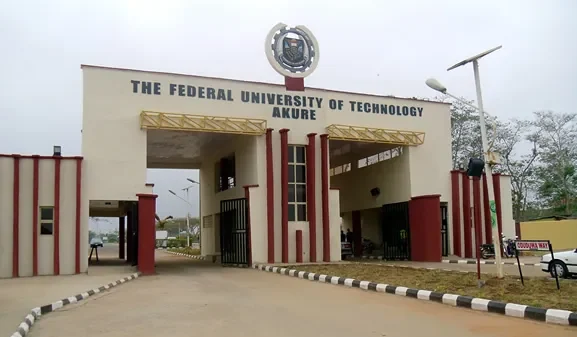
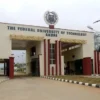
The Federal University of Technology, Akure (FUTA) has received a ₦1 billion grant from the Federal Government to scale up its commercial agriculture project and strengthen research-based food production initiatives. The fund, approved under President Bola Ahmed Tinubu’s 2025 Special Intervention Programme for Agricultural Commercial Farms, represents one of the most significant federal allocations to a tertiary institution’s agricultural program in recent years.

The approval was formally conveyed to the university through a letter signed by the Executive Secretary of the Tertiary Education Trust Fund (TETFund), Arc. Sonny Echono. In the letter addressed to FUTA’s Vice Chancellor, Professor Adenike Oladiji, Echono stated that the allocation was made in accordance with the provisions of the TETFund Act of 2011 and forms part of the government’s broader efforts to enhance food security through academic-driven innovation.

“Further to the approval of the 2025 intervention budget by President Bola Ahmed Tinubu, GCFR, and in line with the provisions of the TETFund Act, I hereby convey the allocation of the sum of one billion naira only for the Agricultural Commercial Farm in your institution,” the letter read. Echono emphasized that the grant is aimed at transforming FUTA’s commercial farm into a model for sustainable agribusiness and food production in Nigeria.

Strengthening Research-Driven Food Security

The initiative reflects the Tinubu administration’s renewed focus on integrating higher education and agricultural development to tackle Nigeria’s persistent food supply challenges. Under the Special Intervention Programme, selected universities are being equipped to become innovation hubs for commercial-scale farming, crop improvement, and value-chain development.

FUTA has long been recognized as one of Nigeria’s leading institutions in agricultural technology and applied research. The new fund is expected to accelerate the university’s capacity to translate academic research into practical agricultural outcomes that benefit both farmers and the national economy.

Vice Chancellor’s Response

Reacting to the development, FUTA’s Vice Chancellor, Professor Adenike Oladiji, expressed gratitude to President Tinubu and TETFund for the intervention, describing it as a “major milestone” in the university’s journey toward agricultural excellence.

“This allocation is a further testament to FUTA’s relevance in tackling food insecurity in Nigeria,” she said. “FUTA is fully committed to providing innovative solutions through agricultural research and technology. We will ensure that the funds are judiciously used to expand our commercial farm operations and empower the local farming community.”

Professor Oladiji highlighted that FUTA’s Teaching and Research Farm has already made remarkable progress in developing and cultivating high-yield, pest-resistant F1 hybrid species of bell peppers and tomatoes. These improved varieties, developed by the university’s agricultural scientists, have proven to outperform traditional types in productivity, resilience, and shelf life.

“Our vegetable production center is ready to assist local farmers in adopting these improved species,” she added. “Beyond research, we aim to make a direct impact on food availability and quality in Nigeria.”

She further revealed that the university had recently doubled the number of trees in its palm plantation and commenced the construction of additional greenhouses to support vegetable cultivation and agro-technology training. “This fund will give new energy to our commercial farming activities,” she affirmed. “I can assure the President that FUTA will deliver on this mandate and make measurable contributions to Nigeria’s agricultural transformation.”

Driving Inclusive Agricultural Innovation

The ₦1 billion allocation underscores the Federal Government’s strategy to reposition tertiary institutions as key players in Nigeria’s agricultural value chain. Through TETFund’s support, FUTA’s commercial farm will serve as a model for modern mechanized agriculture, agro-processing, and agribusiness incubation.

The university’s project aligns with national priorities to strengthen food self-sufficiency, reduce post-harvest losses, and promote local production of key staples. It also supports the administration’s goal of attracting youth participation in agriculture through training, technology transfer, and entrepreneurial initiatives.

FUTA’s commercial farm was originally established as a hybrid teaching, research, and production center aimed at bridging the gap between theory and practice. With the new funding, the institution plans to expand its production capacity, enhance mechanization, and establish stronger linkages with smallholder farmers and agribusinesses across the Southwest region.

Analysts say the project could serve as a blueprint for other universities seeking to diversify revenue streams and foster industry-academic collaboration. By leveraging science, innovation, and public-private partnerships, FUTA’s initiative could help transform Nigeria’s agricultural sector from subsistence to commercial scale.

As the global demand for sustainable and climate-resilient agriculture continues to grow, FUTA’s advancement in agritech and crop innovation positions it as a major player in shaping Nigeria’s food future. The N1 billion intervention fund, therefore, marks not just a boost for the university but a strategic step toward achieving national food sovereignty and economic diversification.

Speaker Abbas urges Algeria to adopt visa-free policy for Nigerians to enhance trade, education, and research ties

  • dollaers
  • October 22, 2025
  • Law, Scholarships / Financial Aid
  • 0 comments

The Speaker of Nigeria’s House of Representatives, Rt. Hon. Abbas Tajudeen, has called for visa-free access and simplified visa procedures between Nigeria and Algeria to deepen bilateral trade, research collaboration, and people-to-people relations.

Tajudeen made the appeal during a meeting with Algeria’s Minister of Foreign Affairs, National Community Abroad and African Affairs, Mr. Ahmed Attaf, in Algiers. The details were contained in a statement by Musa Abdullahi Krishi, Special Adviser on Media and Publicity to the Speaker.

Pushing for a Nigeria–Algeria visa facilitation framework

According to the statement, Speaker Abbas proposed that both countries’ parliaments work together to develop a bilateral visa facilitation framework. This, he said, should include visa-free access for holders of diplomatic and official passports, and simplified visa processes for business executives, students, researchers, and tourists.

He stressed that easing movement between both nations would strengthen cooperation under the African Continental Free Trade Agreement (AfCFTA), remove barriers to trade, and promote regional economic growth.

Strengthening bilateral relations

Recalling earlier discussions between Algeria’s foreign minister and Nigeria’s Minister of Foreign Affairs, Ambassador Yusuf Tuggar, Tajudeen emphasized the need to revive the Nigeria–Algeria Binational Commission to serve as a platform for sustained strategic engagement.

“Our parliaments must take the lead in restoring the Binational Commission to ensure continuity and structure in our bilateral cooperation,” he said.

Tajudeen also highlighted the ongoing construction of a new Nigerian Embassy chancery in Algiers as a demonstration of Nigeria’s commitment to improving diplomatic relations and providing better consular services to its citizens.

Support for the Trans-Saharan Gas Pipeline Project

The Speaker reaffirmed Nigeria’s legislative backing for the Trans-Saharan Gas Pipeline Project (TSGP) and pledged to mobilize support from other West African parliaments participating in the initiative.

He noted that the project represents a critical step toward enhancing Africa’s energy security and expanding gas exports to Europe.

Algeria welcomes deeper cooperation

According to Algerian media outlet Al24, the meeting provided an opportunity for both sides to review existing areas of cooperation and explore new opportunities in trade, energy, and parliamentary diplomacy.

Algeria’s Ministry of Foreign Affairs described the engagement as part of efforts to give “greater momentum” to Algeria–Nigeria relations, emphasizing the role of legislative collaboration in supporting regional integration and strategic projects.

Background: Strengthening energy and economic ties

The meeting follows Nigeria’s signing of a tripartite agreement with Algeria and Niger Republic in February 2025 to advance the TSGP. The project aims to transport up to one trillion cubic feet of natural gas annually through a 2,565-mile pipeline linking Nigeria’s Warri hydrocarbon fields to Algeria’s Hassi R’Mel hub on the Mediterranean coast.

By advocating for visa-free access and parliamentary cooperation, Speaker Abbas aims to position Nigeria and Algeria as stronger economic and strategic partners within Africa and beyond.

Forgot Password
Please enter your email address or username below.
*
 
Login
*
*
Lost Your Password
Dont have account? Signup