



Creator
  • Type:
  • Genre:
  • Duration:
  • Average Rating:
Log In
 
  • Marketplace
Log In
 
  • Type:
  • Genre:
  • Duration:
  • Average Rating:
  • Marketplace

Budget

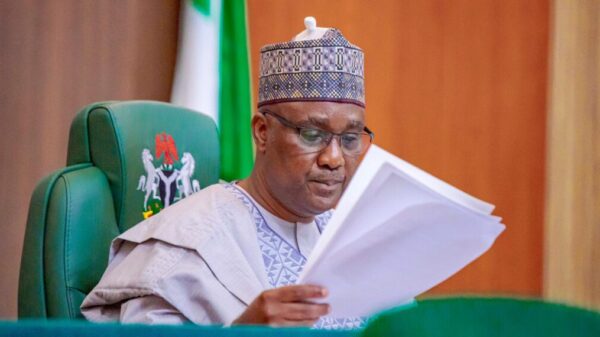
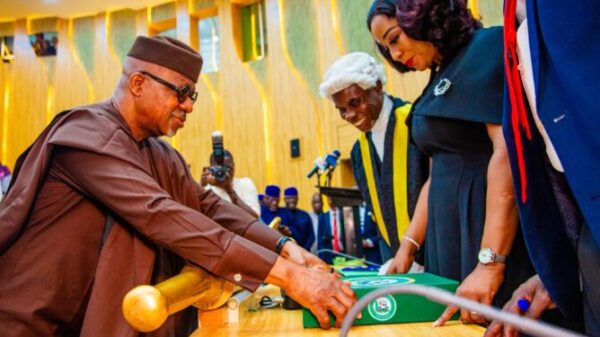
Gov. Dapo Abiodun Presents N1.66 Trillion 2026 Budget Proposal to Ogun Assembly

  • dollaers
  • December 4, 2025
  • Budget
  • 0 comments

Ogun State Governor, Prince Dapo Abiodun, has formally presented the 2026 Appropriation Bill valued at N1.66 trillion to the State House of Assembly, marking a major step toward advancing his administration’s economic agenda and long-term development vision. The budget proposal, unveiled on Wednesday at the Assembly Complex in Abeokuta, has been tagged the “Budget of Sustainable Legacy”, signifying a focus on strengthening the state’s economic foundation while accelerating investments in infrastructure, social services, and institutional reforms.

The proposed budget represents a 57% increase over the N1.055 trillion approved for the 2025 fiscal year. Governor Abiodun explained that the sizable growth in expenditure reflects both the ambitious revenue outlook of the state and its strategic priorities, especially in industrial expansion, infrastructure modernization, and human capital development.

Capital and Recurrent Expenditure Framework

In his budget presentation, the governor highlighted the fiscal structure of the 2026 spending plan, demonstrating a strong emphasis on capital investments. Out of the total N1.66 trillion:

  • N1.044 trillion, representing 63%, has been earmarked for capital expenditure

  • N624.76 billion, equivalent to 37%, has been allocated for recurrent expenditure

The recurrent component, which covers the cost of running government institutions, is further broken down as follows:

  • Personnel costs: N167.92 billion

  • Public debt charges: N99.98 billion

  • Overhead costs: N291.06 billion

Governor Abiodun emphasized that the dominant allocation to capital projects underscores his administration’s focus on long-term economic gains, job creation, and improved public services across the state.

Revenue Composition and Funding Sources

To finance the 2026 budget, the governor outlined a blend of internally generated revenue, federal allocations, and capital receipts. A key focus is boosting the state’s internal revenue base, in line with the administration’s broader strategy to minimize dependence on federal allocations.

According to the proposal:

  • N250 billion is projected to come from the Ogun State Internal Revenue Service (OGIRS)

  • N259.88 billion is expected from other Ministries, Departments, and Agencies (MDAs)
    This brings the projected Internally Generated Revenue (IGR) to a total of N509.88 billion.

In addition, the state anticipates N554.81 billion in federal revenue through statutory allocations, Value Added Tax (VAT), and other shared receipts. A further N518.90 billion will be sourced through capital receipts, including internal and external loans as well as development grants.

Sectoral Priorities and Allocations

Governor Abiodun presented a detailed breakdown of sectoral spending, reflecting his administration’s development priorities:

  • Infrastructure: N526.15 billion (32%)

  • Education: N275 billion (17%)

  • Health: N210.59 billion (13%)

  • Housing & Community Development: N166.96 billion (10%)

  • Social Protection: N72.82 billion (4%)

  • Recreation, Culture & Religion: N42.24 billion (3%)

  • Agriculture & Industry: N40.54 billion (2%)

He stated that infrastructure development, including roads, industrial parks, and energy access, remains central to the administration’s plans for economic growth and investment attraction. Allocations for education and health also reflect an expanded push to improve access to quality learning and medical services.

Economic Outlook and Commitment

Despite macroeconomic pressures—ranging from inflation to forex challenges—Governor Abiodun expressed confidence in the state’s economic trajectory. He noted Ogun’s position as one of Nigeria’s leading contributors to non-oil revenue and described the state as a top industrial hub with strong policy continuity and administrative efficiency.

“Our administration remains steadfast in building a strong and productive economy, empowering citizens, and promoting inclusive development,” he said.

Legislative Collaboration

Responding to the presentation, the Speaker of the House of Assembly, Rt. Hon. Oludaisi Elemide, pledged full legislative cooperation to ensure expedited review and passage of the budget. He reaffirmed the Assembly’s commitment to supporting both the executive and judiciary arms of government in advancing the state’s development agenda.

Long-Term Revenue Ambitions

The budget presentation follows recent disclosures that Ogun State is setting an ambitious target to generate N500 billion in IGR for the 2026 fiscal year. According to the governor, the ultimate goal is to expand annual IGR to N750 billion by 2027, leveraging the state’s industrial base, proximity to Lagos, and strategic infrastructure projects currently underway.

Abiodun stated that the administration aims to use the next two fiscal years to entrench a sustainable revenue framework, deepen private-sector partnerships, and ensure that Ogun remains competitive both nationally and internationally.

Governor Peter Mbah Presents ₦1.62 Trillion 2026 Budget to Enugu State Assembly, Targets Accelerated Growth and Consolidation

  • dollaers
  • December 3, 2025
  • Budget
  • 0 comments

Governor Peter Mbah has presented a ₦1.62 trillion appropriation bill to the Enugu State House of Assembly for the 2026 fiscal year, marking the state’s most ambitious budget yet and signalling his administration’s determination to scale up development gains recorded over the past two years. The budget proposal, themed “Budget of Renewed Momentum,” reflects a 66.5% increase from the ₦971 billion budget for 2025, underscoring a strategic push to deepen reforms and infrastructure expansion across the state.

While addressing lawmakers in Enugu on Tuesday, Mbah said the stepped-up fiscal proposal was essential for sustaining the pace of transformation already visible across key sectors. According to him, the substantial increase demonstrates the government’s resolve to invest heavily in human capital development, modern infrastructure, productive sectors of the economy, and governance systems capable of supporting long-term growth.

Capital Expenditure Dominates 2026 Spending Plan

A major highlight of the 2026 proposal is the allocation structure, which overwhelmingly favours capital investment. Governor Mbah disclosed that ₦321 billion—representing 20% of the entire budget—has been set aside for recurrent expenditure, covering personnel, overheads, and general administration.

In contrast, a significantly larger ₦1.29 trillion is dedicated to capital expenditure, reaffirming the administration’s commitment to transformative, long-term projects. Mbah explained that the budget is anchored on four core pillars that shape his administration’s development philosophy:

  1. Empowerment and Education

  2. Inclusive and People-Centred Development

  3. Good Governance

  4. Economic Transformation

“These pillars form the bedrock of our development agenda and will guide how every naira in this budget is deployed,” the governor told the Assembly, noting that the strategy is designed to accelerate economic expansion, reduce poverty, and enhance overall quality of life.

Funding Structure and Revenue Projections

The government anticipates a robust revenue outlook in 2026, anchored on improved efficiency in internal revenue collection and ongoing federal allocations. To fund the ₦1.62 trillion package, the administration projects:

  • ₦870 billion from Internally Generated Revenue (IGR)

  • ₦387 billion from Federal Allocation

  • ₦329 billion from capital receipts, including loans, grants, and investment inflows

Mbah expressed confidence that ongoing reforms in revenue automation, digital governance, and private-sector partnerships will strengthen the state’s capacity to meet these targets.

Sectoral Allocations Prioritise Infrastructure and Social Development

According to the governor, the economic sector received the largest share of the budget, with an allocation of ₦825 billion. This funding will support critical infrastructure projects, agricultural development programmes, industrial parks, transportation networks, and initiatives to promote investment.

The social sector—covering education, healthcare, social welfare, and other human capital programmes—received ₦644 billion, reflecting the administration’s emphasis on building a skilled and healthy population capable of driving the state’s transformation agenda.

Other allocations include:

  • Administration: ₦128 billion

  • Law and Justice: ₦15 billion

  • Regional Sector: ₦2 billion

2025 Budget Performance Reaches 83%

Governor Mbah also gave an update on the implementation of the 2025 budget, revealing a performance level of 83%. He noted that as the year wraps up, this figure is expected to rise further as ongoing projects approach completion.

Assembly Pledges Full Support

Responding to the presentation, the Speaker of the Enugu State House of Assembly, Chief Uche Ugwu, praised the governor for what he described as an impressive track record of achievements in just two years. He assured the executive of the legislature’s cooperation and promised accelerated consideration of the 2026 appropriation bill.

“We remain committed to giving this budget the priority attention it deserves so that the developmental objectives of this administration can be realised,” Ugwu stated.

Strategic Economic Moves Ahead

This budget presentation comes months after the state government signed a landmark Memorandum of Understanding (MoU) with Lion Business Park Limited to establish a modern industrial and commercial hub within the Enugu Industrial Park Free Trade Zone. The initiative aims to raise the state’s GDP dramatically—from $4.4 billion to $30 billion—by stimulating innovation, industrial growth, employment, and regional competitiveness.

Governor Mbah reiterated that the 2026 budget is crafted to sustain this growth trajectory, foster shared prosperity, and entrench Enugu State as an emerging economic powerhouse in the South-East and Nigeria at large.

Kaduna Governor Uba Sani Presents N985.9 Billion “People-Oriented” 2026 Budget to State Assembly

  • dollaers
  • December 2, 2025
  • Budget
  • 0 comments

Kaduna State Governor, Senator Uba Sani, on Monday laid before the Kaduna State House of Assembly a N985.9 billion Appropriation Bill for the 2026 fiscal year, describing it as one of the most people-focused and development-driven budgets the state has ever produced. The proposed spending plan—nearly N200 billion higher than the N790 billion budget for 2025—seeks to consolidate gains in security, infrastructure, education, healthcare, and rural development while deepening inclusive governance across all local government areas.

Presenting the budget at the historic Lugard Hall in Kaduna, the Governor emphasized that the exercise was far more than a constitutional obligation. It was, according to him, “a solemn civic engagement anchored on transparency, equity, accountability, and the welfare of every resident of Kaduna State.” He added that the 2026 proposal embodies renewal, resilience, and a far-reaching vision for progress in every home, ward, and community.

A Budget Built on Unprecedented Consultations

Governor Sani disclosed that the 2026 draft budget went through one of the broadest multi-level consultative processes ever implemented in Kaduna State. Stakeholders who shaped the fiscal plan included traditional rulers, civil society groups, women and youth associations, academics, business leaders, religious leaders, and vulnerable groups such as persons with disabilities and widows.

Engagements were conducted across all 23 local government areas, ensuring that grassroots concerns—from farmers to artisans, traders, teachers, and rural households—were directly reflected in the final document. The Governor said this approach strengthens participatory democracy and gives citizens a stronger sense of ownership over the state’s development priorities.

Budget Structure and Sectoral Allocation

The Appropriation Bill forecasts N734.2 billion in recurrent revenue and N251.6 billion in capital receipts. In line with the administration’s focus on long-term development, capital expenditure accounts for 71% of the total budget.

Sectoral allocations include:

  • Education – 25%

  • Infrastructure – 25%

  • Health – 15%

  • Agriculture – 11%

  • Security – 6%

  • Social Development – 5%

  • Governance – 5%

  • Climate Action – 4%

As part of its community empowerment and grassroots development strategy, the government earmarked N100 million for each of Kaduna’s 255 wards under the Ward Development Committee initiative. Sani described it as the largest grassroots budgeting model in Nigeria, enabling communities to identify and execute projects that directly address their most urgent needs.

Review of 2025: Achievements Despite Headwinds

Governor Sani highlighted several notable achievements in the 2025 fiscal year, despite economic challenges, fluctuating federal allocations, and significant security concerns.

In the area of security, he said Kaduna had made measurable progress in combating banditry, kidnapping, and communal tensions. Many previously unsafe farmlands and schools were reopened, and peacebuilding interventions under the Kaduna Peace Model helped restore stability across volatile hotspots.

Infrastructure development also accelerated. The state is currently executing 140 road projects spanning 1,335 kilometers, with 64 already completed. These new roads have begun unlocking economic corridors and reconnecting rural communities neglected for decades.

The transport sector recorded major reforms, including:

  • The upcoming Kaduna Bus Rapid Transit (KBRT) system—Northern Nigeria’s first—featuring CNG-powered buses and digital ticketing.

  • An interstate bus terminal in Kakuri (75% completed).

  • A subsidised transport scheme that has saved residents over N500 million.

  • Continued progress on the Kaduna Light Rail Project, with Phase I covering Rigachikun–Sabon Tasha and Phase II connecting Millennium City–Rigasa.

  • Construction of new bus parks across the metropolis.

Agriculture and Food Security Gains

Agricultural investments surged from N1.4 billion in 2023 to N74.2 billion in 2025, enabling large-scale recovery of over 500,000 hectares of abandoned farmland. Farmers also benefited from expanded irrigation support, livestock vaccination campaigns, mechanisation programmes, seed distribution, and more than 900 truckloads of free fertiliser.

The Governor highlighted the state’s participation in the $510 million AfDB-supported Special Agro-Industrial Processing Zone, which positions Kaduna as a leading agro-industrial centre in West Africa.

Education and Health: Central Pillars of Human Capital Development

The administration recorded significant strides in education. In 2025 alone:

  • 535 schools were reopened,

  • 300,000 out-of-school children returned to classrooms,

  • 736 new classrooms were built,

  • 1,220 classrooms were renovated,

  • Over 33,000 teachers received training, and

  • New bilingual and vocational schools were established.

In the health sector, all 255 Primary Healthcare Centres were upgraded to Level 2 status, while 15 general hospitals were renovated and five more completed. The state also commissioned the 300-bed Bola Tinubu Specialist Hospital and implemented the CONMESS and CONHESS wage structures. Additional investments went into emergency response systems, oxygen plants, digital medical warehousing, and a N1 billion health insurance subsidy for vulnerable families.

Assembly Commends Proposal

Responding on behalf of the legislature, Speaker Yusuf Liman praised the budget as ambitious, comprehensive, and development-focused. He commended the Governor for empowering lawmakers with greater involvement in constituency projects—a first in Kaduna’s political history—and promised a thorough and transparent review process.

He assured residents that the Assembly would work harmoniously with the Executive to fast-track reforms and ensure balanced, statewide development.

Governor Bala Mohammed Presents N878 Billion 2026 Budget to Bauchi Assembly

  • dollaers
  • November 28, 2025
  • Budget
  • 0 comments

Bauchi State Governor, Bala Mohammed, has presented an N878 billion Appropriation Bill for the 2026 fiscal year to the State House of Assembly, marking one of the most ambitious financial proposals in the state’s history. The governor made the presentation on Thursday in Bauchi, describing the proposal as a “Budget of Consolidation and Sustainability,” and assuring lawmakers of its full and effective implementation.

During the presentation, Mohammed emphasized that the budget was structured in compliance with the national chart of accounts and reflects the administration’s commitment to strengthening ongoing reforms across critical sectors. The proposed 2026 budget allocates N567 billion, or 65%, to capital expenditure, while N310 billion, representing 35%, is dedicated to recurrent spending. This distribution underscores the government’s focus on infrastructure development, service delivery improvement, and long-term socioeconomic growth.

Budget Growth Driven by Reforms

Governor Mohammed noted that the 2026 budget represents a 41.07% increase compared to the 2025 estimates. He attributed this substantial rise to enhanced revenue prospects driven by state-led reforms and the projected effects of tax adjustments scheduled for implementation in January 2026. According to him, the administration adopted a conservative revenue framework, aligning the proposal with the Medium-Term Expenditure Framework (MTEF) and the state’s Fiscal Responsibility Law to ensure fiscal realism and execution feasibility.

Mohammed highlighted that the state has recorded improvements in internally generated revenue, partly due to financial reforms and efforts to plug leakages. These gains, he said, provided a foundation for the expanded 2026 fiscal plan.

Sectoral Allocation: Economic Sector Dominates Spending

Providing a breakdown of the proposed allocations, the governor revealed that the economic sector accounts for the largest share of the budget, receiving N435 billion, or 49.6% of the total. This category covers agriculture, public works, transport, commerce, and other growth-enabling sectors critical to job creation and poverty reduction.

The administrative sector is set to receive N120 billion, representing 13.7%, while the Law and Justice sector has been allocated N12 billion, equal to 1.4% of the total. The social sector, which encompasses education, healthcare, and social welfare, is assigned N310 billion, representing 34.4% of the overall budget.

Mohammed explained that the allocations reflect the government’s priorities of strengthening human capital, enhancing infrastructure, and expanding economic opportunities for citizens.

Review of 2025 Budget and Expectations for 2026

While reviewing the performance of the ongoing 2025 budget, the governor reported an impressive 79.1% implementation rate as of September 2025. He expressed confidence that the 2026 budget would achieve at least 85% implementation, citing improved planning, disciplined financial management, and enhanced revenue mobilization efforts.

The governor appealed for sustained cooperation from the House of Assembly to fast-track the passage of the Appropriation Bill, stressing that timely approval is essential to maintaining the momentum of development across the state.

Assembly Promises Quick Passage

In his response, the Speaker of the Bauchi State House of Assembly, Abubakar Sulaiman, commended the governor for presenting the budget early and reaffirmed the legislature’s commitment to thoroughly and promptly reviewing the proposal. He praised the administration for its developmental strides and pledged the Assembly’s unwavering support for initiatives aimed at improving residents’ welfare.

Additional Context

Earlier in July, the Bauchi State Government disclosed that investments in the state’s gypsum and limestone resources had surpassed $1.5 million, accelerating plans for establishing a state-owned cement production company. This development aligns with the administration’s broader economic diversification goals, which are reflected in the heavy allocation to the economic sector in the 2026 budget.

Delta Governor Oborevwori Presents N1.664 Trillion 2026 Budget to State Assembly

  • dollaers
  • November 27, 2025
  • Budget
  • 0 comments

Delta State Governor, Sheriff Oborevwori, has presented a N1.664 trillion Appropriation Bill for the 2026 fiscal year to the State House of Assembly in Asaba, marking one of the most ambitious financial proposals in the state’s history. The presentation, made during plenary, outlines the administration’s priorities for accelerating infrastructural development, strengthening economic resilience, and expanding social investments across the state.

Governor Oborevwori explained that the proposed budget is structured to reinforce his administration’s commitment to inclusive growth and long-term development. Of the total amount, N499 billion—representing 30% of the budget—is dedicated to recurrent expenditure. This allocation covers salaries, pensions, overheads, and the day-to-day operations of government institutions. The remaining N1.165 trillion, or 70%, is earmarked for capital projects, reflecting the administration’s strong emphasis on infrastructure expansion, economic diversification, and strategic investments in critical sectors.

The 2026 proposal represents a dramatic increase of N685 billion—about 70%—over the 2025 budget. The governor attributed the expansion to the state’s intensified development agenda and the need to address infrastructural deficits that constrain economic activity. He added that the higher capital allocation aligns with his promise to deliver visible and transformative projects under the “MORE Agenda,” which targets meaningful development, opportunities for all, realistic reforms, and enhanced peace and security.

Speaking further on funding sources, Governor Oborevwori disclosed that revenues for the fiscal year will be drawn from statutory allocations, internally generated revenue (IGR), Value Added Tax (VAT), the 13% oil derivation fund, and other legally recognized income streams. He emphasized that strengthening IGR mechanisms remains a central priority, especially as the administration seeks to reduce dependence on federal allocations and ensure more stable financial planning.

A major highlight of the budget is the allocation of N450 billion for road infrastructure. The governor stressed that well-constructed and well-maintained roads are essential for driving Delta State’s economic ambitions. He explained that improved road networks will lower transportation costs, enhance access to local and urban markets, attract new investments, strengthen inter-community linkages, and create thousands of jobs through construction and ancillary services. He also reaffirmed his administration’s commitment to completing ongoing road projects and initiating new ones in underserved communities.

Beyond infrastructure, agriculture remains a core component of the 2026 development plan. The budget sets aside N10 billion for the Ministry of Agriculture and Natural Resources to expand mechanized farming, support agribusinesses, and strengthen value chains in key commodities. Governor Oborevwori underscored that agriculture is central to economic diversification, poverty reduction, and food security. He noted that the administration will continue to invest in training, incentives, and modern tools to empower farmers across Delta State.

During his presentation, the governor called on lawmakers to give the budget swift consideration, stressing that timely approval is necessary to maintain momentum in project execution and service delivery. He pledged that his administration would continue to build “a prosperous, secure, and stronger Delta where no one is left behind.”

Responding on behalf of the Assembly, Speaker Rt. Hon. Dennis Guwor commended the governor for his achievements during the past year. He noted significant progress under the ‘Renewed Hope for MORE Agenda,’ including investments in infrastructure, social welfare programs, and prudent fiscal management. Guwor also praised the governor for approving the Consolidated Legislative Salary Structure (CONLESS) and initiating the construction of permanent offices for the Assembly Service Commission.

The Speaker assured the governor that the 8th Assembly would conduct a thorough and efficient review of the budget proposal. While affirming the Legislature’s constitutional independence, Guwor emphasized that both arms of government share a unified goal—delivering sustainable development and improving the lives of citizens across Delta State.

Gov. Otti Presents N1.016 Trillion 2026 Budget Proposal to Abia State House of Assembly

  • dollaers
  • November 27, 2025
  • Budget
  • 0 comments

Abia State Governor, Dr. Alex Otti, has formally submitted a 2026 budget estimate of N1.016 trillion to the Abia State House of Assembly, marking a significant fiscal step for the state as it pursues deeper economic transformation and institutional strengthening. The presentation, made on Wednesday, was announced in a statement issued by the Governor’s Chief Press Secretary, Ukoha Njoku Ukoha.

The proposed budget—aptly titled “Budget of Acceleration and New Possibilities”—signals the administration’s intention to build on the momentum created in 2025. The new estimate represents a 13% increase over the previous year’s budget, underscoring the state government’s expanded ambitions in infrastructure renewal, social sector investments, and governance reforms.

A central feature of the proposal is its heavy emphasis on capital development. Of the N1.016 trillion outlay, a substantial N811.8 billion (80%) has been earmarked for capital expenditure. This marks not only a prioritization of long-term developmental projects but also a 32% increase in capital spending compared to the 2025 projection of N726.4 billion. In contrast, recurrent expenditure is set at N204.4 billion (20%), which itself reflects a 33% rise from last year’s recurrent appropriation of N136 billion.

Governor Otti explained that the increase in recurrent spending is primarily driven by administrative and workforce needs, especially following the onboarding of thousands of newly recruited employees across various sectors of the state government. According to him, the adjustments were necessary to adequately fund essential public services, sustain operational efficiency, and support the personnel structure required to deliver on the administration’s development agenda.

While presenting the budget, Governor Otti emphasized that the fiscal plan is aligned with the goal of accelerating socioeconomic development through strategic investments in infrastructure, social welfare, security architecture, and institution-building—pillars he described as critical to the “ongoing transformation” of Abia State. He highlighted that the administration is committed to sustaining policies and projects that stimulate growth and improve citizens’ quality of life.

The proposed budget gives strong attention to key social sectors. Education receives 20% of the total allocation, while health is assigned 15%, bringing their combined share to 35% of the 2026 budget. This focus reinforces Otti’s long-stated commitment to strengthening human capital as a driver of long-term prosperity.

Infrastructure remains one of the most heavily funded priorities. The budget allocates N169.3 billion for road construction, reconstruction, rehabilitation, and maintenance. This includes ongoing projects as well as new interventions aimed at improving mobility, opening up economic corridors, and easing transportation challenges across urban and rural communities.

The government also outlined the revenue assumptions guiding the budget. The 2026 plan is built on conservative revenue projections that take into account the economic conditions of 2025. Internally generated revenue is expected to hit N223.4 billion. Governor Otti noted that the administration intends to finance all recurrent expenditure solely from IGR, which he described as a strategic approach to strengthening fiscal responsibility. Any borrowing, he emphasized, would be strictly tied to infrastructure projects that can stimulate growth and generate long-term value.

Overall, the N1.016 trillion budget proposal reflects the Otti administration’s drive to consolidate recent gains and deepen reforms. With its blend of aggressive capital investment, social sector expansion, and prudent fiscal planning, the 2026 budget charts a trajectory aimed at accelerating development while opening new possibilities for economic advancement and institutional renewal in Abia State.

  • ‹ Previous
  • 1
  • 2
  • 3
Forgot Password
Please enter your email address or username below.
*
 
Login
*
*
Lost Your Password
Dont have account? Signup