





























The Federal Government has budgeted a total of N92.9 billion for electricity and diesel expenses across ministries, departments, and agencies (MDAs) in the 2026 fiscal year, underscoring the persistent financial burden of Nigeria’s unreliable power supply on public sector operations.
Details contained in the 2026 Appropriation Bill reveal that energy-related recurrent expenditure remains a major cost item for federal institutions, despite years of reforms aimed at improving electricity generation, transmission, and distribution. The proposed allocations indicate that MDAs continue to rely heavily on a combination of grid electricity and diesel-powered generators to sustain daily operations.
The scale of the planned spending reflects a reality in which public institutions are still preparing for power shortfalls rather than depending on stable electricity supply from the national grid. Analysts note that this trend highlights the slow pace of improvement in grid reliability and the enduring dependence on alternative power sources.
Electricity spending concentrated in key sectors
A breakdown of the proposed budget shows that electricity allocations are spread across nearly all MDAs, with the defence, health, and education sectors accounting for the largest shares. These sectors operate energy-intensive facilities that require uninterrupted power to function effectively.
The Ministry of Defence tops the list with an allocation of N16.16 billion for electricity. The provision is intended to cover the energy needs of military formations, barracks, training facilities, and operational bases across the country, many of which require round-the-clock power for security and logistics.
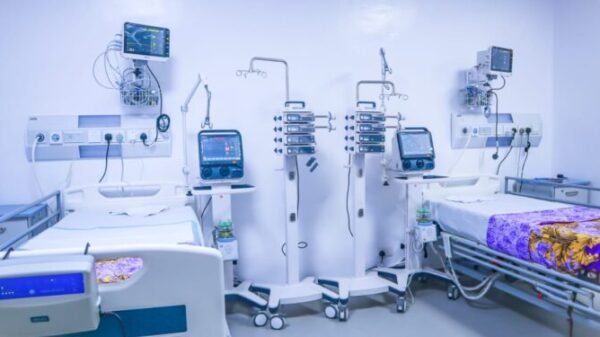
The Federal Ministry of Health and Social Welfare follows with N9.43 billion earmarked for electricity expenses. This allocation reflects the significant power requirements of teaching hospitals, federal medical centres, and other healthcare institutions, where electricity is critical for medical equipment, laboratories, and emergency services.
The Federal Ministry of Education is projected to spend N8.23 billion on electricity, covering federal universities, colleges of education, unity schools, and other educational institutions under federal control. Rising enrolment levels and expanding campus infrastructure have further increased energy demand within the education sector.
Other MDAs with notable electricity allocations include the Ministry of Police Affairs, with N3.69 billion, the Office of the National Security Adviser at N3.59 billion, and the Ministry of Foreign Affairs at N3.49 billion, largely linked to the operation of Nigeria’s diplomatic missions and facilities both locally and abroad.
The Presidency is expected to spend close to N2 billion on electricity, while ministries such as Agriculture, Transport, Interior, Budget and Economic Planning, and Science and Technology have allocations running into several hundreds of millions of naira.
Even regulatory and oversight bodies are not exempt. Institutions such as the Independent Corrupt Practices and Other Related Offences Commission, the Code of Conduct Bureau, the Office of the Auditor-General of the Federation, and the Revenue Mobilisation, Allocation and Fiscal Commission all made electricity provisions ranging from tens to hundreds of millions of naira.
Diesel dependence remains widespread
Beyond grid electricity costs, the budget highlights extensive spending on diesel, reflecting MDAs’ continued reliance on generators due to unstable power supply. Diesel expenditure alone accounts for a significant portion of the N92.9 billion energy allocation.
The Ministry of Health and Social Welfare again leads diesel spending with N8.29 billion, followed closely by the Ministry of Defence at N6.6 billion and the Ministry of Education at N5.75 billion. These figures underscore the high operational costs faced by institutions that cannot afford power disruptions.
Other major diesel spenders include the Office of the Secretary to the Government of the Federation, the Office of the National Security Adviser, and the Ministry of Foreign Affairs, which together account for over N3.6 billion. Ministries such as Interior, Justice, Police Affairs, Agriculture and Food Security, Budget and Economic Planning, and Information and National Orientation each budgeted between several hundreds of millions and over N1 billion for diesel.
Smaller agencies, including the Code of Conduct Tribunal, Police Service Commission, and Federal Character Commission, also made diesel provisions, though at comparatively lower levels.
Why this matters
The magnitude of electricity and diesel spending in the 2026 budget reinforces concerns about the fiscal cost of Nigeria’s longstanding power challenges. Heavy reliance on diesel not only strains public finances but also exposes MDAs to fuel price volatility and environmental concerns.
Despite repeated assurances of progress in the power sector, the budget figures suggest that public institutions are still planning for unreliable electricity supply. Analysts argue that without significant improvements in grid stability, energy costs will continue to divert resources away from service delivery, infrastructure development, and social programmes.
Background on power sector reforms
In 2025, the Federal Government issued the first bond under the Presidential Power Sector Debt Reduction Programme, aimed at clearing long-standing payment arrears owed to power generation companies and gas suppliers. While the initiative marked a major step toward stabilising the sector financially, operational challenges persist.
Nigeria’s power sector has long struggled with limited generation capacity, transmission bottlenecks, and distribution inefficiencies. Although recent reforms have expanded private sector participation and state-level involvement in electricity generation and distribution, grid reliability remains weak, particularly for large public institutions.
The 2026 budget figures suggest that meaningful structural improvement in electricity supply may still take time, with MDAs continuing to bear the cost of power sector shortcomings through rising energy expenditure.

Emmanuel Bassey is a Financial Expert that has worked in the Banking and Finance Industry for over 15+ years across different banks in Nigeria


