






















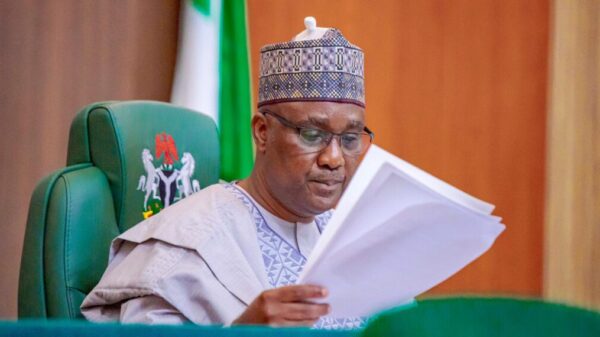


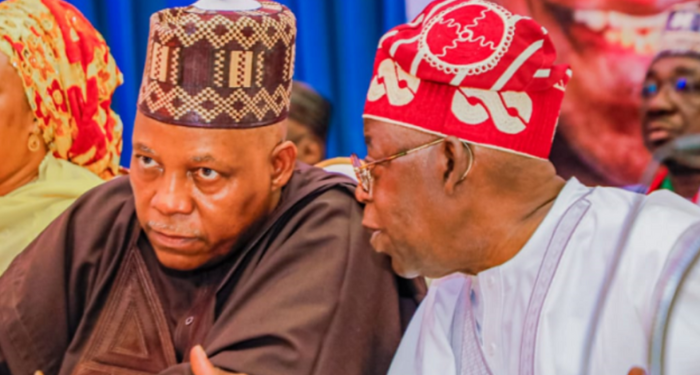
President Bola Ahmed Tinubu and Vice-President Kashim Shettima are collectively allocated N11.03 billion for State House operations in the 2026 fiscal year, according to details contained in the 2026 Appropriation Bill presented to the National Assembly. The figures, analysed by Nairametrics, provide insight into the cost structure of running Nigeria’s Presidency amid ongoing fiscal consolidation efforts.
Budget data extracted from the Appropriation Bill show that the State House Headquarters remains the single largest cost centre within the Presidency. In total, N43.191 billion has been earmarked for the headquarters, which houses the offices of the President, Vice-President, and other key units that support executive governance.
A closer look at the allocation reveals that capital expenditure dominates the State House budget. Out of the N43.191 billion total, capital spending accounts for N30.487 billion, reflecting ongoing investments in infrastructure, rehabilitation, and upgrades within the Presidential Villa and associated facilities. Personnel costs are estimated at N2.643 billion, while overhead expenses are projected at N10.060 billion.
Specifically, the President’s State House Operations vote is allocated N8.386 billion for 2026. This covers a wide range of administrative and operational expenses tied to the Office of the President, including travel, logistics, and day-to-day running costs. The Office of the Vice-President, on the other hand, received an allocation of N2.642 billion to support its own operations during the fiscal year.
Further disaggregation of the Presidency’s budget shows that the Office of the Chief of Staff to the President is allocated N1.360 billion. Notably, N1.00 billion of this amount is set aside for overhead costs alone, highlighting the administrative intensity of the role. Additional provisions under this office include N312.91 million for local training, N24.90 million for meals and refreshments, and N199.50 million for the purchase of motor vehicles.
The Office of the Chief Security Officer to the President is budgeted N371.240 million, while the State House Lagos Liaison Office received an allocation of N298.328 million, completing the core spending framework of the Presidency for 2026.
A breakdown of presidential expenditures indicates that recurrent and related expenses amount to N7.61 billion. Of this, international travel and associated costs account for N6.14 billion, reflecting Nigeria’s diplomatic and foreign engagement priorities. Local travel and transportation are allocated N873.89 million. Other line items include N79.67 million for drugs and medical supplies, N56.43 million for meals and refreshments, and N65.78 million for honorarium and sitting allowances. Publicity and advertisement activities linked to the President’s office are budgeted at N14.63 million.
The Vice-President’s allocation places notable emphasis on maintenance and renovations. Of the N2.64 billion budgeted, N171.03 million is earmarked for foodstuffs and catering materials, while N14.99 million is set aside for meals and refreshments. Office stationery and computer consumables are expected to cost N5.23 million, with N21.80 million allocated for honorarium and sitting allowances.
Significant capital provisions include N615.51 million for the rehabilitation and repair of residential buildings, N208.87 million for the renovation of the Vice-President’s quarters at the Presidential Villa, and another N208.87 million for the renovation of the Vice-President’s Guest House in Asokoro. An additional N25.88 million is provided for the procurement of printers, photocopiers, and media equipment.
President Tinubu presented the N58.18 trillion 2026 Appropriation Bill to a joint session of the National Assembly in December, describing it as the “Budget of Consolidation, Renewed Resilience and Shared Prosperity.” He said the budget aims to consolidate recent economic reforms and translate improving macroeconomic indicators into tangible gains for Nigerians.
The President also announced the end of the long-standing practice of running multiple overlapping budgets, noting that abandoned projects, inherited obligations, and repeated rollovers had weakened fiscal discipline. According to Tinubu, all outstanding capital liabilities from previous years are expected to be fully funded and closed by March 31, 2026, paving the way for a single budget cycle from April 2026 and tighter control over public spending.

Emmanuel Bassey is a Financial Expert that has worked in the Banking and Finance Industry for over 15+ years across different banks in Nigeria


