


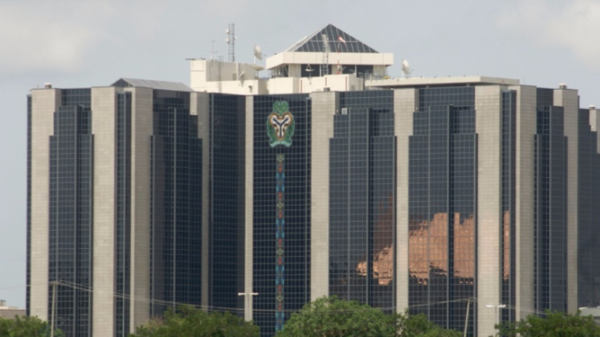










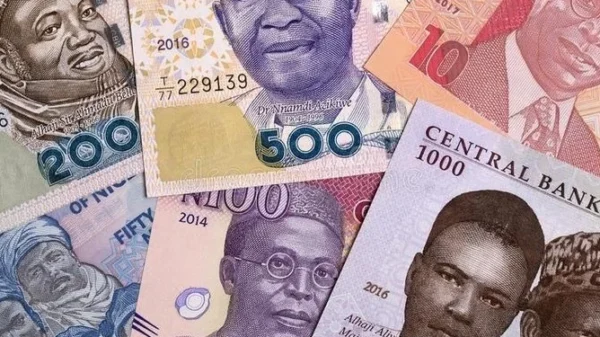





















The Nigerian naira recorded a mild depreciation at the official foreign exchange market in the second week of January 2026, closing at N1,421 per US dollar on Wednesday, according to data published by the Central Bank of Nigeria (CBN). The mid-week movement, while notable, remains relatively modest and is being interpreted by analysts as part of routine market adjustments rather than a reversal of the broader stabilisation trend expected in 2026.
The latest close follows a week of mixed trading for the currency. Official market data shows that the naira traded at N1,428/$ on Monday before firming slightly to N1,416/$ on Tuesday, making Wednesday’s N1,421/$ close the first clear mid-week slip in the second week of the year. Market participants say the narrow trading band reflects moderated volatility compared with the sharp swings that characterised Nigeria’s FX market in previous years.
Earlier in the month, the naira had already shown signs of early-year pressure. On January 2, 2026, the first trading day of the year, the currency weakened to N1,431/$, largely due to pent-up demand following the New Year holiday and short-term supply adjustments. Analysts note that such pressures are common at the start of the year, especially as businesses resume imports and individuals seek foreign currency for travel and school fees.
Parallel market still under pressure
At the parallel market, the naira continued to trade weaker than at the official window. On Wednesday, rates hovered between N1,490 and N1,495 per dollar, compared with around N1,470/$ the previous day. The persistent gap between official and informal market rates highlights unmet demand for FX, particularly for travel allowances, imports, medical expenses, and other invisible transactions that often struggle to access the official market.
Despite the spread, analysts point out that the scale of volatility has reduced significantly. Compared with the sharp dislocations seen in 2023 and early 2024, movements in both markets have been more contained, suggesting improving confidence in Nigeria’s evolving FX framework and the CBN’s market-oriented reforms.
Reserves provide growing support
One of the strongest anchors for the naira remains Nigeria’s external reserves. Data from the apex bank shows that reserves edged up to $45.62 billion on Tuesday, from $45.60 billion on Monday, providing additional short-term support for the currency. More importantly, the CBN projects that reserves could rise to about $51.04 billion in 2026, up from an estimated $45.01 billion in 2025.
The projected improvement is expected to be driven by easing FX pressures, higher oil earnings, planned sovereign bond issuances, and increased diaspora remittance inflows. Stronger reserves, economists argue, enhance the CBN’s ability to manage liquidity shocks and smooth excessive volatility without resorting to rigid controls.
Structural reforms strengthen outlook
Beyond reserves, structural developments in the energy sector are increasingly viewed as supportive of FX stability. The expansion of Dangote Refinery, which raised its nameplate capacity to 700,000 barrels per day from 650,000 bpd in 2025, is expected to significantly reduce Nigeria’s reliance on imported refined petroleum products. With a medium-term target of 1.4 million bpd, the refinery’s output could materially lower FX demand for fuel imports, supporting reserve accumulation and easing pressure on the naira.
Speaking to Nairametrics, Dr. Muda Yusuf, Chief Executive Officer of the Centre for the Promotion of Private Enterprise (CPPE), described the outlook for the naira in 2026 as largely positive.
“The prospects for the stability of the naira are quite bright. This is largely because our foreign reserves are very strong, and reserves play a critical role in determining the strength and stability of any currency,” Yusuf said.
What you should know
Market projections also remain broadly supportive. In its 2026 macroeconomic outlook, CardinalStone projected that the naira could trade within a N1,350 to N1,450 per dollar range in 2026, assuming continued policy consistency and improved FX inflows.
While short-term fluctuations are likely to persist—driven by seasonal demand, global financial conditions, and investor sentiment—analysts agree that Nigeria’s FX fundamentals are stronger than they were a year ago. With rising reserves, reduced import dependence, and sustained reforms, the naira’s mid-week slip to N1,421/$ is widely seen as a temporary adjustment rather than a signal of renewed instability heading into 2026.

Emmanuel Bassey is a Financial Expert that has worked in the Banking and Finance Industry for over 15+ years across different banks in Nigeria


