
































U.S. dollar inflows into Nigeria’s official foreign exchange market declined sharply in the opening week of the year, underscoring persistent fragility in foreign investor confidence despite sustained reforms and interventions by the monetary authorities. Data from the Nigeria Foreign Exchange Market (NFEM) show that total dollar inflows fell by 20.67% week on week to US$593.70 million, compared with US$748.40 million recorded in the previous week.
According to a research note published by Coronation Merchant Bank, the sharp contraction was driven primarily by a steep deterioration in offshore participation, as both portfolio and direct investments into the country weakened significantly. The decline highlights the ongoing caution among global investors toward Nigeria’s macroeconomic environment, even after notable foreign exchange reforms implemented in 2024 and 2025.
Foreign inflows collapse as caution persists
The report revealed that foreign portfolio investment (FPI) inflows plunged by 72.91% to just US$46 million, down from US$169.8 million a week earlier. Foreign direct investment (FDI) also recorded a dramatic fall, dropping 81.87% to US$7.0 million from US$38.6 million in the prior week. As a result, foreign sources accounted for only 17.05% of total FX inflows during the period.
Analysts say this collapse in offshore inflows reinforces concerns that international investors remain unconvinced about Nigeria’s near-term risk outlook. While the liberalisation of the FX market and the move toward a more market-reflective exchange rate were widely welcomed, investors continue to weigh issues such as inflationary pressures, policy consistency, and broader macroeconomic stability.
Domestic sources shoulder FX liquidity
With foreign participation fading, domestic sources once again became the backbone of FX supply, contributing 82.95% of total inflows into the official market. Individuals led domestic inflows with US$165.1 million, followed closely by the Central Bank of Nigeria (CBN), which supplied US$128.0 million. Exporters and importers added another US$115.6 million.
Market analysts note that while the strong contribution from local sources has helped prevent severe dislocations in the FX market, it also highlights Nigeria’s continued dependence on central bank intervention and domestic FX recycling. This structure, they argue, is less sustainable than a model anchored on consistent autonomous foreign inflows from trade, investment, and remittances.
Mixed performance for the naira
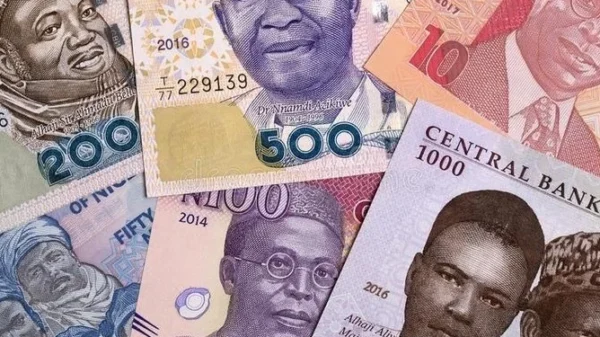
The naira’s performance mirrored these underlying tensions. At the official window, the currency appreciated by 0.88% week on week to close at N1,430.85/US$, supported largely by ongoing dollar sales from the CBN. However, conditions in the parallel market told a different story, with the naira weakening to around N1,490/US$, reflecting lingering unmet demand outside the formal FX system.
Coronation Research observed that while intervention has succeeded in dampening volatility at the official market, structural pressures persist. Recovering import demand, coupled with subdued foreign investment inflows, continues to strain overall FX balance.
Reserves edge higher amid heavy intervention
Nigeria’s gross external reserves rose marginally by 0.58% to US$45.50 billion, increasing by about US$264.56 million at the start of the year. This modest gain came despite significant FX market intervention. The Coronation report estimates that the CBN spent approximately US$4.1 billion in the first half of last year defending the naira and supporting market liquidity.
The adoption of technology-driven platforms such as the Bloomberg FX Matching System and the Electronic Foreign Exchange Matching System has improved transparency, price discovery, and interbank confidence. These measures have also helped narrow the gap between official and parallel market rates, though analysts caution that such gains remain fragile without a rebound in foreign inflows.
Outlook: confidence is the missing link
In the near term, the naira is expected to trade within a relatively narrow band at the official window, supported by continued CBN intervention and easing seasonal FX demand following year-end pressures. Looking further into 2026, Coronation projects an exchange rate range of N1,400–N1,500/US$, underpinned by higher oil production, reduced fuel import dependence, and improved export-driven FX earnings.
However, analysts stress that lasting exchange-rate stability will ultimately depend on policy consistency, fiscal discipline, and renewed investor confidence. Without a sustained recovery in foreign portfolio and direct investments, Nigeria’s FX market is likely to remain heavily reliant on domestic liquidity and central bank support, leaving the naira vulnerable to future shocks.

Emmanuel Bassey is a Financial Expert that has worked in the Banking and Finance Industry for over 15+ years across different banks in Nigeria


