



























The Rivers State Government has taken a major step toward defining its fiscal and development priorities for the year ahead, as the State Executive Council approved a ₦1.85 trillion budget proposal for the 2026 fiscal year. The approval, which followed extensive deliberations by the council, signals the administration’s intention to sustain development momentum while navigating Nigeria’s prevailing economic pressures.
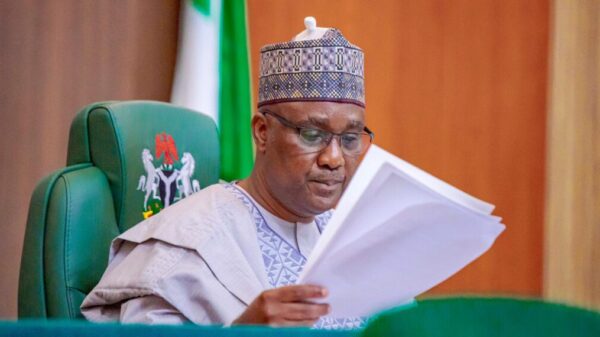
The decision was reached at a council meeting presided over by Siminalayi Fubara, according to disclosures made by state officials and reports by the News Agency of Nigeria (NAN). The approved spending framework outlines the government’s proposed recurrent and capital expenditures for 2026 and will now be transmitted to the Rivers State House of Assembly for legislative consideration and eventual approval.
State officials say the proposed budget is designed to consolidate ongoing development efforts while addressing emerging socio-economic needs across the state. With inflationary pressures, infrastructure gaps, and social welfare demands still posing challenges, the 2026 budget is expected to serve as a critical policy tool for stimulating economic activity and improving the living standards of residents.
Focus on completing key projects
Briefing journalists in Port Harcourt after the council meeting, the Special Adviser to the Governor on Economic Matters, Peter Medee, explained that the ₦1.85 trillion proposal places strong emphasis on completing ongoing projects rather than initiating numerous new ones.
According to him, a significant portion of the budget has been earmarked to meet outstanding obligations in critical sectors such as infrastructure, health, and education. He added that productive and socially impactful sectors—including agriculture, youth empowerment, culture, tourism, and information and communication technology (ICT)—have also been prioritised to ensure balanced and inclusive development.
“The budget sum of ₦1.85 trillion would fund outstanding obligations in critical sectors, including infrastructure, health, and education. Agriculture, youth empowerment, culture, tourism, and ICT will also be adequately prioritised by the budget,” Medee said, noting that the administration is keen on translating spending into tangible benefits for citizens.
Also speaking, Honour Sirawoo, Permanent Secretary in the Ministry of Information and Communications, said the proposal underwent detailed scrutiny by the Executive Council. He noted that the rigorous review process was aimed at ensuring value for money and aligning spending with the government’s broader development agenda. According to Sirawoo, the approved allocations are strategically targeted at improving public welfare and service delivery across Rivers State.
Economic implications
If passed by the Rivers State House of Assembly, the ₦1.85 trillion budget could play a significant role in stimulating economic activity in the oil-rich state. Analysts note that the strong emphasis on infrastructure and social sectors could help unlock private sector participation, enhance productivity, and improve access to essential services.
The inclusion of agriculture and ICT as priority areas also points to an effort to diversify the state’s economic base, create jobs—particularly for young people—and reduce reliance on oil-related revenues. However, observers caution that the ultimate impact of the budget will depend heavily on revenue performance, fiscal discipline, and effective implementation.
Looking back at 2025
The 2026 proposal comes against the backdrop of Rivers State’s 2025 fiscal experience. In January 2025, Governor Fubara signed the ₦1.1 trillion 2025 budget into law, describing it as a cornerstone of the state’s development agenda. That budget comprised ₦462.25 billion for recurrent expenditure, ₦678.09 billion for capital projects, a planning reserve of ₦35.69 billion, and a closing balance of ₦12.93 billion.
The governor had disclosed that financing for the 2025 budget would be sourced from multiple revenue streams, including allocations from the Federation Accounts Allocation Committee (FAAC), Internally Generated Revenue (IGR), statutory allocations, mineral funds, Value Added Tax (VAT), and various refunds.
However, the 2025 fiscal year was not without controversy. Lawmakers were reported to have barred Governor Fubara from accessing the House of Assembly to re-present the 2025 budget, an incident that underscored political tensions within the state.
The road ahead
As the ₦1.85 trillion 2026 budget proposal heads to the legislature, attention will now shift to the Rivers State House of Assembly’s review process. Stakeholders will be watching closely to see how quickly the budget is considered and whether proposed allocations are retained or adjusted. Ultimately, residents of Rivers State will judge the budget not by its size, but by its ability to deliver visible improvements in infrastructure, public services, and economic opportunities.

Emmanuel Bassey is a Financial Expert that has worked in the Banking and Finance Industry for over 15+ years across different banks in Nigeria


