



























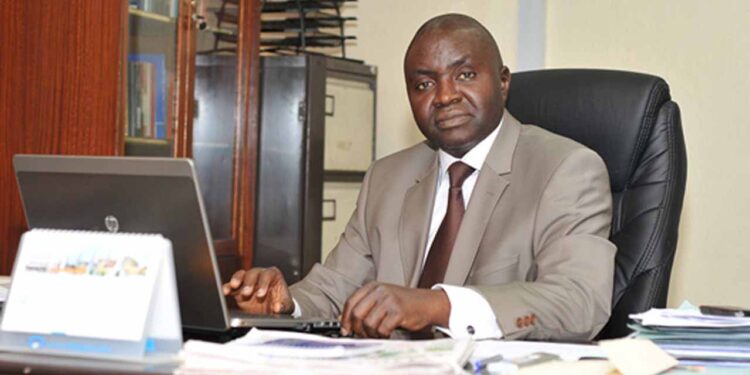
The Centre for the Promotion of Private Enterprise (CPPE) has cautioned that delays in submitting Nigeria’s 2026–2028 Medium-Term Expenditure Framework (MTEF) pose significant risks to the country’s budget process, potentially weakening legislative scrutiny and undermining the credibility of government fiscal planning. The warning was contained in a policy brief shared with Nairametrics by CPPE’s Director and Chief Executive Officer, Dr. Muda Yusuf.
The MTEF serves as the strategic foundation for the annual national budget, outlining the government’s revenue projections, spending priorities, and macroeconomic assumptions over a three-year horizon. Under the Fiscal Responsibility Act (FRA), the executive arm of government is required to transmit the MTEF to the National Assembly at least four months before the start of the next fiscal year. This statutory timeline is intended to allow lawmakers ample time to analyze the document, engage stakeholders, and interrogate underlying assumptions before approving the federal budget.
According to Dr. Yusuf, failure to comply with this legal framework puts undue pressure on the legislature, reducing the depth and quality of legislative debate and potentially weakening Nigeria’s fiscal governance. “The Fiscal Responsibility Act mandates that the MTEF be submitted at least four months ahead of the fiscal year. Delayed presentation of the 2026–2028 MTEF will significantly constrain the diligence of deliberations due to the limited time available,” CPPE stated in the brief. The organization emphasized that adherence to statutory timelines is not merely procedural—it is fundamental to ensuring transparency, predictability, and accountability in public financial management.
The think tank noted that delays affect not just the timing of the budget, but also the robustness of fiscal planning. Without sufficient time for analytical review, lawmakers are left to approve projections and expenditure frameworks based on compressed assessments, limiting their ability to interrogate assumptions around revenue targets, debt sustainability, and sectoral allocations. According to CPPE, such weaknesses can diminish investor confidence, create uncertainty for businesses, and slow economic planning across the private sector.
Reform Efforts Welcomed, but Structural Gaps Persist
Despite concerns over the delayed submission, the CPPE acknowledged improvements in the underlying assumptions adopted in the 2026–2028 MTEF. The Federal Executive Council (FEC) has adopted more conservative economic projections, aimed at aligning spending plans with Nigeria’s prevailing macroeconomic realities.
Government officials have set an oil production benchmark of 1.8 million barrels per day (mbpd) for the three-year framework, even though the broader FEC approval referenced a potential production target of 2.6 mbpd. The Council also endorsed an oil price benchmark of $64 per barrel and an exchange rate assumption of N1,512 to the dollar. CPPE described these adjustments as steps toward fiscal realism, noting that overly optimistic assumptions in previous frameworks had led to underperformance in revenue generation and widened fiscal deficits.
“By adopting more cautious revenue and expenditure assumptions, the new MTEF strengthens the foundation for improved budget credibility and more sustainable fiscal outcomes,” the CPPE brief stated. However, Dr. Yusuf stressed that more work is needed to align projections with Nigeria’s operating environment, particularly around crude oil output, security disruptions in the Niger Delta, foreign exchange volatility, and global oil market uncertainties. He argued that realistic forecasting is critical for reducing fiscal slippage, avoiding budget revisions, and improving government cash flow management.
Background and Outlook
The Minister of Budget and Economic Planning, Senator Atiku Bagudu, announced approval of the 2026–2028 MTEF after last Wednesday’s FEC meeting. He disclosed that the federal government expects total revenue inflows of N34.33 trillion in 2026, including N4.98 trillion from government-owned enterprises. Bagudu stated that the exchange rate assumption reflects expectations shaped by both economic conditions and political dynamics ahead of the 2027 general elections.
CPPE’s intervention comes at a time when Nigeria faces mounting fiscal pressure, including rising debt servicing costs, limited oil revenue mobilisation, and declining investment inflows. The organisation underscored that transparent budgeting and disciplined financial planning are essential to restoring confidence and enabling sustained private sector growth.
By calling attention to statutory compliance and deeper scrutiny of fiscal plans, the CPPE hopes to steer public discourse toward stronger governance practices and a more predictable budget environment.

Emmanuel Bassey is a Financial Expert that has worked in the Banking and Finance Industry for over 15+ years across different banks in Nigeria


