























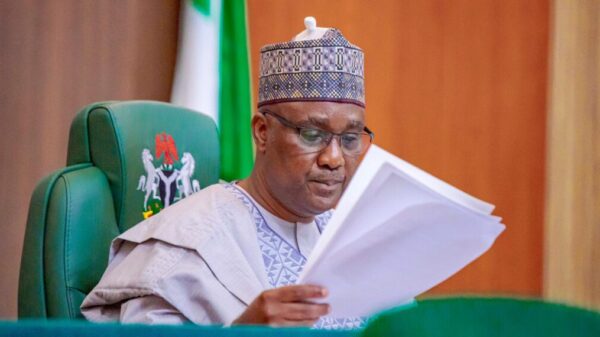


Bauchi State Governor, Bala Mohammed, has presented an N878 billion Appropriation Bill for the 2026 fiscal year to the State House of Assembly, marking one of the most ambitious financial proposals in the state’s history. The governor made the presentation on Thursday in Bauchi, describing the proposal as a “Budget of Consolidation and Sustainability,” and assuring lawmakers of its full and effective implementation.
During the presentation, Mohammed emphasized that the budget was structured in compliance with the national chart of accounts and reflects the administration’s commitment to strengthening ongoing reforms across critical sectors. The proposed 2026 budget allocates N567 billion, or 65%, to capital expenditure, while N310 billion, representing 35%, is dedicated to recurrent spending. This distribution underscores the government’s focus on infrastructure development, service delivery improvement, and long-term socioeconomic growth.
Budget Growth Driven by Reforms
Governor Mohammed noted that the 2026 budget represents a 41.07% increase compared to the 2025 estimates. He attributed this substantial rise to enhanced revenue prospects driven by state-led reforms and the projected effects of tax adjustments scheduled for implementation in January 2026. According to him, the administration adopted a conservative revenue framework, aligning the proposal with the Medium-Term Expenditure Framework (MTEF) and the state’s Fiscal Responsibility Law to ensure fiscal realism and execution feasibility.
Mohammed highlighted that the state has recorded improvements in internally generated revenue, partly due to financial reforms and efforts to plug leakages. These gains, he said, provided a foundation for the expanded 2026 fiscal plan.
Sectoral Allocation: Economic Sector Dominates Spending
Providing a breakdown of the proposed allocations, the governor revealed that the economic sector accounts for the largest share of the budget, receiving N435 billion, or 49.6% of the total. This category covers agriculture, public works, transport, commerce, and other growth-enabling sectors critical to job creation and poverty reduction.
The administrative sector is set to receive N120 billion, representing 13.7%, while the Law and Justice sector has been allocated N12 billion, equal to 1.4% of the total. The social sector, which encompasses education, healthcare, and social welfare, is assigned N310 billion, representing 34.4% of the overall budget.
Mohammed explained that the allocations reflect the government’s priorities of strengthening human capital, enhancing infrastructure, and expanding economic opportunities for citizens.
Review of 2025 Budget and Expectations for 2026
While reviewing the performance of the ongoing 2025 budget, the governor reported an impressive 79.1% implementation rate as of September 2025. He expressed confidence that the 2026 budget would achieve at least 85% implementation, citing improved planning, disciplined financial management, and enhanced revenue mobilization efforts.
The governor appealed for sustained cooperation from the House of Assembly to fast-track the passage of the Appropriation Bill, stressing that timely approval is essential to maintaining the momentum of development across the state.
Assembly Promises Quick Passage
In his response, the Speaker of the Bauchi State House of Assembly, Abubakar Sulaiman, commended the governor for presenting the budget early and reaffirmed the legislature’s commitment to thoroughly and promptly reviewing the proposal. He praised the administration for its developmental strides and pledged the Assembly’s unwavering support for initiatives aimed at improving residents’ welfare.
Additional Context
Earlier in July, the Bauchi State Government disclosed that investments in the state’s gypsum and limestone resources had surpassed $1.5 million, accelerating plans for establishing a state-owned cement production company. This development aligns with the administration’s broader economic diversification goals, which are reflected in the heavy allocation to the economic sector in the 2026 budget.

Emmanuel Bassey is a Financial Expert that has worked in the Banking and Finance Industry for over 15+ years across different banks in Nigeria


