




















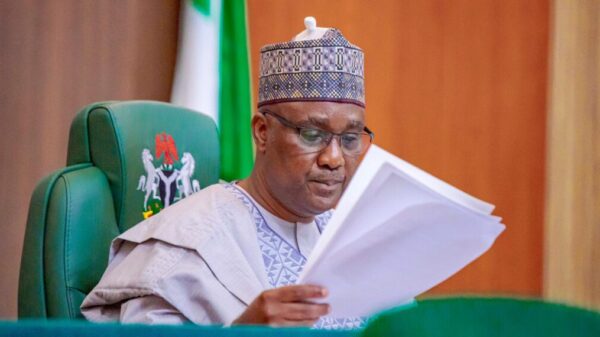


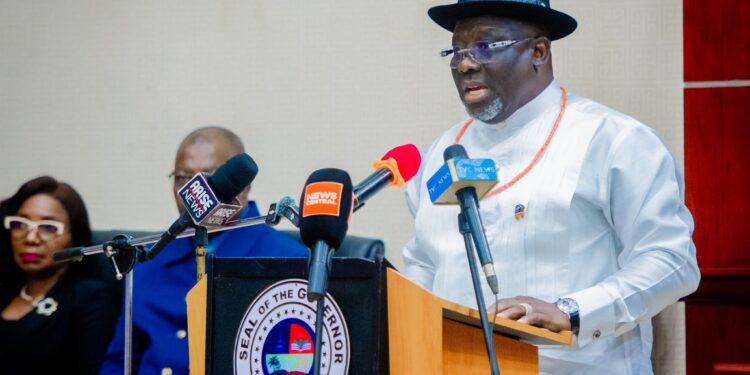
Delta State Governor, Sheriff Oborevwori, has presented a N1.664 trillion Appropriation Bill for the 2026 fiscal year to the State House of Assembly in Asaba, marking one of the most ambitious financial proposals in the state’s history. The presentation, made during plenary, outlines the administration’s priorities for accelerating infrastructural development, strengthening economic resilience, and expanding social investments across the state.
Governor Oborevwori explained that the proposed budget is structured to reinforce his administration’s commitment to inclusive growth and long-term development. Of the total amount, N499 billion—representing 30% of the budget—is dedicated to recurrent expenditure. This allocation covers salaries, pensions, overheads, and the day-to-day operations of government institutions. The remaining N1.165 trillion, or 70%, is earmarked for capital projects, reflecting the administration’s strong emphasis on infrastructure expansion, economic diversification, and strategic investments in critical sectors.
The 2026 proposal represents a dramatic increase of N685 billion—about 70%—over the 2025 budget. The governor attributed the expansion to the state’s intensified development agenda and the need to address infrastructural deficits that constrain economic activity. He added that the higher capital allocation aligns with his promise to deliver visible and transformative projects under the “MORE Agenda,” which targets meaningful development, opportunities for all, realistic reforms, and enhanced peace and security.
Speaking further on funding sources, Governor Oborevwori disclosed that revenues for the fiscal year will be drawn from statutory allocations, internally generated revenue (IGR), Value Added Tax (VAT), the 13% oil derivation fund, and other legally recognized income streams. He emphasized that strengthening IGR mechanisms remains a central priority, especially as the administration seeks to reduce dependence on federal allocations and ensure more stable financial planning.
A major highlight of the budget is the allocation of N450 billion for road infrastructure. The governor stressed that well-constructed and well-maintained roads are essential for driving Delta State’s economic ambitions. He explained that improved road networks will lower transportation costs, enhance access to local and urban markets, attract new investments, strengthen inter-community linkages, and create thousands of jobs through construction and ancillary services. He also reaffirmed his administration’s commitment to completing ongoing road projects and initiating new ones in underserved communities.
Beyond infrastructure, agriculture remains a core component of the 2026 development plan. The budget sets aside N10 billion for the Ministry of Agriculture and Natural Resources to expand mechanized farming, support agribusinesses, and strengthen value chains in key commodities. Governor Oborevwori underscored that agriculture is central to economic diversification, poverty reduction, and food security. He noted that the administration will continue to invest in training, incentives, and modern tools to empower farmers across Delta State.
During his presentation, the governor called on lawmakers to give the budget swift consideration, stressing that timely approval is necessary to maintain momentum in project execution and service delivery. He pledged that his administration would continue to build “a prosperous, secure, and stronger Delta where no one is left behind.”
Responding on behalf of the Assembly, Speaker Rt. Hon. Dennis Guwor commended the governor for his achievements during the past year. He noted significant progress under the ‘Renewed Hope for MORE Agenda,’ including investments in infrastructure, social welfare programs, and prudent fiscal management. Guwor also praised the governor for approving the Consolidated Legislative Salary Structure (CONLESS) and initiating the construction of permanent offices for the Assembly Service Commission.
The Speaker assured the governor that the 8th Assembly would conduct a thorough and efficient review of the budget proposal. While affirming the Legislature’s constitutional independence, Guwor emphasized that both arms of government share a unified goal—delivering sustainable development and improving the lives of citizens across Delta State.

Emmanuel Bassey is a Financial Expert that has worked in the Banking and Finance Industry for over 15+ years across different banks in Nigeria


