




















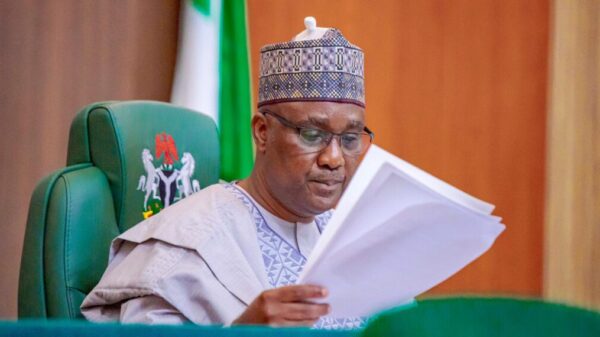


Nigeria’s Minister of Finance and Coordinating Minister of the Economy, Wale Edun, has welcomed the recent decision by S&P Global Ratings to revise Nigeria’s economic outlook from Stable to Positive, describing it as a strong and encouraging validation of the reforms currently being implemented by the administration of President Bola Tinubu.
In a statement released on Saturday, Edun noted that S&P’s upgrade—while maintaining Nigeria’s long- and short-term sovereign credit ratings at B-/B—demonstrates growing international confidence in the direction of Nigeria’s fiscal, monetary, and structural reforms. According to him, the acknowledgment reinforces the government’s resolve to continue pursuing policies designed to restore macroeconomic stability and lay the foundation for long-term, inclusive growth.
“I am delighted to receive the news that S&P Global Ratings has revised Nigeria’s outlook to Positive from Stable while affirming our ‘B-/B’ rating,” Edun said. “This development is yet another clear signal that the difficult but necessary reforms we are undertaking are gaining traction and earning strong recognition from respected global institutions.”
All Major Rating Agencies Now Align
Edun highlighted that S&P’s revised outlook follows earlier upgrades and positive signals from Moody’s and Fitch Ratings earlier in the year. With all three major global credit rating agencies now aligned in their assessment of Nigeria’s reform progress, he said this convergence reflects a strengthening level of confidence in the country’s economic direction.
“This alignment reflects tremendous confidence in the trajectory of our fiscal, monetary, and structural reforms, and in the renewed strength and stability of our economy,” he explained.
Reform Efforts Already Showing Results
The Minister noted that S&P’s decision was driven by Nigeria’s improving macroeconomic indicators—especially stronger growth prospects, rising external buffers, and clearer, more credible monetary policy outcomes. These improvements, he said, indicate that the government’s policy choices are beginning to yield measurable benefits.
“These positive signals reinforce our commitment to staying the course,” Edun stated. “We recognise that more work lies ahead, but we are confident that the foundations being built today will support sustainable and inclusive growth for years to come.”
He praised President Tinubu for what he termed “unwavering leadership and political courage” in driving reforms that previous administrations had avoided. Edun also acknowledged the resilience of Nigerians who are navigating the ongoing economic transition, assuring them that the reforms are designed to create a stronger, more dynamic economy.
“We will continue to implement well-coordinated policies that restore macroeconomic stability, attract investment, and create opportunities for our citizens. The confidence shown by global ratings agencies strengthens our resolve to deliver a prosperous Nigerian economy,” he added.
What S&P Noted in Its Report
In its statement on Friday, S&P Global Ratings revised Nigeria’s outlook to Positive, citing ongoing reform efforts and improving macroeconomic performance. The rating agency also reaffirmed Nigeria’s national scale ratings at ngBBB+/ngA-2.
According to S&P, the positive outlook reflects improving fiscal, monetary, external, and economic outcomes—though the agency also pointed out persistent challenges such as low GDP per capita, high debt-servicing costs, and structural data limitations.
The upgrade follows several major reforms implemented since mid-2023, including:
-
Exchange-rate liberalisation
-
Removal of the fuel subsidy
-
Aggressive revenue-mobilisation measures
-
Rising crude oil production
-
Stabilisation efforts in the oil and gas sector
-
Commissioning of the Dangote Refinery, poised to reshape Nigeria’s energy supply
S&P stated that these coordinated policy moves are placing Nigeria on a more resilient economic path, adding: “We think authorities are taking steps to improve the economy’s growth prospects and macroeconomic resilience.”
What You Should Know
S&P has also raised its average growth projection for Nigeria to 3.7% between 2025 and 2028, up from its previous estimate of 3.2%, supported by increased oil production and stronger private sector confidence.
Other key projections include:
-
Inflation is expected to gradually ease to 13% by 2028.
-
Nigeria’s external position has improved, with gross foreign reserves estimated at just under $44 billion as of October 2025.
-
Removal from the Financial Action Task Force (FATF) grey list and a more stable exchange-rate environment have boosted both diaspora remittances and foreign portfolio inflows.
Overall, the latest S&P rating marks another significant milestone in Nigeria’s reform journey and signals growing international recognition of the country’s economic recovery efforts under the Tinubu administration.

Emmanuel Bassey is a Financial Expert that has worked in the Banking and Finance Industry for over 15+ years across different banks in Nigeria


