

























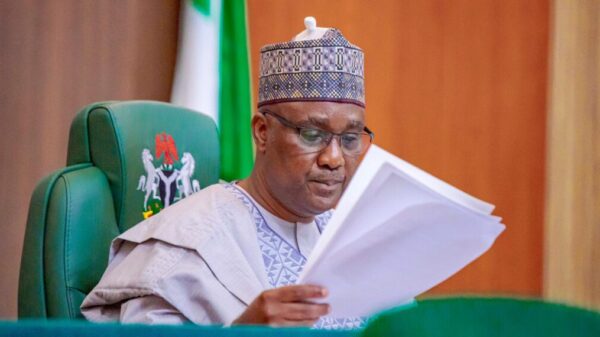


The Executive Chairman of the Federal Inland Revenue Service (FIRS), Zacch Adedeji, has emphasized that Nigeria must urgently shift to selecting public infrastructure projects—such as roads, ports, and power investments—based strictly on their potential economic returns if the country intends to overcome its persistent revenue constraints. Adedeji made this assertion on Friday while delivering a keynote lecture at the University of Ilesa’s Founders’ Day celebration, where he outlined strategic measures needed to reposition Nigeria’s revenue system for long-term fiscal sustainability.
According to him, Nigeria’s existing project selection culture, which often prioritizes political considerations over economic impact, is no longer sustainable. With dwindling government revenues and rising obligations, he argued that public infrastructure projects must now pass a more rigorous economic justification process, ensuring they can attract private-sector participation, expand productive capacity, stimulate trade, and ultimately generate measurable returns to the treasury.
Four Strategic Actions to Reverse Revenue Decline
Adedeji explained that adopting an economic-returns-driven approach to project selection is only one of four key policy steps that Nigeria must embrace if it hopes to reverse its downward revenue trajectory. The first and most critical measure, he said, is a deliberate and aggressive Domestic Revenue Mobilization (DRM) effort. This includes both broadening the tax net and deepening the government’s ability to collect taxes fairly, efficiently, and sustainably.
While Nigeria’s tax system has historically leaned heavily on a relatively small number of large formal-sector businesses, Adedeji stressed that such a concentration is inadequate and unfair. He noted that enormous revenue opportunities remain untapped in the informal sector, digital economy, and among high-net-worth individuals—groups that continue to operate outside the tax net despite their growing economic footprint.
Leveraging Technology to Close Compliance Gaps
The FIRS Chairman highlighted the progress already being made through technology-driven tax administration. Platforms such as TaxPro Max, e-TCC, and new tax intelligence systems have significantly improved compliance monitoring, taxpayer verification, and digital filing. These tools, he said, are closing long-standing loopholes and ensuring that tax obligations are tracked with greater precision and transparency.
By modernizing tax administration, the FIRS intends to make compliance simpler for honest taxpayers while increasing pressure on individuals and businesses who have historically evaded their obligations.
Strengthening Fiscal Discipline and Budget Credibility
Another major focus of Adedeji’s lecture was the need for Nigeria to improve its budget credibility. He cautioned that budgeting must be anchored in realism—meaning that government spending plans must be backed by verifiable revenue expectations, rather than optimistic projections that quickly collapse during implementation.
He also called for enhanced adherence to fiscal rules such as debt ceilings, savings benchmarks, and medium-term expenditure frameworks. Transparent procurement processes, he added, are essential for eliminating waste and strengthening public accountability.
Infrastructure and Diversification Must Be Data-Driven
Adedeji reiterated that infrastructure development remains central to Nigeria’s economic transformation, but he emphasized that such investments must now be strategic and data-driven. Roads, ports, energy facilities, and other capital projects should be selected for their ability to unlock economic opportunities, reduce logistics costs, attract private-sector financing, and improve Nigeria’s competitiveness.
“Infrastructure development should be strategic, data-informed, and private-sector aligned,” he stated, adding that true economic diversification requires “capital, coordination, and courage.”
Importance of Institutional Strengthening
The FIRS Chairman also advocated for greater institutional reforms, including improved inter-agency coordination and enhanced autonomy for key economic institutions such as the FIRS, Nigeria Customs Service, and the Budget Office. Stronger institutions, he argued, are essential for enforcing compliance, enhancing efficiency, and driving consistent fiscal reforms across government.
Revenue Performance Highlights Structural Inequality
Adedeji’s remarks come at a time when Nigeria’s internally generated revenue (IGR) landscape reveals widening disparities between high-performing and low-performing states. According to Nairametrics analysis of 2024 IGR data, the 36 states and the FCT collectively generated N3.63 trillion in 2024—an impressive increase from N2.43 trillion recorded in 2023, representing 49.69% growth.
However, despite this improvement, the bottom 10 states accounted for only 5.23% of total IGR, highlighting deep structural weaknesses and overreliance on federal allocations among many subnational governments. Lagos, Rivers, and the FCT continue to dominate revenue generation, while several states struggle to build resilient domestic revenue systems.
A Call to Action
In his concluding remarks, Adedeji stressed that Nigeria’s path to sustainable development rests on evidence-based planning, disciplined budgeting, improved tax administration, and strategic infrastructure investment. By selecting projects based on their economic impact and further strengthening institutions, Nigeria can unlock new sources of growth and build a more stable, resilient revenue foundation for the future.

Emmanuel Bassey is a Financial Expert that has worked in the Banking and Finance Industry for over 15+ years across different banks in Nigeria


