






Creator
  • Type:
  • Genre:
  • Duration:
  • Average Rating:
Log In
 
  • Marketplace
Log In
 
  • Type:
  • Genre:
  • Duration:
  • Average Rating:
  • Marketplace

Court

EFCC Witness Tells Court $6.23 Million Was Withdrawn Using Forged Documents Under Emefiele

  • dollaers
  • January 30, 2026
  • Court
  • 0 comments

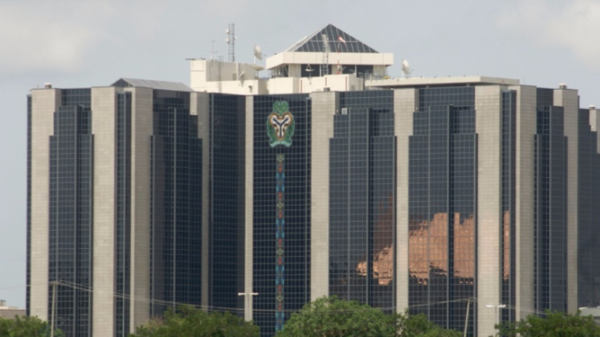
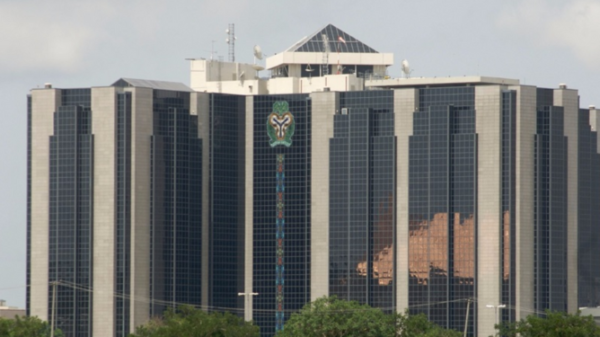
A prosecution witness in the trial of former Central Bank of Nigeria (CBN) Governor, Godwin Emefiele, has told a Federal Capital Territory High Court in Abuja that $6.23 million was withdrawn from the CBN’s Garki Branch using forged documents.

The disclosure was contained in a statement issued by the Economic and Financial Crimes Commission (EFCC) on Thursday, January 29, 2026.

According to the EFCC, the money was allegedly intended for election-related expenses, including payments to election observers and logistics, but the withdrawal was processed through fraudulent approvals.

What the EFCC is saying

Bashirudden Muhammed Maishanu, an Assistant Director at the CBN and the eleventh prosecution witness (PW11), told the court that he was approached in January 2023 by an individual identified as Alhaji Ahmed, who claimed to have obtained presidential approval for the cash withdrawal.

The EFCC quoted the witness as saying that the $6.23 million was withdrawn on February 8, 2023, from the CBN’s Garki Branch through forged papers.

According to the commission’s statement, the funds were purportedly meant for election observers and logistics, but the approvals used to process the transaction were not genuine.

How the withdrawal allegedly happened

The witness reportedly told the court that he was asked to recommend someone to collect the money on his behalf, as he could not go personally.

A friend of his later collected the cash from the Garki Branch, after which $2.5 million was left with him and two other individuals.

Maishanu told the court that he later discovered that the documents authorising the withdrawal were likely forged and described the incident as a set-up.

He added that he was not involved in monitoring the 2023 general elections and did not initially know that the withdrawal was fraudulent.

CBN procedures and internal controls

The EFCC statement said the witness also explained CBN’s internal approval processes for large cash withdrawals.

According to him, such transactions require board-level or governor-level approvals, supported by traceable documentation within the bank’s system.

He further told the court that staff found to have violated procedures could face sanctions ranging from warnings and demotion to outright dismissal, depending on the severity of the offence.

He reportedly noted that he did not face any internal disciplinary action in relation to the transaction.

Status of the trial

The trial is ongoing, with the court expected to continue proceedings on Friday, January 30, 2026.

The court is examining the alleged roles played by Emefiele and other parties in connection with the withdrawal.

Background

Godwin Emefiele, who served as CBN Governor under the administration of former President Muhammadu Buhari, was suspended in June 2023 by President Bola Tinubu and later taken into custody by the Department of State Services.

Since then, he has faced multiple criminal and civil cases, including charges related to procurement, foreign exchange allocations, and alleged abuse of office.

Several of these cases are still pending in courts in Abuja and Lagos, while the EFCC continues to pursue asset forfeiture and recovery actions linked to alleged proceeds of unlawful activities.

Court Orders Forfeiture of Orlean Invest Jet Over Unpaid N1.04 Billion Customs Duty

  • dollaers
  • January 28, 2026
  • Business, Court
  • 0 comments

The Federal High Court sitting in Abuja has ordered the final forfeiture of a Bombardier BD-700 Global 6000 private jet operated by Orlean Invest Africa Limited to the Federal Government of Nigeria over the non-payment of N1.04 billion in customs duty.

The judgment was delivered on Tuesday by Justice James Omotosho, following a suit instituted by the Nigeria Customs Service (NCS). The decision was reported by the News Agency of Nigeria (NAN).

According to the court, the aircraft was imported into Nigeria on October 26, 2015, but the owners failed to pay the required customs duties or obtain a valid Temporary Import Permit (TIP), in clear violation of Nigeria’s customs laws.

Court’s findings

Justice Omotosho ruled that Orlean Invest Africa Limited and other respondents failed to provide any justification for why the aircraft should not be forfeited to the Federal Government. The judge held that the failure to pay customs duty and secure appropriate importation permits amounted to a breach of the Nigeria Customs Service Act, which prescribes seizure and forfeiture for such infractions.

The court noted that the respondents provided no documentary evidence to show that customs duties were paid at the time of importation or afterward, effectively depriving the government of substantial revenue for nearly a decade.

“The respondents failed to show any justification for why the aircraft should not be forfeited to the Federal Government of Nigeria,” Justice Omotosho ruled, adding that the jet was lawfully seized by the NCS.

Arguments rejected by the court

In their defence, the respondents argued that the aircraft was foreign-registered in Malta and operated under an international charter arrangement by Elit’Avia Malta Ltd. They also contended that the provisions of the Nigeria Customs Service Act, 2023, could not be applied retrospectively to an aircraft imported in 2015.

Additionally, they cited clearances issued by the Nigerian Civil Aviation Authority (NCAA), including approvals for maintenance and flight operations, as evidence of regulatory compliance.

However, Justice Omotosho dismissed these arguments, stating that obligations under the repealed Customs and Excise Act were still applicable at the time of importation. He further relied on a January 17, 2017, NCAA circular which directed all aircraft owners importing aircraft into Nigeria to obtain customs clearance, pay applicable duties, or secure a Temporary Import Permit accompanied by an undertaking to re-export the aircraft within an approved timeframe.

The court found that Orlean Invest Africa Limited failed to comply with these requirements and did not present proof of duty payment or valid temporary import documentation.

Background to the case

The case arose from an audit conducted by the Nigeria Customs Service between June and July 2024, during which compliance levels among private aircraft operating in Nigerian airspace were reviewed. The audit uncovered widespread violations related to importation procedures and customs duty payments.

The NCS stated that the Bombardier Global 6000 jet owed N1.04 billion in customs duty and had been operating in Nigeria without the necessary permits since its importation.

In its final ruling, the court ordered the permanent forfeiture of the aircraft to the Federal Government, describing the decision as a significant enforcement milestone in Nigeria’s private aviation sector.

What you should know

The issue of private jets entering Nigeria without proper documentation or duty payment has persisted for years. In June 2024, the NCS launched a nationwide verification exercise aimed at identifying privately owned aircraft imported without the required permits and recovering outstanding customs duties.

As of August 2021, the NCS disclosed that 30 out of 65 verified private aircraft in Nigeria were liable to pay customs duties, many of which had entered the country under Temporary Importation agreements that later expired without settlement.

The latest ruling reinforces the government’s resolve to tighten enforcement, recover lost revenue, and ensure full compliance within Nigeria’s aviation sector.

Appeal Court Disqualifies Nestoil’s Legal Team in $2 Billion Debt Dispute

  • dollaers
  • January 24, 2026
  • Business, Court
  • 0 comments

The Court of Appeal sitting in Lagos has disqualified Chief Wole Olanipekun, SAN, and Dr. Muiz Banire, SAN from representing Nestoil Limited and Neconde Energy Limited in the companies’ ongoing $2 billion debt dispute with a consortium of lenders.

The ruling was delivered on Friday, January 23, 2026, by a panel of justices of the Court of Appeal and was confirmed by sources within the Nestoil legal team. In a significant procedural move, the appellate court also struck out all legal processes filed by the law firms of the two senior advocates on behalf of the affected companies.

The decision represents a major shift in the long-running receivership battle between Nestoil and its creditors, many of which are Nigerian banks.

In its ruling, the Court of Appeal clarified the legal implications of receivership on corporate governance and legal representation. The court held that once a company enters receivership, the powers of its board of directors are suspended, including the authority to appoint or retain legal counsel in matters connected to the receivership.

On this basis, the court granted the application to disqualify Dr. Muiz Banire, SAN, and Chief Wole Olanipekun, SAN, from appearing for Nestoil Limited and Neconde Energy Limited, respectively. All filings and applications previously submitted by their law firms in the matter were consequently struck out.

The court also noted that Nestoil’s alleged indebtedness of about $2 billion is substantial, reportedly exceeding the minimum capital requirement of at least four Nigerian banks with international licences, underscoring the scale and systemic importance of the dispute.

The legal conflict between Nestoil and its lenders has unfolded across multiple courts over several months. In November, Nestoil initiated proceedings at the Federal High Court in Abuja against eight Nigerian banks and the African Export-Import Bank (Afreximbank), seeking to restrain them from enforcing receivership proceedings following a Notice of Default.

At that hearing, legal teams representing both sides—including Access Bank, FBNQuest Merchant Bank Limited, and Afreximbank—appeared before Justice Mohammed Umar. While the lenders maintained that the receivership was lawfully triggered due to Nestoil’s failure to meet its debt obligations, the company challenged the process and sought injunctive relief.

Earlier developments escalated tensions when armed officers of the Nigeria Police Force sealed Nestoil’s headquarters in Victoria Island, Lagos, following a Federal High Court order freezing the company’s assets, bank accounts, and shares. That order was linked to an alleged $1.01 billion and N430 billion debt owed to FBNQuest Merchant Bank Limited and First Trustees Limited, both subsidiaries of First Bank of Nigeria Limited.

Just a day before the latest ruling, the Court of Appeal had adjourned another receivership-related case involving FBNQuest Merchant Bank, First Trustees Limited, Nestoil Limited, Neconde Energy Limited, and other parties. Presiding Justice Yargata Nimpara held that the court could not proceed until the issue of who could validly represent the respondent companies was resolved.

The disqualification of Olanipekun and Banire directly addresses that procedural uncertainty, effectively clearing the way for the appellate court to proceed with substantive hearings in the receivership dispute.

The ruling is expected to have far-reaching implications for the conduct of receivership cases in Nigeria, particularly on the limits of board authority and legal representation once control of a company has shifted to court-appointed receivers.

Court Orders Interim Forfeiture of 57 Properties Worth N213.2 Billion Linked to Former AGF Abubakar Malami

  • dollaers
  • January 8, 2026
  • Court
  • 0 comments

A Federal High Court sitting in Abuja has ordered the interim forfeiture of 57 properties valued at N213.2 billion, allegedly linked to former Attorney-General of the Federation (AGF) and Minister of Justice, Abubakar Malami (SAN), and two of his sons. The ruling marks a significant escalation in one of Nigeria’s most high-profile corruption and asset recovery cases in recent years.

The interim forfeiture order was granted on Tuesday, January 6, 2026, following an application filed by the Economic and Financial Crimes Commission (EFCC). According to the anti-graft agency, the assets are reasonably suspected to be proceeds of unlawful activities and are therefore subject to temporary forfeiture pending the outcome of ongoing investigations and court proceedings.

The development was disclosed in an official statement issued by the EFCC on Wednesday through its verified X (formerly Twitter) account. The commission explained that the order was granted after Justice Emeka Nwite considered and approved an ex parte motion filed by EFCC’s legal team, led by senior advocate Ekele Iheanacho (SAN).

Court directives and legal process

In granting the interim forfeiture, Justice Nwite directed that the order be published in a national daily newspaper. This publication, the court said, is intended to notify any individual or corporate entity with a legal interest in the affected properties, giving them 14 days to appear before the court and show cause why the assets should not be permanently forfeited to the Federal Government.

The judge further adjourned the matter to January 27, 2026, for a report on compliance with the court’s directives, particularly the publication requirement. The court emphasized that the interim forfeiture does not amount to a final determination of guilt but is a procedural step designed to preserve the assets while investigations and trial processes continue.

According to the EFCC, the forfeited properties are “reasonably suspected to be proceeds of unlawful activities,” a standard threshold required under Nigerian law for interim forfeiture orders in financial crime cases.

Scope and nature of the properties

The 57 properties, with a combined estimated value of N213,234,120,000, are spread across Abuja, Kebbi, Kano, and Kaduna States. They comprise a wide mix of residential, commercial, and industrial assets, reflecting significant diversification in the property portfolio allegedly linked to Malami and his family members.

Among the notable assets listed in the court filings are luxury residential properties in highbrow areas of Abuja, including a luxury duplex on Amazon Street, Maitama, reportedly purchased in December 2022 for N500 million and now valued at N5.95 billion. Another major asset is a two-winged, large storey building on Onitsha Crescent, Garki, Abuja, acquired in December 2018 for N7 billion.

Commercial assets include Meethaq Hotels Ltd in Jabi, Abuja, a five-storey hotel with 53 rooms, purchased in September 2020 for N850 million and currently valued at N8.4 billion, as well as a 15-room hotel on Rhine Street, Maitama, bought in February 2018 for N430 million and now estimated at N12.95 billion.

Outside Abuja, the properties also include 100 hectares of land along Birnin Kebbi–Jega Road, purchased in 2020 for N100 million, alongside various shops, warehouses, residential buildings, schools, pharmacies, supermarkets, oil and gas filling stations, and commercial plazas acquired between 2016 and 2024. Collectively, these assets run into several billions of naira.

Broader legal context

The EFCC noted that the interim forfeiture order is connected to ongoing money laundering charges involving Malami, his wife Bashir Asabe, and one of his sons, Abdulaziz Malami, relating to alleged financial crimes totaling N8.7 billion. The commission said the asset recovery process is part of its broader mandate to trace, freeze, and recover proceeds of crime, regardless of the status or former position of those involved.

Malami’s camp has, however, pushed back strongly against the EFCC’s actions, describing them as “brazen, contemptuous, and lawless.” The anti-graft agency has rejected these claims, insisting that all its actions are grounded in law and backed by court orders.

What you should know

Malami is reportedly being investigated for at least 18 alleged offences, including money laundering and abuse of office. He has also alleged that the EFCC’s actions are retaliatory, a claim the commission maintains is unfounded.

The case follows earlier high-profile prosecutions involving former Attorneys-General, including Mohammed Bello Adoke, who was discharged in 2024 after a no-case submission was upheld by the court. In the ongoing trial, the Federal High Court has previously granted Malami, his wife, and his son N1.5 billion bail in relation to the N8.7 billion money laundering charges.

As the legal process unfolds, the interim forfeiture order represents a major milestone, underscoring the growing use of asset tracing and recovery as a central tool in Nigeria’s anti-corruption framework.

Court of Appeal Dismisses NAIC’s Appeal Against First Bank in N200bn Agric Credit Scheme Dispute

  • dollaers
  • November 29, 2025
  • Court
  • 0 comments

The Court of Appeal in Abuja has upheld the decision of the Federal High Court to dismiss a long-running suit filed by the Nigerian Agricultural Insurance Corporation (NAIC) against First Bank of Nigeria over the disbursement of the Federal Government’s N200 billion Commercial Agriculture Credit Scheme (CACS). The appellate court’s ruling, delivered on Friday by Justice Okon Abang, effectively ends a 12-year legal tussle that began in 2013.

In a series of seven coordinated judgements delivered within six hours, Justice Abang held that NAIC’s attempt to discontinue its case at the trial court after issues had already been joined amounted to an effort to manipulate judicial proceedings. He described the move as “a smart attempt” to salvage a weak and unsustainable claim.

Background of the Dispute

The case originated from NAIC’s allegation that First Bank, one of the participating disbursement banks under the CACS programme, failed to deduct and remit the mandatory 2.5% insurance premium from beneficiaries of the scheme. NAIC sought declaratory reliefs through an originating summons at the Federal High Court, Abuja.

First Bank promptly countered the claims by filing a counter-affidavit, written address, and additional affidavits opposing NAIC’s suit. Court records show the matter experienced multiple adjournments over the years, after which NAIC surprisingly applied to withdraw the suit. NAIC claimed the withdrawal was prompted by an intervention from Mr. Jubril Aku, a representative of the Bankers’ Committee, who allegedly sought an out-of-court settlement.

First Bank objected, arguing that NAIC’s application to discontinue the suit without its consent—especially after both sides had fully exchanged pleadings—was prejudicial. The bank maintained that the appropriate order should be a dismissal, not a striking out, which would leave room for NAIC to refile the case.

The trial court agreed, ruling that since issues had already been joined, discontinuance could only result in dismissal. Dissatisfied, NAIC appealed the ruling, arguing for a striking out instead.

Court of Appeal Ruling

In upholding the trial court’s verdict, Justice Abang described NAIC’s arguments as “grossly misconceived.” He emphasized that once a claimant has seen the defence of the opposing party, any attempt to withdraw the case without the other party’s consent should naturally result in a dismissal.

He explained that an order striking out the suit would only have been appropriate if NAIC had applied for withdrawal before First Bank’s counter-affidavit was served.

Justice Abang further questioned NAIC’s reliance on the alleged intervention of the Bankers’ Committee, noting that the committee was not a party to the suit and had earlier opposed being joined. He expressed surprise that NAIC, after withdrawing an earlier application to join the committee—which the court struck out in October 2013—proceeded two months later to file an application based on its purported intervention.

According to the appellate court, the only reasonable conclusion was that NAIC became apprehensive after reviewing First Bank’s defence and sought a “soft landing” through withdrawal, with the hope of re-instituting the suit later. Justice Abang stressed that such a move could not be permitted, and the trial court acted correctly in dismissing the case.

He affirmed that the ruling aligned fully with established Supreme Court precedents and proceeded to dismiss NAIC’s appeal. The court also awarded N1 million in costs in favour of First Bank.

Broader Context

The Commercial Agriculture Credit Scheme remains one of Nigeria’s major agricultural financing initiatives, aimed at boosting productivity and supporting agribusinesses. Launched in 2009 and funded through a N200 billion bond issued by the Debt Management Office, the scheme offered qualified companies loans at a maximum interest rate of 9%.

The case underscores the importance of procedural diligence in Nigeria’s legal system, particularly the consequences of attempting to discontinue a suit after parties have fully joined issues.

Federal High Court Overturns FIRS’ ₦5.3 Billion Tax Judgment Against AEDC, Cites Bias and Orders Fresh Trial

  • dollaers
  • November 25, 2025
  • Court
  • 0 comments

The Federal High Court in Abuja has set aside a contentious judgment previously issued by the Tax Appeal Tribunal (TAT), which had mandated Abuja Electricity Distribution Company (AEDC) to pay the Federal Inland Revenue Service (FIRS) a combined ₦5.31 billion in alleged Value Added Tax (VAT) and Withholding Tax (WHT) liabilities dating back to 2013. In a significant ruling delivered on Monday, Justice Umar Mohammed held that the tribunal’s decision was undermined by bias and a breach of the principles of natural justice, thereby necessitating a complete retrial of the case.

The dispute dates back to a December 14, 2023 judgment delivered by the TAT, in which AEDC was ordered to pay ₦4.53 billion in VAT liabilities for the 2013–2017 assessment years, ₦780.3 million in WHT liabilities, and an additional ₦100,000 as costs in favour of the FIRS. AEDC immediately challenged the ruling, arguing that the judgment was flawed and that compelling compliance would endanger electricity supply across multiple states, including Kogi, Nasarawa, Niger, and the Federal Capital Territory.

Why the Court Reversed the Tribunal’s Decision

At the heart of AEDC’s appeal was an allegation of procedural unfairness linked to the involvement of Honourable Ajayi Julius Bamidele, who served as a member of the TAT panel that adjudicated the case. AEDC contended that Bamidele had previously worked with the FIRS and had directly participated in tax audit decisions relevant to the very liabilities under dispute. According to the company, this prior involvement created a clear conflict of interest and violated the rule against bias.

Justice Umar described this revelation as “uncontroverted,” noting that neither the FIRS’ counter-affidavit nor relevant submissions successfully disputed the claims. Additional testimony provided by a partner at KPMG Advisory Services strengthened AEDC’s position. The KPMG representative stated unequivocally that during the relevant audit period, FIRS’ tax audit teams reported to Bamidele, who was then a coordinating director responsible for overseeing such examinations.

The court ruled that this undisputed link struck at the jurisdiction and integrity of the tribunal’s decision. Citing settled Supreme Court authority, Justice Umar emphasised that no individual may sit in judgment over a matter in which they have been previously involved or have a vested interest. Even the perception of bias, he argued, “destroys the integrity” of judicial or quasi-judicial proceedings.

The FIRS had attempted to argue that AEDC waived its right to raise the issue by failing to object during the tribunal hearings. But Justice Umar dismissed this contention, stating that a violation of natural justice could not be ignored or excused by procedural omissions. Once bias—or the likelihood of bias—is established, he held, the entire proceedings become null and void regardless of whether the tribunal otherwise acted correctly.

A Full Retrial Ordered

With these findings, the court declared AEDC’s appeal meritorious, set aside the TAT judgment in its entirety, and ordered the matter to be sent back to the tribunal for a fresh trial before a properly constituted panel.

Background to the Dispute

The controversy began after a 2018 joint tax investigation conducted by the FIRS and the Economic and Financial Crimes Commission (EFCC). The FIRS alleged that AEDC owed billions in unpaid taxes for the 2013–2017 period. AEDC disputed the assessment, maintaining that the liabilities lacked lawful foundation and that conclusions drawn by the tax authorities were incorrect. The matter escalated through hearings and submissions before the TAT, ultimately resulting in the now-quashed ruling.

Monday’s judgment resets the long-running tax conflict, reopening a legal battle with major implications for both the electricity distributor’s finances and Nigeria’s broader tax administration framework.

Nestoil: Lagos Federal High Court Lifts Mareva Injunction in Disputed $1.01 Billion Debt Case

  • dollaers
  • November 22, 2025
  • Court
  • 0 comments

The Federal High Court in Lagos has set aside the widely publicized Mareva injunction earlier issued against Nestoil Limited in connection with an alleged $1.01 billion and ₦430 billion debt owed to FBNQuest Merchant Bank Limited and other First Bank subsidiaries. The reversal was delivered on Thursday by Justice Daniel Osiagor, following the transfer of the matter from the former trial judge, Justice Deinde Dipeolu, whose handling of the case came under scrutiny after a petition alleging bias was filed by Nestoil’s Chairman, Ernest Azudialu-Obiejesi.

The ruling was confirmed through a statement issued by Nestoil titled “PUBLIC NOTICE: NESTOIL WINS FIRST BANK ENTITIES/PROXIES IN FEDERAL HIGH COURT.” According to the company, the latest court pronouncement effectively nullifies the earlier freezing order that had locked up its bank accounts, assets, and equity holdings across more than 20 Nigerian financial institutions.

How the Case Returned to Court

The matter resumed before Justice Osiagor after the Chief Judge of the Federal High Court reassigned it in response to the bias petition against Justice Dipeolu. At Thursday’s hearing, counsel to the plaintiffs, Babajide Koku, SAN, informed the court that his clients had filed a Notice of Appeal challenging Justice Dipeolu’s decision to recuse himself from the case on November 7, 2025. He argued that the appeal should automatically halt proceedings until the Court of Appeal issues a decision.

However, Nestoil’s counsel, Dr. Muiz Banire, SAN, countered this position, asserting that a Notice of Appeal does not translate into an automatic stay. He cited Order 32 Rule 1 of the Federal High Court (Civil Procedure) Rules 2025, which governs the issuance and lifespan of preservative orders such as a Mareva injunction.

Supporting Banire’s argument, Chief Wole Olanipekun, SAN, counsel for Neconde Energy Limited—another entity implicated in the alleged debts—emphasized that the Chief Judge possesses statutory powers to transfer any case regardless of its stage. According to him, such administrative decisions are not subject to appeal and therefore cannot stall proceedings.

Other lawyers aligned with the position that the ex parte Mareva injunction had already expired by operation of law and that the matter should commence afresh under the new judge.

Justice Osiagor’s Decision

After considering the arguments, Justice Osiagor ruled that the initial Mareva injunction had automatically lapsed 14 days after a motion challenging it was filed, effectively nullifying its continued enforcement. He further held that the transfer of the matter from Justice Dipeolu to himself was not an appealable decision, emphasizing that filings at the Court of Appeal referring to the former judge did not affect proceedings before him.

According to the judge:
“There is no longer a subsisting ex parte order, having elapsed 14 days from the Motion on Notice challenging it. As the order has expired, the arguments of parties affected by the ex parte order are now moot or academic.”

The case was thereafter adjourned to November 25, 2025, for the hearing of a motion for joinder, and December 12, 2025, for consideration of pending applications.

Background: How the Dispute Started

The dispute traces back to October 22, 2025, when Justice Dipeolu granted a far-reaching Mareva injunction freezing Nestoil’s assets and appointing Abubakar Sulu-Gambari, SAN, as receiver-manager. The injunction empowered the receiver-manager to take possession of Nestoil’s head office on Akin Adesola Street, Victoria Island, Lagos. Law enforcement agencies—including the police, navy, and State Security Service (SSS)—were directed to support enforcement, leading to a police seal-off of the company’s headquarters in late October.

The injunction was sought by FBNQuest Merchant Bank Limited and First Trustees Limited, both subsidiaries of First Bank, in pursuit of alleged unpaid credit facilities issued to entities within the Obijackson Group, including Nestoil and Neconde Energy. The loans were reportedly secured with oilfield interests, properties, and shares.

As the legal battle intensified, Nestoil also filed a separate application at the Federal High Court in Abuja seeking to vacate the Lagos orders and halt enforcement actions.

What This Means for Nigeria’s Commercial Litigation Landscape

With liabilities exceeding ₦1 trillion when dollar and naira claims are combined, the Nestoil–FBNQuest dispute ranks among the largest commercial litigation cases currently before the Nigerian judiciary. The outcome of the matter could significantly shape future judicial attitudes toward Mareva injunctions, debt recovery, and cross-institutional enforcement involving major corporate borrowers.

As proceedings resume under a new judge, the case is expected to remain a major point of interest for financial institutions, corporate lenders, and regulatory observers watching how Nigerian courts balance creditor rights with procedural fairness in high-value disputes.

Forgot Password
Please enter your email address or username below.
*
 
Login
*
*
Lost Your Password
Dont have account? Signup