















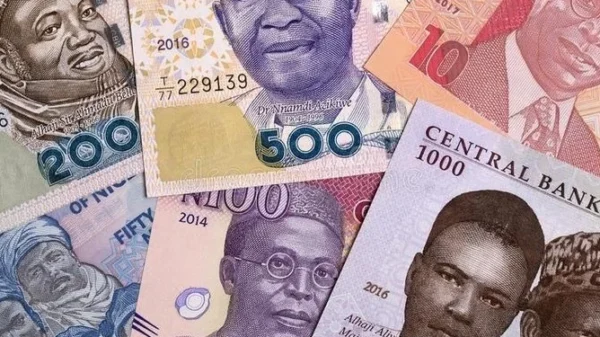




















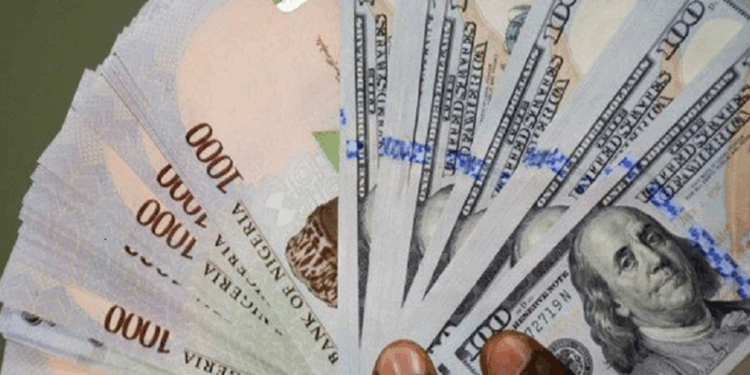
The naira recorded a mild appreciation at the official market, closing at N1,417.95 to the US dollar on Friday, marking a modest gain in the third trading week of January 2026.
Data from the Central Bank of Nigeria (CBN) shows the local currency improved slightly from N1,424.5/$ at the close of trading the previous week, reflecting a gradual but steady strengthening trend.
How the naira traded during the week
The naira maintained relative stability throughout the week, with only narrow movements in the official market. It opened the week at N1,425/$ on Monday, appreciated to N1,420.25/$ on Tuesday, strengthened further to N1,419.5/$ on Wednesday, slipped marginally to N1,420/$ on Thursday, and finally closed stronger at N1,417.95/$ on Friday.
This pattern suggests a calm trading environment, with limited volatility despite sustained demand for foreign exchange.
What the data is saying
The slight appreciation coincided with a modest improvement in Nigeria’s external buffers. According to the CBN, foreign exchange reserves rose to $45.8 billion, up from $45.6 billion the previous week.
Analysts attribute the gradual reserve build-up to a combination of oil export receipts and portfolio investment inflows. The steady reserves position appears to have supported confidence in the official forex market, helping to stabilise the naira even as pressures persist.
Despite the gains, analysts caution that foreign exchange demand remains strong across both the official and parallel markets, limiting the pace at which the naira can strengthen.
Why it matters
Exchange rate stability remains critical for Nigeria’s broader macroeconomic outlook. A firmer naira helps to reduce the cost of imports, easing inflationary pressures and supporting businesses with foreign currency obligations.
Conversely, sharp volatility could undermine investor confidence, increase import costs, and raise the burden of servicing external debt. The CBN’s measured interventions are therefore aimed at striking a balance between exchange rate stability and reserve conservation.
Market watchers note that while the naira’s performance this week reflects cautious optimism, sustaining these gains will depend on consistent forex inflows and prudent macroeconomic management.
What you should know
-
Nigeria’s external reserves have stayed above $45 billion since the start of 2026, providing a buffer against external shocks.
-
The CBN’s official exchange rate guides transactions for banks and authorised dealers, while parallel market movements continue to influence sentiment.
-
Recent CBN measures have focused on supplying forex to end-users and curbing speculative activity.
-
Nigeria’s inflation outlook has also improved, with headline inflation easing to 15.15% in December 2025, following a CPI methodology review by the National Bureau of Statistics.
Overall, the naira’s slight appreciation points to short-term stability, but economists stress that longer-term strength will require deeper structural reforms, stronger export earnings, and sustained confidence in Nigeria’s economic policy direction.

Emmanuel Bassey is a Financial Expert that has worked in the Banking and Finance Industry for over 15+ years across different banks in Nigeria


