



















The Lagos State House of Assembly has passed a ₦4.44 trillion budget for the 2026 fiscal year, formally approving the Lagos State Government’s proposed “Budget of Shared Prosperity.” The passage followed extensive deliberations during plenary and the adoption of the report of the House Committee on Economic Planning and Budget, marking a key milestone in the state’s fiscal planning for the coming year.
The newly approved budget lays out the state’s macroeconomic assumptions, spending priorities, and deficit financing strategy, all aimed at sustaining economic growth, strengthening infrastructure delivery, and maintaining fiscal stability in Nigeria’s commercial capital. As the country’s largest sub-national economy, Lagos State’s budget decisions are often seen as an important barometer of broader economic confidence.
Macroeconomic assumptions and 2025 performance
Presenting the committee’s report, Chairman of the House Committee on Economic Planning and Budget, Mr. Sa’ad Olumoh, explained that the 2026 budget framework was shaped by prevailing national and global economic conditions. According to him, the assumptions underpinning the budget include an exchange rate benchmark of ₦1,512 to the US dollar, an inflation rate of 14.7%, daily oil production of 2.06 million barrels, and a benchmark oil price of $64 per barrel.
Olumoh also disclosed that lawmakers reviewed the performance of the 2025 budget to guide their assessment of the 2026 proposal. As of November 2025, the state recorded a cumulative budget performance of 79%. Capital expenditure performance stood at 75%, while recurrent expenditure reached 87%. Overall revenue performance was also placed at 79%, reflecting relatively strong fiscal execution despite inflationary pressures and macroeconomic headwinds.
Breakdown of the 2026 budget
For the 2026 fiscal year, the approved ₦4.44 trillion budget is made up of ₦2.052 trillion in recurrent expenditure and ₦2.185 trillion in capital expenditure, underscoring the state government’s continued emphasis on infrastructure-led development. The near balance between recurrent and capital spending signals a deliberate effort to avoid excessive consumption spending while prioritizing long-term economic assets.
The capital allocation is expected to support investments across critical sectors such as transportation, health, education, housing, and public utilities. Recurrent expenditure provisions cover personnel costs, overheads, debt servicing, and loan repayments, reflecting the operational realities of running Africa’s most populous city-state.
The budget carries a projected deficit of about ₦243 billion, which, according to the committee, will be financed through approved borrowing and other financing options in line with existing fiscal responsibility frameworks.
Legislative adjustments and debates
During the legislative review process, lawmakers disclosed that an additional ₦171 billion was added to the original budget proposal submitted by the executive. Mr. Aro Moshood, representing Ikorodu II constituency, confirmed the upward adjustment, noting that the changes were made to accommodate priority spending areas identified during committee reviews.
Several lawmakers emphasized the need for sustained revenue reforms, improved efficiency among revenue-generating agencies, and prudent debt management to ensure the long-term sustainability of the state’s finances, especially in an environment of rising borrowing costs.
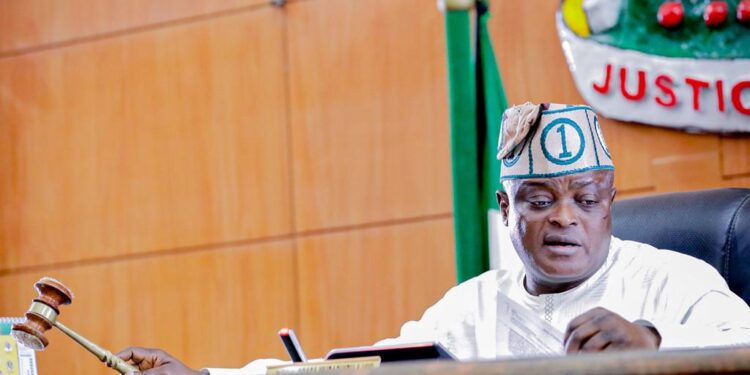
Speaking after the budget’s passage, the Speaker of the House, Mudashiru Obasa, described the 2026 budget as realistic and well-balanced. He expressed confidence that, if properly implemented, it has the capacity to drive inclusive economic growth and improve living standards across the state. Obasa added that revenue-generating agencies had assured lawmakers of stronger collaboration to meet—and possibly exceed—projected revenue targets.
Why the budget matters
Lagos State remains Nigeria’s economic powerhouse, and the size and structure of its annual budget often influence investor sentiment and sub-national policy direction. With capital expenditure nearly matching recurrent spending, the 2026 budget reinforces the state’s commitment to infrastructure development at a time of economic uncertainty, high inflation, and mounting fiscal pressures on state governments.
The reliance on internally generated revenue and the modest deficit projection also highlight the importance of efficient tax administration, revenue diversification, and disciplined spending to preserve Lagos State’s fiscal health.
What you should know
Governor Babajide Sanwo-Olu originally presented a ₦4.237 trillion budget proposal to the House on November 25. He projected total revenue of ₦3.99 trillion, comprising ₦3.12 trillion from internally generated revenue and ₦874 billion from federal transfers. Following legislative review, the budget was adjusted upward, with the deficit financing plan for 2026 estimated at approximately ₦243.3 billion.
With its passage, attention now shifts to implementation, as stakeholders watch closely to see how effectively Lagos State translates its ambitious 2026 budget into tangible economic and social outcomes

Emmanuel Bassey is a Financial Expert that has worked in the Banking and Finance Industry for over 15+ years across different banks in Nigeria


