





























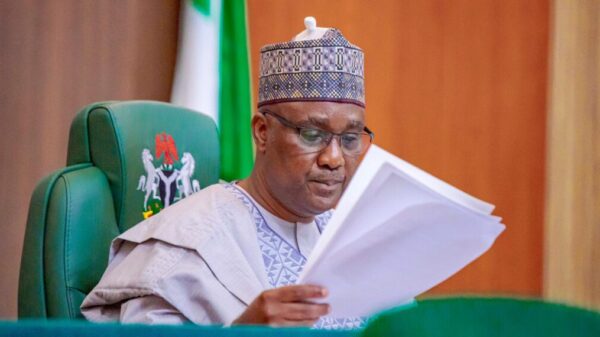


Governor Umaru Bago of Niger State has presented a proposed ₦1.31 trillion budget for the 2026 fiscal year to the Niger State House of Assembly, outlining a spending plan he described as firmly anchored on consolidation, inclusive growth, and long-term sustainability. The budget was laid before lawmakers on Friday and reflects the administration’s intention to stabilise public finances while deepening investment in critical development sectors.
At ₦1.31 trillion, the 2026 proposal represents a 12.7 per cent reduction from the ₦1.5 trillion budget approved for the 2025 fiscal year. Governor Bago explained that the downward adjustment was deliberate, aimed at strengthening fiscal discipline, prioritising impactful projects, and ensuring better value for public spending amid a challenging national and global economic environment.
The governor tagged the proposal the “Budget of Consolidation,” stressing that it would focus on translating earlier reforms and investments into tangible outcomes for citizens. According to him, the core priorities of the budget include wealth and job creation, agricultural transformation, improved healthcare delivery, expansion of road and other infrastructure, and enhanced access to quality education.
A breakdown of the spending framework shows a strong emphasis on capital development. Of the total budget size, ₦270.29 billion (26.19 per cent) is allocated to recurrent expenditure, while ₦761.64 billion (73.81 per cent) is set aside for capital projects. This allocation underscores the administration’s commitment to infrastructure expansion and productive investments that can stimulate economic activity across the state.
On the revenue side, Governor Bago said the budget would be financed through a mix of statutory transfers and internally generated funds. Expected inflows include ₦163.2 billion from statutory allocation, ₦154.7 billion from Value Added Tax (VAT), ₦100.2 billion from Internally Generated Revenue (IGR), and ₦398.8 billion from capital receipts, alongside other funding sources. He noted that improving IGR remains a major focus as the state works to reduce overreliance on federal allocations.
Sectoral allocations reveal agriculture as a central pillar of the administration’s agenda. The sector is allocated ₦59.2 billion, reflecting Niger State’s ambition to consolidate its position as a leading agricultural hub. Governor Bago said the funds would support fertiliser distribution, construction of modern abattoirs, and the establishment of an Agricultural Cooperative Agency designed to boost productivity, strengthen value chains, and increase farmers’ incomes.
Education receives ₦107.9 billion, with plans to rehabilitate at least 325 schools, expand teacher training programmes, and promote vocational and technical skills—particularly in agriculture and information and communications technology (ICT)—to better prepare young people for the evolving labour market. The health sector is allocated ₦72 billion, which will be deployed to advance universal health coverage, complete primary healthcare centres across the state, and strengthen the state health insurance scheme.
Infrastructure accounts for the bulk of capital spending, with ₦761.6 billion dedicated to roads, water supply expansion, and energy projects aimed at unlocking economic opportunities and improving living standards. The governor also disclosed that the broader economic sector—including agriculture, commerce, and industrial development—would receive ₦510.3 billion, while the social sector is allocated ₦194.1 billion for education, healthcare, and social welfare programmes.
Additional allocations include ₦7.8 billion for the law and justice sector, targeted at strengthening the rule of law and judicial efficiency, and ₦50.3 billion for general administration, intended to support civil service reforms and improve public sector performance.
Governor Bago said the budget assumptions are based on an exchange rate of ₦1,447.21 per dollar, an inflation rate of 16.05 per cent, and a GDP growth projection of 4.23 per cent. Implementation, he added, would prioritise completing ongoing projects, boosting agricultural output and food security, and enhancing revenue mobilisation.
Responding on behalf of the legislature, Speaker of the Niger State House of Assembly, Alhaji Abdulmalik Sarkin-Daji, pledged lawmakers’ support for the executive arm, calling for sustained collaboration to realise the vision of a prosperous and secure “New Niger.” He emphasised that progress would depend on strong synergy between government institutions, traditional authorities, and citizens, describing unity as essential to building a competitive and opportunity-rich state.

Emmanuel Bassey is a Financial Expert that has worked in the Banking and Finance Industry for over 15+ years across different banks in Nigeria


