


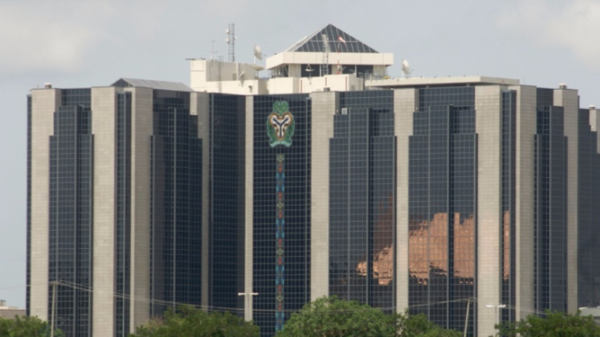
































The Economic and Financial Crimes Commission (EFCC) on Thursday arraigned BFI Group Corporation and six individuals before the Federal Capital Territory (FCT) High Court sitting in Jabi, Abuja, over an alleged attempt to defraud the Central Bank of Nigeria (CBN) of €100 million through a fake Certificate of Capital Importation (CCI).
The development was disclosed in a statement posted on the EFCC’s official X account on Thursday.
According to the anti-graft agency, the defendants are accused of conspiring to mislead the CBN into issuing a Certificate of Capital Importation for funds that were never deposited into a valid account.
Who is involved
The defendants listed in the case are:
-
BFI Group Corporation
-
Reuben M. Jaja
-
Uzor Chidi Jerry
-
David Femi James
-
Imeobong Jumbo Udom
-
Adeola Edward
-
Emeka Emmanuel Okorie
They are facing a five-count amended charge bordering on conspiracy, fraud, and obtaining by false pretence.
What the EFCC is alleging
The EFCC said that between August 12, 2020, and March 2021, the defendants allegedly conspired to induce the CBN to issue a Certificate of Capital Importation for €100 million, even though the funds were never lodged in any legitimate or verifiable CBN account.
Count one of the amended charge alleges that the defendants intended to induce the CBN to confer a benefit on BFI Group Corporation by false pretence, contrary to Sections 8(a) and 1(3) of the Advance Fee Fraud and Other Related Offences Act.
Count two specifically alleges that BFI Group Corporation and Reuben M. Jaja attempted to obtain the €100 million CCI by falsely claiming that the funds had been deposited in a non-existent CBN account.
The EFCC said the alleged actions were aimed at using the fake CCI to validate a capital inflow that never actually occurred.
Court proceedings
When the amended charges were read in court, all the defendants pleaded not guilty.
Prosecution counsel, Ekele Iheanacho, SAN, asked the court to fix a trial date and also requested a date to hear and determine the bail applications.
Defence counsel, Chinedu Eze, applied orally for bail on behalf of the defendants, citing provisions of the Administration of Criminal Justice Act (ACJA) and relying on previous judicial precedents.
However, the prosecution objected, arguing that the cited authorities were inapplicable because the defendants had already been formally charged and that written bail applications were already before the court.
Justice M.S. Idris adjourned the matter until February 3, 2026, for ruling on the bail applications and to set a trial schedule.
The court ordered that the fourth defendant be remanded in EFCC custody, while the remaining defendants were remanded at the Kuje Correctional Centre pending the bail ruling.
Why this matters
Certificates of Capital Importation are critical documents used to confirm the inflow of foreign capital into Nigeria and to guarantee investors the right to repatriate funds and profits.
Any abuse of the CCI process undermines investor confidence, weakens foreign exchange monitoring, and exposes the financial system to fraud and regulatory risks.
The EFCC said the case forms part of its broader efforts to clamp down on financial crimes, including contract fraud, illicit capital flows, and misrepresentation in Nigeria’s financial and foreign exchange systems.
The Commission has in recent months intensified prosecutions involving large-scale fraud, signalling tougher enforcement to protect the integrity of Nigeria’s financial architecture.

Emmanuel Bassey is a Financial Expert that has worked in the Banking and Finance Industry for over 15+ years across different banks in Nigeria


