

































Nigeria’s equity market has entered 2026 on a historic high, reshaping the country’s financial landscape and attracting renewed attention from both local and offshore investors. Market capitalisation on the Nigerian Exchange (NGX) has crossed the N100 trillion mark, while the All-Share Index (ASI) closed last week at 165,512 points, translating to a year-to-date return of about 6.36%.
At first glance, the rally appears convincing. Over recent months, the ASI has pushed into uncharted territory, oscillating between 155,000 and 167,000 points, suggesting that bullish sentiment could persist through 2026. Some analysts, citing ongoing reforms, improved macroeconomic coordination, and the prospect of new high-profile listings, project potential gains of up to 40% for the year.
However, beneath the glittering headline numbers lie structural and systemic risks that investors cannot afford to ignore.
Premium valuations and the illusion of depth
The Nigerian stock market is increasingly trading at a premium relative to historical norms. This has been driven by a mix of structural reforms, tighter monetary conditions that have reduced speculative alternatives, and a sharp imbalance between demand and the supply of quality listed assets. Simply put, too much money is chasing too few fundamentally strong stocks.
This imbalance has pushed prices higher, but it has also exposed one of the market’s most persistent weaknesses: liquidity.
The “ghost” of liquidity
On paper, many NGX-listed stocks appear liquid. In practice, liquidity is heavily concentrated in a narrow group of bellwether names — mainly Tier-1 banks and a handful of blue-chip corporates such as MTN Nigeria, Dangote Cement, BUA Cement, Zenith Bank, and UBA.
Beyond the NGX-30, trading volumes thin out sharply. For many mid- and small-cap stocks, liquidity becomes what analysts describe as a “ghost”: visible in theory, but difficult to access in meaningful size without triggering sharp price declines. Investors may hold shares in fundamentally sound companies, yet struggle to exit positions without accepting deep discounts.
This liquidity risk remains one of the most underappreciated threats in the current rally.
Currency risk and real returns
Another major caveat is the naira. Nominal equity returns mean little if they are eroded by currency depreciation. A 30% gain in stocks, for instance, offers no real protection if the naira weakens by 40% against the dollar or euro over the same period.
This dynamic explains why foreign portfolio investors (FPIs) remain cautious despite improved mid-term stability in the foreign exchange market. For offshore investors, Nigerian equities represent a dual bet — on company performance and on currency stability. Until confidence in the naira’s long-term purchasing power improves, foreign inflows are likely to remain selective.
Election-year pressures ahead
Looking ahead, 2026 carries its own risks. As a pre-election year ahead of the 2027 general polls, rising government expenditure could fuel inflationary pressures, distort market signals, and introduce uncertainty into fiscal and monetary policy planning. Historically, such conditions have tended to weigh on equity valuations, particularly in sectors sensitive to macro instability.
Structural challenges also persist, including shallow investor diversification, lingering restrictions on retail participation (despite recent reforms), currency controls, and broader economic fragilities linked to debt and external shocks.
Dividends under pressure
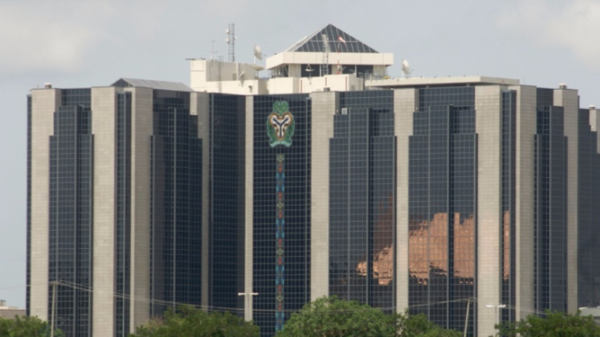
For income-focused investors, especially pension funds and local retail players, the outlook is further complicated by regulatory changes. The Central Bank of Nigeria (CBN) has suspended dividend payments for some banks as part of its recapitalisation drive ahead of the March 2026 deadline.
This marks a significant shift in a market where bank stocks have traditionally been prized for yield. While recapitalisation is expected to strengthen the financial system in the long run, the short-term impact is a drying up of dividends — a key pillar of investor demand.
Why optimism hasn’t vanished
Despite these caveats, optimism has not disappeared. In the medium term, the market could receive a major boost from the anticipated listing of the Dangote Petroleum Refinery, widely expected to be the most significant capital market event of 2026. With an estimated valuation of around $20 billion, the listing could inject substantial liquidity and enhance the global profile of Nigeria’s capital market.
In addition, recapitalised Nigerian banks are evolving into fortress-like financial institutions capable of underwriting large-scale infrastructure projects. Price targets for Tier-1 lenders such as Zenith Bank and UBA have already been revised upward, with return-on-equity forecasts approaching 45% by the end of 2026.
Bottom line
Nigeria’s stock market rally is real, but it is not without risks. Liquidity constraints, currency exposure, election-year uncertainties, and dividend pressures all complicate the investment case. For investors, the message is clear: opportunities exist, but success in this market will depend less on broad optimism and more on timing, stock selection, and risk management.

Emmanuel Bassey is a Financial Expert that has worked in the Banking and Finance Industry for over 15+ years across different banks in Nigeria


