


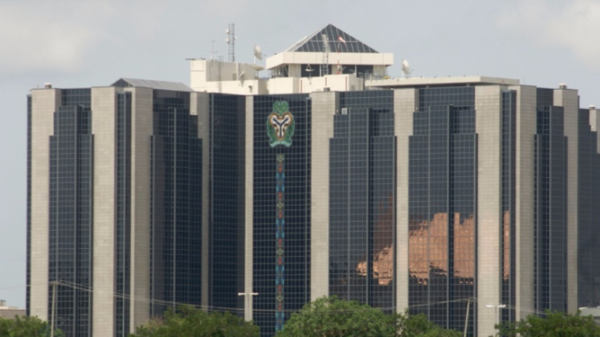
































Nigeria’s banking sector is increasingly being tipped by market analysts as one of the strongest equity investment opportunities for 2026, despite lingering concerns around recapitalisation, dividend sustainability, and evolving tax policies. Analysts sampled by Nairametrics argue that stronger capital buffers, improving macroeconomic stability, and expectations of clearer regulatory direction from the Central Bank of Nigeria (CBN) have laid the groundwork for a potential re-rating of banking stocks in the year ahead.
Leading this optimistic view is Tajudeen Olayinka, Chief Executive Officer of Wyoming Capital & Partners Limited, who believes the ongoing recapitalisation exercise has fundamentally strengthened banks’ balance sheets. According to him, the fresh capital injections—while dilutive in the short term—have positioned banks to expand credit creation and deepen deposit mobilisation as economic conditions stabilise.
“The business of a bank is asset creation and liability generation, and the economy is now in a better position to support that,” Olayinka said, noting that Nigeria has moved beyond the most severe phase of post-reform economic dislocation experienced in 2023. He added that fears surrounding dilution are often exaggerated, pointing out that several banks that completed capital raising early were still able to pay dividends on newly issued shares, in some cases exceeding prior-year payouts.
Olayinka explained that the scale of equity issuance was largely driven by the CBN’s recapitalisation framework, which recognises only paid-up capital and share premium—excluding retained earnings. This regulatory approach, he said, compelled even fundamentally strong banks to raise equity at relatively depressed market valuations. As a result, many banking stocks are now trading at deep discounts to book value, creating what he described as a rare mispricing opportunity for long-term investors.
Caution persists amid dividend and regulatory uncertainty
Despite the bullish narrative, some market operators urge restraint. Garba Kurfi, Chief Executive Officer of APT Securities & Funds Ltd, said investors remain firmly in a “wait-and-see” mode following the release of banks’ management accounts. He noted that weaker interim dividend payouts—significantly below prior-year levels—have heightened scepticism, particularly against the backdrop of recapitalisation uncertainty and recent regulatory actions involving institutions such as Aso Savings & Loans and Union Homes.
Kurfi stressed that until the CBN officially announces which banks have fully met recapitalisation requirements, claims by individual lenders remain speculative. “That announcement will determine the direction of banking stocks,” he said.
He also highlighted a structural constraint that could limit sharp price appreciation: the sheer volume of outstanding banking shares, often ranging between 40 billion and 50 billion units. Compared with companies like Seplat Energy or Nestlé Nigeria, whose smaller share bases support higher nominal prices, banks may require strong and consistent dividend payouts to justify significant valuation upside.
Tax policy adds another layer of risk
Beyond sector-specific dynamics, analysts warn that broader policy risks could influence equity performance in 2026. Muda Yusuf, Convener of the Centre for the Promotion of Public Enterprise (CPPE), has cautioned that the proposed increase in capital gains tax from 10% to 30% could dampen investor confidence, particularly among large institutional investors who dominate market liquidity.
While Yusuf acknowledged Nigeria’s improving growth outlook and the possibility of moderating interest rates—factors that could favour equities over fixed income—he warned that sharply higher taxes could undermine market momentum just as confidence is rebuilding.
Outlook: opportunity tempered by policy signals
Taken together, analysts agree that Nigeria’s banking sector stands at a critical inflection point. Stronger capital positions, improving macroeconomic indicators, and discounted valuations have positioned bank stocks as a lagging but potentially high-upside segment of the equity market in 2026. However, the pace and scale of any rally will depend on three decisive factors: regulatory clarity from the CBN, dividend outcomes for the 2025 financial year, and the broader policy environment—particularly taxation—that will shape investor appetite.
As analysts at Coronation Merchant Bank noted, while banking stocks underperformed in 2025 due to higher provisioning and the end of pandemic-era forbearance, the sector is well placed to become a major driver of market growth in 2026 as macroeconomic stability gradually returns.

Emmanuel Bassey is a Financial Expert that has worked in the Banking and Finance Industry for over 15+ years across different banks in Nigeria


