























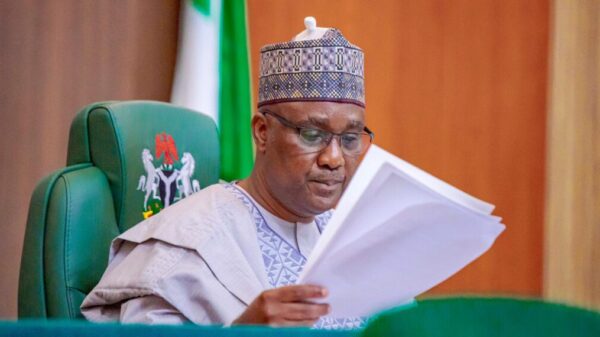


The Borno State Government has disbursed N1 billion to small and medium-scale enterprises (SMEs) across five local government areas in the southern senatorial district of the state, reinforcing its commitment to grassroots economic recovery and post-insurgency development. The intervention, unveiled on Thursday, targets entrepreneurs operating in Biu, Hawul, Shani, Bayo, and Kwaya-Kusar.
According to reports by the News Agency of Nigeria (NAN), the disbursement is designed to support small business owners, improve business sustainability in rural communities, and stimulate local economic activity in areas that were severely affected by years of insurgency and insecurity.
What the state government is saying
Governor Babagana Zulum said the direct injection of capital into the SME sector is a critical strategy for driving inclusive growth, reducing poverty, and fostering long-term stability in Borno’s rural communities. Speaking at the flag-off ceremony in Biu, the governor explained that empowering local entrepreneurs remains central to the state’s recovery agenda.
According to him, small businesses form the backbone of local economies, particularly in post-conflict regions where formal employment opportunities are limited. By providing financial support to SMEs, the government aims to enable beneficiaries to expand operations, retain existing jobs, and create new ones.
Zulum noted that the initiative aligns with the state’s broader economic recovery framework, which prioritises self-reliance over prolonged dependence on humanitarian assistance. He stressed that revitalising small businesses would help restore livelihoods, strengthen household incomes, and reduce social vulnerabilities that often fuel unrest.
“This direct support to entrepreneurs is essential for grassroots development and for building a culture of self-reliance in communities recovering from years of insecurity,” the governor was quoted as saying.
Focus on rural inclusion and post-insurgency recovery
The SME disbursement reflects the Borno State Government’s deliberate focus on rural inclusion, particularly in the southern part of the state, which has been relatively stable compared to other areas but still bears the economic scars of prolonged conflict.
Beneficiaries were drawn from a wide range of sectors, including trading, agriculture, agro-processing, services, and small-scale manufacturing. State officials said the spread of beneficiaries across multiple local government areas was intended to ensure balanced development and prevent the concentration of support in a single location.
By targeting SMEs in these communities, the government hopes to unlock local value chains, encourage entrepreneurship among youth and women, and deepen economic participation at the community level.
Additional interventions announced
Beyond the N1 billion SME intervention, Governor Zulum announced several complementary initiatives aimed at addressing youth unemployment, education, healthcare, and infrastructure gaps in Biu and surrounding areas.
He approved the immediate employment of 200 youths from Biu to curb youth restiveness and provide income opportunities. The governor also inaugurated a remodeled Second Chance School, designed to offer vulnerable girls and women access to basic education, vocational skills training, and digital literacy.
In the health sector, Zulum visited the Biu Specialist Hospital, where volunteer health workers were formally employed to strengthen service delivery. He also inspected a 100-unit teachers’ housing estate under construction, a project aimed at attracting and retaining qualified teachers in public schools across the district.
Additionally, the governor directed the commencement of rehabilitation work on the Borno State Hotel Annexe in Biu, part of a broader infrastructure renewal drive to improve public assets and stimulate local economic activity.
What you should know
The N1 billion SME disbursement builds on a series of economic empowerment initiatives implemented by the Borno State Government in recent years. In March 2025, the state approved N1 billion in grants for 9,403 MSMEs in Biu and Hawul LGAs, targeting entrepreneurs, youths, and vulnerable households.
Earlier, in July 2024, the government disbursed N450 million to about 45,000 widows and vulnerable women as palliative support, aimed at helping families rebuild livelihoods disrupted by the Boko Haram crisis.
Taken together, these interventions underscore the state government’s strategy of combining humanitarian support with economic empowerment, as Borno continues its transition from emergency response to sustainable development and long-term economic recovery.

Emmanuel Bassey is a Financial Expert that has worked in the Banking and Finance Industry for over 15+ years across different banks in Nigeria


