












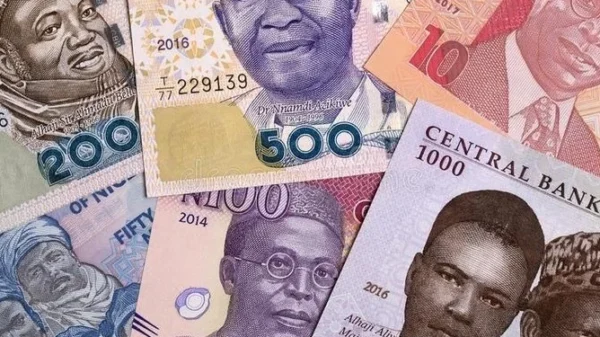




















Nigeria’s currency, the naira, is projected to remain under sustained pressure throughout 2026, as structural weaknesses in the economy continue to weigh on foreign exchange stability. This outlook was highlighted by economist Dr. Yemi Kale during his presentation at the FirstBank Nigeria Economic Outlook 2026 forum, where he outlined multiple scenarios for the performance of the naira in the coming year.
According to Kale, the most likely outcome for the naira is a moderate but persistent depreciation, driven by ongoing challenges such as inflationary pressures, limited foreign exchange inflows, high import dependence, and lingering confidence issues in the FX market. While policy reforms have improved transparency and reduced some distortions, he noted that these measures may not be sufficient to deliver strong currency appreciation in the near term.
Under the baseline scenario, the naira is expected to trade within the range of ₦1,350 to ₦1,450 per U.S. dollar by the end of 2026. This projection assumes gradual improvements in external reserves, relative stability in oil production and export earnings, continued central bank intervention to smooth volatility, and the absence of major external shocks. By mid-year, the currency could trade around ₦1,310 to the dollar before weakening slightly toward year-end.
Despite this outlook, Kale cautioned that risks to the currency remain elevated. Structural issues such as persistent inflation, weak productivity growth, and FX mismatches across sectors could continue to exert downward pressure on the naira, making sustained stability difficult without deeper reforms.
Alternative scenarios for the currency
In a more optimistic scenario, the naira could strengthen to levels between ₦1,200 and ₦1,300 per dollar by the end of 2026. This outcome would depend on stronger global oil prices, improved domestic oil output, increased non-oil export earnings, rising remittance inflows, and effective implementation of foreign exchange reforms. A reduction in inflation and a narrowing gap between official and parallel market rates would also support currency stability under this scenario.
However, even in this more favourable case, the naira would still remain significantly weaker than historical levels, reflecting long-standing structural imbalances in Nigeria’s economy. Kale stressed that currency stability should be viewed as a gradual process rather than a rapid turnaround.
On the downside, a more adverse scenario could see the naira weaken beyond ₦1,550 to ₦1,650 per dollar by the end of 2026. This outcome could be triggered by a sharp decline in oil prices, disruptions to crude oil production, worsening fiscal pressures, rising inflation, or a renewed loss of investor confidence. In such a scenario, limited FX liquidity and widening budget deficits could intensify depreciation pressures.
Reserves, fiscal conditions, and structural reforms
The outlook also pointed to a gradual rebuilding of Nigeria’s external reserves over the medium term, supported by improved oil receipts, remittance inflows, and potential portfolio investment returns. However, Kale emphasised that reserve accumulation alone would not be sufficient to stabilise the naira without consistent policy implementation and fiscal discipline.
Efforts to reduce dependence on imported fuel through local refining were identified as a key opportunity to conserve foreign exchange. In addition, expanding exports in agriculture, manufacturing, and services could help broaden Nigeria’s FX base and reduce vulnerability to oil price shocks.
On the fiscal side, Nigeria’s debt-to-GDP ratio is expected to remain relatively stable over the medium term. However, high debt servicing costs continue to pose a challenge, with interest payments consuming a significant share of government revenue. This fiscal pressure limits the government’s ability to support the economy during periods of external stress, indirectly affecting currency stability.
Broader economic implications
The cautious outlook for the naira reflects broader macroeconomic realities facing Nigeria. While economic growth is expected to improve moderately and inflation is projected to ease gradually, uncertainties around global financial conditions, commodity prices, and domestic reforms remain key risk factors.
Kale noted that restoring confidence in the naira will require sustained efforts across monetary, fiscal, and structural policy areas. Transparent FX management, credible fiscal planning, and reforms that boost productivity and exports will be critical to improving long-term currency resilience.
As Nigeria enters 2026, the naira’s performance will likely continue to reflect the balance between reform progress and structural constraints, with moderate depreciation remaining the most probable outcome in the absence of significant external or policy-driven improvements.

Emmanuel Bassey is a Financial Expert that has worked in the Banking and Finance Industry for over 15+ years across different banks in Nigeria


