
































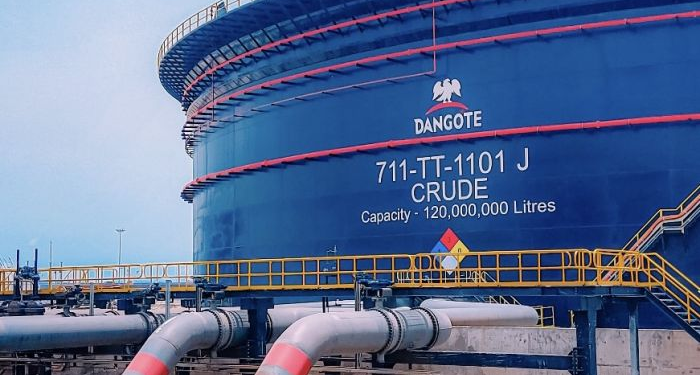
The Dangote Petroleum Refinery has firmly denied reports suggesting that it is shutting down operations for maintenance, describing such claims as false, misleading, and deliberately crafted to unsettle Nigeria’s downstream petroleum market. In a statement issued on Monday, the refinery reaffirmed that it continues to operate at scale, supplying more than 50 million litres of petrol daily to meet domestic demand.
The management of the 650,000 barrels-per-day Lagos-based facility said production remains stable and uninterrupted, stressing that the refinery is fully functional and continues to play a critical role in stabilising fuel supply and prices across the country. According to the company, the rumours of a shutdown are unfounded and do not reflect the realities of its current operations.
Production steady despite maintenance activities
The refinery explained that it has consistently maintained daily petrol production levels ranging between 40 million and 50 million litres, depending solely on prevailing market demand. As evidence of ongoing operations, the company disclosed that on January 4, it produced 50 million litres of Premium Motor Spirit (PMS) and evacuated 48 million litres through its gantry on the same day. In addition, marketers reportedly lifted over 48 million litres in a single day last Sunday, underscoring steady offtake from the facility.
Dangote Refinery further revealed that its current stock levels are sufficient to cover more than 20 days of national petrol consumption, effectively dispelling fears of an imminent supply shortage. It also reaffirmed its ex-gantry price of N699 per litre, noting that the price remains accessible to all marketers and bulk buyers without discrimination.
In its words, “Dangote Petroleum Refinery continues to operate at scale and retains the capacity to supply between 40 million and 50 million litres of Premium Motor Spirit (PMS) daily through January and February, subject solely to market demand.”
Maintenance without disruption
Addressing the source of the shutdown speculation, the refinery clarified that routine maintenance was being carried out on select units, including the Crude Distillation Unit (CDU) and the Residual Fluid Catalytic Cracking (RFCC) unit. However, it stressed that these activities have not disrupted overall production, owing to the integrated and redundant design of the facility.
According to the statement, other critical processing units—such as the Naphtha Hydrotreater, Continuous Catalytic Regeneration (CCR) Reformer, and the Hydrocracker—remain fully operational. These units continue to produce not only PMS but also Automotive Gas Oil (diesel) and Jet A-1 fuel, ensuring a steady supply of refined products to the domestic market.
To further reassure stakeholders, the refinery disclosed that between December 16, 2025, and the present date, it has consistently loaded between 31 million and 48 million litres of PMS daily, in line with actual market demand. These figures, it noted, are independently verifiable through depot loading records maintained by the Nigerian Midstream and Downstream Petroleum Regulatory Authority (NMDPRA) as part of its regulatory oversight.
Stabilising fuel prices in a post-subsidy era
Dangote Refinery also highlighted the broader implications of its operations for Nigeria’s fuel market. According to the company, without domestic refining capacity, petrol prices in a post-subsidy environment could climb as high as N1,400 per litre, driven by import costs, foreign exchange pressures, and global price volatility.
“The refinery’s operations have therefore served as a critical stabilising force in the downstream petroleum market,” the statement said, adding that sustained local production has helped moderate pump prices and reduce Nigeria’s exposure to external supply shocks.
What you should know
In December, the refinery reiterated its readiness to take full responsibility for meeting Nigeria’s domestic petrol needs. It pledged to deliver up to 1.5 billion litres of PMS monthly—equivalent to about 50 million litres per day—with plans to ramp up supply to 1.7 billion litres per month, or roughly 57 million litres daily, from February 2026.
Market analysts note that the recent decline in petrol prices across several parts of the country has been largely attributed to increased domestic refining output from Dangote Refinery. As Nigeria continues to transition away from fuel imports, the refinery’s sustained operations are expected to remain central to energy security, price stability, and foreign exchange savings in the months ahead

Emmanuel Bassey is a Financial Expert that has worked in the Banking and Finance Industry for over 15+ years across different banks in Nigeria


