

























Nigeria’s capital market recorded a significant surge in short-term funding activities in 2025, with more than ₦753 billion raised through commercial paper (CP) issuances between April and October, according to the Securities and Exchange Commission (SEC). The disclosure underscores growing liquidity in the market, strong investor appetite, and renewed confidence in regulatory reforms introduced over the past year.
In a statement released on Sunday, December 28, the SEC noted that the impressive volume of CP issuances reflects the increasing importance of the instrument as a flexible and efficient financing option for corporates seeking short-term funding. The Commission attributed the performance to improved market confidence, enhanced regulatory oversight, and favourable macroeconomic developments that have supported capital formation.
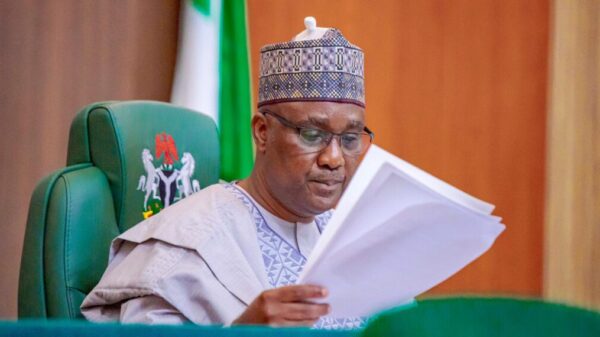
Speaking on the development, SEC Director-General, Emomotimi Agama, described the commercial paper market as one of the most vibrant segments of Nigeria’s capital market during the review period. According to him, CP issuances played a critical role in supporting working capital needs across key sectors of the economy, including manufacturing, agriculture, energy, and other strategic industries.
“Commercial paper issuance remained vibrant, with over ₦753 billion raised to support short-term funding needs across diverse sectors,” Agama said. He added that the resilience of the CP market demonstrates how effectively the capital market is responding to the evolving financing needs of businesses amid tight credit conditions and elevated interest rates in the banking system.
Beyond commercial papers, Agama noted that the broader debt market also recorded landmark transactions within the same period. These include the ₦500 billion Climate Funding Special Purpose Vehicle (SPV) and the ₦200 billion Elektron Finance bond issuance, both of which signal rising investor interest in infrastructure-related and sustainable finance instruments. According to him, such transactions highlight the market’s growing sophistication and its ability to mobilise long-term capital for national development priorities.
“These figures are not just numbers; they represent confidence in our regulatory framework and the resilience of our market architecture,” the SEC chief stressed. He explained that the strong performance of the CP segment forms part of wider capital-raising activities approved by the Commission across debt, equity, and hybrid instruments between April and October 2025. During this period, the market demonstrated what he described as “remarkable depth and adaptability,” reinforcing its central role in funding economic expansion.
Agama also pointed to supportive macroeconomic developments that helped strengthen investor sentiment during the year. Nigeria’s recent sovereign credit rating upgrade and its removal from the Financial Action Task Force (FATF) grey list were cited as critical confidence boosters. According to him, these milestones send a positive signal to both domestic and foreign investors about the stability and credibility of the Nigerian economy.
“These achievements signal renewed confidence in our economy. They will attract greater investment and enhance capital inflows,” he said, noting that improved global perception of Nigeria is already reflecting in higher participation across various market segments.
On monetary conditions, the SEC boss observed that easing inflationary pressures have created room for innovation within the capital market. He urged market operators to move beyond policy discussions to active execution, stressing that the capital market must increasingly position itself as a driver of inclusive economic growth. “The time for passive observation is over. Our collective responsibility is to activate opportunities and position the market as an engine of inclusive growth,” he said.
Agama also addressed the sharp downturn recorded in November, when the Nigerian Exchange lost about ₦6.54 trillion in market capitalisation. He attributed the decline to a combination of profit-taking ahead of the proposed 30 percent Capital Gains Tax, weak sentiment in banking stocks, and broader global uncertainties. He, however, noted that the market has since rebounded following policy assurances and improved investor outlook.
A key reform highlighted by the SEC DG is the migration of the equities settlement cycle from T+3 to T+2, which he described as a landmark achievement that has improved liquidity and reduced counterparty risk. He disclosed that plans are already underway to move to T+1 and ultimately T+0, aligning Nigeria with global best practices.
Commercial paper, which is a short-term unsecured debt instrument with maturities of 270 days or less, has increasingly become a preferred funding tool for corporates. The SEC confirmed that companies raised a total of ₦753 billion through CPs during the review period alone.
As Nigeria’s capital market closes 2025 on a historic high, with total market capitalisation nearing ₦150 trillion, the SEC believes that strong commercial paper activity, major debt issuances, improved macroeconomic indicators, and sustained market reforms are collectively positioning the country as one of Africa’s leading investment destinations.

Emmanuel Bassey is a Financial Expert that has worked in the Banking and Finance Industry for over 15+ years across different banks in Nigeria


