































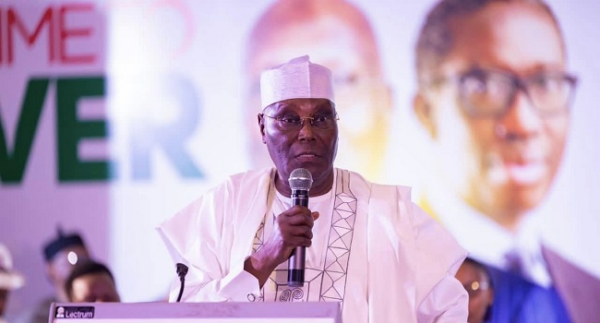
Former Vice President Atiku Abubakar has called for a fresh round of legislative consideration of the tax reform laws introduced by the administration of President Bola Tinubu, citing what he described as serious constitutional flaws arising from discrepancies between the versions passed by the National Assembly and those subsequently gazetted.
In a statement issued late Sunday, Atiku argued that the only lawful remedy available is to return the affected tax laws to the National Assembly for proper reconsideration, passage, and presidential assent. His intervention comes at a critical moment, as the Federal Government plans to implement the remaining tax reform laws from January 1, 2026, despite mounting concerns from lawmakers and legal commentators.
According to Atiku, the controversy took a decisive turn after the Senate confirmed that the gazetted version of the Tax Act does not fully reflect what was debated, harmonised, and approved by both chambers of the National Assembly. He described this confirmation as a constitutional red flag that cannot be brushed aside through administrative fixes or expedited re-gazetting.
Atiku stressed that under Section 58 of Nigeria’s 1999 Constitution, the lawmaking process is explicit and sequential. A bill must be passed by both the Senate and the House of Representatives, receive presidential assent, and only then be gazetted. In his view, gazetting is merely an administrative act that gives public notice to an already valid law; it does not have the power to amend, correct, or validate a defective or altered piece of legislation.
He warned that any law published in a form that was never approved by the National Assembly is legally invalid. “Any post-passage insertion, deletion, or modification without legislative approval amounts to forgery, not a clerical error,” Atiku said, adding that legality cannot be restored by speed, discretion, or internal directives.
The former Vice President was particularly critical of reports suggesting that authorities may be considering a rushed re-gazetting of the tax laws while legislative investigations into the alleged alterations are still ongoing. He argued that such a move would undermine parliamentary oversight and set a dangerous constitutional precedent. In his view, neither the Senate President, Godswill Akpabio, nor the Speaker of the House of Representatives, Tajudeen Abbas, has the authority to validate or regularise laws that were not properly passed in identical form by both chambers.
“The only lawful path,” Atiku maintained, “is fresh legislative consideration, re-passage in identical form by both chambers, fresh presidential assent, and proper gazetting.” Anything short of this, he argued, risks eroding constitutional order and exposing the tax reforms to prolonged legal challenges.
The controversy itself emerged after members of the House of Representatives raised concerns that the gazetted versions of certain tax reform laws differed materially from the versions approved by lawmakers. The laws at the centre of the dispute are the Nigerian Tax Act and the Nigerian Tax Administration Act, both scheduled to take effect on January 1, 2026. Subsequent Senate confirmation that discrepancies exist has intensified calls for corrective legislative action.
Why the matter carries weight is tied to the central role of the tax reforms in the Tinubu administration’s economic agenda. The reforms are designed to ease the tax burden on low-income earners and small businesses, while improving long-term government revenue through economic expansion, improved compliance, and a broader tax base. However, unresolved constitutional defects could render the laws vulnerable to court challenges, potentially stalling implementation and undermining investor and public confidence.
Atiku acknowledged that fresh legislative consideration would likely delay the rollout of the new tax regime but argued that such a delay is preferable to implementing laws that may later be struck down by the courts. In his view, a transparent and constitutionally sound process would ultimately strengthen the credibility of the reforms and protect the rule of law.
For context, four tax reform laws have been enacted under the Tinubu administration. Two of them took effect in June 2025, while the remaining two are scheduled for January 1, 2026. Despite the controversy, Taiwo Oyedele, Chairman of the Presidential Committee on Fiscal Policy and Tax Reforms, has insisted that implementation will proceed as planned. He has, however, indicated that the Federal Government remains open to working with the National Assembly should remedial action become necessary.
As the debate continues, Atiku’s intervention adds political and constitutional weight to the growing calls for caution, underscoring the tension between reform momentum and adherence to due legislative process.

Emmanuel Bassey is a Financial Expert that has worked in the Banking and Finance Industry for over 15+ years across different banks in Nigeria


