
































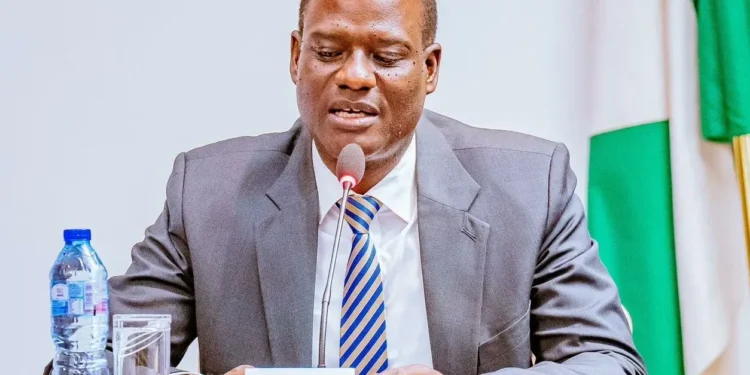
Nigeria’s sweeping tax reform agenda will move forward as scheduled, with two major fiscal laws set to take effect on January 1, 2026, despite concerns raised by the House of Representatives over alleged alterations to the gazetted versions of the legislation. This assurance was given by Taiwo Oyedele, Chairman of the Presidential Committee on Fiscal Policy and Tax Reforms, following a meeting with President Bola Ahmed Tinubu in Abuja.
Speaking to journalists after the briefing, Oyedele said the Federal Government remains firmly committed to the implementation timeline of the Nigerian Tax Act and the Nigerian Tax Administration Act. According to him, the reforms are designed to ease the tax burden on ordinary Nigerians, improve fairness in the system, and stimulate sustainable economic growth. While acknowledging the concerns expressed by lawmakers, he stressed that the overall objectives of the reforms outweigh the current controversy and that the commencement date will not be shifted.
The comments come amid ongoing deliberations by the House of Representatives, whose committee is reviewing allegations that some provisions in the gazetted tax laws differ from what was originally debated and passed by the National Assembly. Lawmakers have argued that any discrepancies should be addressed before full implementation, with some calling for a temporary suspension of the new laws.
Oyedele clarified that four separate tax reform laws have been enacted as part of the administration’s broader fiscal overhaul. Two of these—the Nigerian Revenue Service Establishment Act and the Joint Revenue Service Establishment Act—already came into force on June 26, 2025. He explained that these earlier commencements were intentional, allowing new institutions to be set up, staffed, and operational ahead of the more comprehensive rollout scheduled for 2026.
The remaining two laws, he said, are legally and administratively ready to take effect on January 1. “The plan to commence the new laws on January 1, 2026, will go ahead as scheduled because these reforms are designed to provide relief to the Nigerian people,” Oyedele stated. He added that the executive arm is open to working with the National Assembly if any remedial or clarificatory action is required, but such engagements will not derail the implementation timeline.
A major pillar of the reforms is broad-based tax relief for workers and businesses. Oyedele disclosed that under the new framework, about 98 percent of Nigerian workers will either pay no Pay-As-You-Earn (PAYE) tax or pay significantly lower rates. For businesses, the impact is even more pronounced at the lower end of the economy: approximately 97 percent of small businesses will be exempt from corporate income tax, value-added tax, and withholding tax. Large companies, while still contributing, are expected to benefit from reduced and more predictable tax liabilities.
Beyond immediate relief, Oyedele emphasised that the reforms are not designed to boost government revenue through higher tax rates. Instead, the focus is on expanding the economy, widening the tax base, eliminating wasteful and distortionary incentives, and improving compliance. He noted that better tax awareness, simpler processes, and a stronger tax culture will ultimately drive revenue growth in a more sustainable way.
Providing context, Oyedele explained that the tax reform bills spent about nine months in the National Assembly between October 2024 and June 2025, giving stakeholders ample time to prepare. Since the laws were signed, the government has invested the past six months in capacity building, system upgrades, and nationwide sensitisation to ensure a smooth transition.
The controversy was sparked earlier in December when a lawmaker alleged discrepancies between the gazetted laws and the versions passed by both chambers of the National Assembly. In response, the House inaugurated a committee to review the legislative and administrative process surrounding the Acts. While that review continues, Oyedele maintained that tax reform is an evolving process and that Nigeria cannot afford to delay changes aimed at promoting growth, inclusivity, and shared prosperity.

Emmanuel Bassey is a Financial Expert that has worked in the Banking and Finance Industry for over 15+ years across different banks in Nigeria


