




































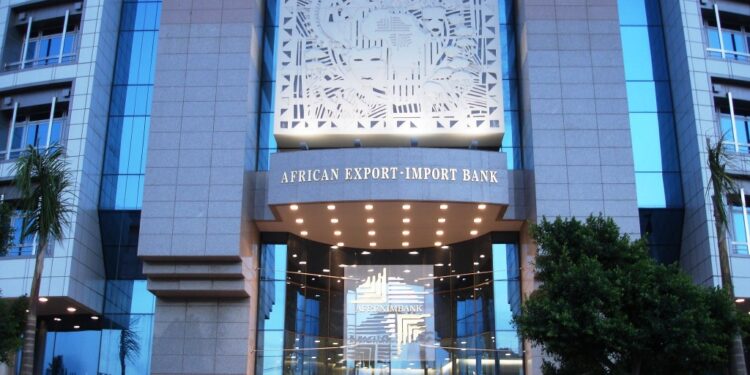
Africa must significantly scale up its factoring volumes to at least €240 billion if it hopes to unlock the full potential of small and medium-sized enterprises (SMEs) and close the continent’s widening working-capital gap, according to the African Export-Import Bank (Afreximbank). The call was made by Mrs. Kanayo Awani, Executive Vice President for Intra-African Trade and Export Development at Afreximbank and member of the FCI Executive Committee, during the Bank’s annual Factoring Workshop held in Abidjan, Côte d’Ivoire.
Awani noted that factoring—an increasingly important form of short-term financing that allows businesses to convert unpaid invoices into cash—has become a critical tool for tackling the estimated US$300 billion SME financing shortfall across Africa. SMEs represent over 90% of African businesses and contribute more than 60% of the continent’s employment and GDP, yet many remain starved of the liquidity needed to scale operations, support supply chains, and compete in expanding regional markets.
While Africa’s factoring volumes have grown substantially—more than doubling from €21.6 billion in 2017 to €50 billion in 2024—the continent is still far from the threshold required to catalyse transformative SME-led growth. Awani explained that for factoring to truly support Africa’s industrialisation agenda and the objectives of the African Continental Free Trade Area (AfCFTA), volumes must rise to a level equivalent to 10% of Africa’s GDP, or roughly €240 billion.
Despite the presence of nearly 200 factoring institutions across the continent, the ecosystem remains underdeveloped. Awani emphasised that achieving the required scale will demand a combination of increased private and public-sector financing, harmonised regulatory reforms, industry-standard legal frameworks, and deeper capacity building for financial institutions and SMEs.
According to her, “SMEs form the backbone of Africa’s economy, yet they continue to face persistent barriers to accessing working capital from formal financial institutions. Scaling factoring to €240 billion will require coordinated industry partnerships, larger funding pools, and targeted support for countries seeking to strengthen legal and operational frameworks for receivables finance.”
Additional insights from the workshop highlighted the broader economic significance of factoring. Mr. Neal Harm, Secretary General of FCI, described factoring and supply chain finance as indispensable tools for unlocking SME competitiveness. Mr. Charlie Dingui, Special Advisor to the National Director of the BCEAO, also underscored the sector’s importance in strengthening socio-economic resilience in West Africa.
Côte d’Ivoire, which hosted the workshop, was spotlighted as one of the continent’s major opportunities, with a potential US$5 billion factoring market. The cocoa sector alone—supporting millions of smallholder farmers and processors—could benefit immensely from faster access to invoice-backed funding, particularly during peak supply cycles.
However, the sector faces persistent constraints. Only 12% of SMEs in Africa currently seek working-capital financing from formal institutions. Instead, many rely on informal lenders, driven away from banks by high borrowing costs, stringent collateral requirements, and slow approval processes. This reliance constrains growth, limits investment in production, and weakens value chains.
Afreximbank’s workshop in Abidjan forms part of a broader effort to build a stronger, more integrated factoring ecosystem across the continent. More than 5,000 participants have now taken part in the Bank’s capacity-building programmes, including the flagship Certificate of Trade Finance in Africa (COTFIA), Afreximbank Academy modules, and FCI’s mentoring and online training sessions. These initiatives are designed to equip regulators, bankers, and factoring professionals with the technical expertise needed to strengthen oversight and expand the industry’s reach.
The Bank also revealed ongoing plans—together with global partners—to provide technical assistance to regulatory bodies, deploy operational toolkits, and support the growth of factoring companies with financing and risk-mitigation solutions. These interventions aim to create a more enabling environment for receivables finance, improve SME access to structured funding, and accelerate Africa’s progress toward a more inclusive and export-oriented economy.
Ultimately, Afreximbank argues that scaling factoring volumes to €240 billion is not just a financial milestone—it is a strategic necessity for employment creation, industrialisation, and the successful implementation of AfCFTA. As millions of young Africans enter the labour market each year, expanding SME financing tools such as factoring will be essential to absorbing new entrants, strengthening value chains, and driving sustainable economic growth across the continent.

Emmanuel Bassey is a Financial Expert that has worked in the Banking and Finance Industry for over 15+ years across different banks in Nigeria


