
































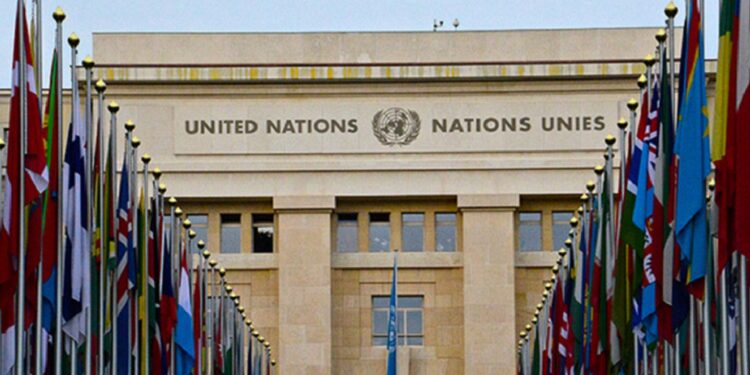
The United Nations has sharply reduced its humanitarian funding appeal for 2026 to $23 billion, slashing its request by almost half compared to the previous year, as global donor support continues to decline despite unprecedented humanitarian needs. The new figure represents the immediate priority under the $33 billion Global Humanitarian Overview (GHO) 2026, which outlines the UN’s plan to deliver lifesaving assistance to millions affected by conflict, climate disasters, epidemics, mass displacement, and food insecurity.
The appeal was announced on Monday during the formal launch of the GHO, the UN’s flagship annual humanitarian assessment and funding document. This year’s appeal reflects a strategic shift driven by a worsening funding environment and intensifying global crises that have left aid organizations under severe operational strain.
Funding Collapse Forces UN to Focus on Those ‘Closest to Death’
In unveiling the 2026 appeal, the UN said it will now focus resources on 87 million people facing the most immediate threats to life. However, the GHO identifies 135 million people across 50 countries who are in urgent need of assistance—a staggering indication of the scale of humanitarian emergencies globally.
“This appeal sets out where we need to focus our collective energy first: life by life,” said Tom Fletcher, the UN’s Under-Secretary-General for Humanitarian Affairs. He warned that steep reductions in donor funding mean the UN must make “brutal decisions” about who receives aid and who will be left without support.
Fletcher described the frontline reality facing humanitarian teams: overstretched personnel, underfunded operations, and mounting insecurity in high-risk conflict zones. “We are forced into tough, tough choices. We are overstretched, underfunded, and under attack. We drive the ambulance toward the fire, on your behalf. But now we are being asked to put the fire out—with almost no water in the tank—while being shot at,” he said.
The UN’s retreat is seen as both financial and moral, occurring at a time when global humanitarian needs have reached record levels. From Gaza to Sudan, Syria, Haiti, Myanmar and the Sahel, conflict and state collapse have triggered mass displacement, chronic hunger, and the collapse of health systems. Climate-driven disasters like floods, cyclones, droughts and crop failures are further intensifying vulnerability.
Historic Shortfall in 2025 Sparks Urgent Reassessment
The dramatic reduction follows a disastrous funding year. The UN originally sought $47 billion for 2025 but later cut back its target after worsening shortfalls from key Western donors, including the United States and Germany. Ultimately, the UN received only $12 billion in 2025—the lowest level of humanitarian funding in a decade.
The consequences were severe: programmes designed to protect women and girls were cut, hundreds of humanitarian organizations shut down, and over 380 aid workers were killed, marking the deadliest year on record for humanitarian staff. Fletcher highlighted that the scale of violence against aid workers has fundamentally changed the operating environment for aid agencies.
Where the Funding Will Go: Gaza, Sudan, and Syria Lead Needs
The 2026 appeal prioritizes three of the world’s most devastating humanitarian emergencies:
-
Occupied Palestinian Territories (Gaza): $4.1 billion
Nearly all 2.3 million residents of Gaza depend on humanitarian assistance following two years of continuous conflict, mass civilian casualties, and infrastructure collapse. -
Sudan: $2.9 billion inside the country; $2 billion for refugees abroad
Sudan now faces one of the fastest-growing humanitarian crises globally. More than 20 million people are displaced internally, while 7 million have fled across borders. -
Syria: $2.8 billion
A regional appeal covering 8.6 million people struggling with food shortages, economic collapse, and unresolved conflict after nearly 14 years of war.
These three emergencies alone account for almost half of the UN’s total appeal, highlighting the overwhelming pressure on humanitarian systems in the Middle East and Northeast Africa.
Millions Will Still Go Without Aid
Despite the new appeal, the UN warns that its plan cannot reach millions who urgently need help due to financing limits. Aid agencies say that underfunding is directly linked to rising hunger and overstretched health systems, with famine conditions reported in parts of Sudan and Gaza in 2025.
The ripple effects extend beyond the UN. The International Organization for Migration (IOM) has also slashed its 2026 appeal to $4.7 billion, down from $8.2 billion in 2025, reducing its target population from 101 million people to 41 million. As of the launch, IOM had secured only $1.3 billion, forcing the organization to lay off thousands of staff this year.
U.S. Share of Aid Funding Falls Sharply
The United States remains the largest donor, but its share of UN humanitarian funding dropped from more than one-third of total support in recent years to 15.6% in 2025, according to UN figures. The decline reflects major budget shifts in Washington and a growing reluctance among Western governments to maintain large overseas aid commitments during domestic economic pressure.
UN Calls for Stronger Protection of Humanitarian Workers
In addition to funding, the UN is urging countries to enhance protection for humanitarian personnel working in conflict zones, warning that without stronger security guarantees, global aid operations are at risk of collapse.
Humanitarian experts emphasize that shrinking budgets will deepen global instability, allowing conflicts and crises to expand unchecked. “The world is entering an era where needs are exploding, and funding is shrinking. That gap is measured in human lives,” one senior aid official said during the launch.

Emmanuel Bassey is a Financial Expert that has worked in the Banking and Finance Industry for over 15+ years across different banks in Nigeria


