



































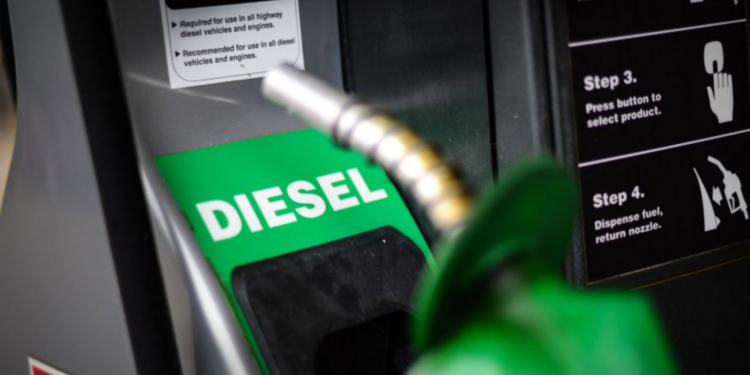
Nigeria’s diesel market experienced renewed upward pressure in October 2025, as the average retail price climbed by 9.45 percent month-on-month to N1,398.57 per litre. This latest increase, published in the National Bureau of Statistics (NBS) Automotive Gas Oil (Diesel) Price Watch report, underscores the volatility of the domestic energy market and the ongoing influence of global and local economic drivers on household and industrial fuel costs.
The October average represents a sharp rise from the N1,277.81 per litre recorded only a month earlier. While diesel prices have fluctuated throughout the year, the October spike stands out for its pace and timing, arriving at a period when many industries traditionally ramp up operations ahead of the year-end cycle. Manufacturers, logistics operators, and power-reliant businesses have therefore faced higher operating expenses during a critical business window.
Interestingly, despite the noticeable month-on-month surge, the NBS report shows that the average diesel price remains slightly lower when compared to the same period in 2024. On a year-on-year basis, diesel prices fell by 2.96 percent, down from N1,441.28 per litre in October 2024 to N1,398.57 in October 2025. This indicates that while Nigeria’s energy market continues to experience short-term spikes, the broader 12-month trend reflects a modest easing of diesel costs, possibly due to changes in global supply conditions and reduced import premiums.
The current movement in prices reflects a complex mix of market forces. Global oil benchmark prices have swung significantly throughout 2025 due to geopolitical tensions, production decisions by major oil exporters, and shifts in European and Asian fuel demand. For Nigeria, these external pressures are compounded by domestic challenges, including foreign exchange volatility and structural issues in local fuel supply chains. Limited refining capacity continues to force reliance on imported fuel, exposing the local market to exchange rate fluctuations and shipping costs.
Regional Disparities Reflect Structural Gaps
The NBS report highlights significant price variations across Nigeria’s states, revealing how geography, infrastructure, and logistics influence energy affordability. Enugu posted the highest average diesel price at N1,468.29 per litre, closely followed by Niger at N1,465.69 and Jigawa at N1,437.40. These states are among regions where longer transport routes, storage limitations, and market inefficiencies create upward pressure on retail fuel prices.
By contrast, the lowest diesel prices were observed in Katsina (N1,301.24), Edo (N1,307.84), and Kebbi (N1,308.94). These states likely benefit from better access to supply channels, improved storage networks, and competitive pricing dynamics that help keep prices below the national average.
The data also underscores zonal disparities. The South East recorded the highest regional average at N1,415.85 per litre, while the South South had the lowest at N1,387.18. Such differences reflect Nigeria’s uneven distribution of energy infrastructure and the differing impacts of transportation costs across its geopolitical zones.
Economic Consequences for Households and Businesses
Diesel plays a central role in Nigeria’s economy, powering heavy-duty vehicles, industrial plants, construction machinery, and a large percentage of private electricity generation. A near 10 percent increase in diesel prices within a single month is likely to intensify economic pressures on businesses and consumers. For small and medium-sized enterprises—which already face rising input costs—a higher fuel bill translates into reduced margins or increased prices for goods and services.
Transportation costs are particularly sensitive to diesel price movements. Trucks, buses, and haulage operators depend heavily on diesel, meaning the cost of moving food, building materials, and manufactured products will rise. This may worsen food inflation and contribute to Nigeria’s elevated cost of living, especially in areas far from energy supply hubs where delivery costs are naturally higher.
Policy Moves and Market Outlook
In October, President Bola Tinubu approved a 15 percent ad-valorem import duty on diesel and premium motor spirit (PMS). The policy was intended to raise government revenue and encourage local refining investment. However, the federal government suspended the implementation shortly after, following concerns about further inflationary effects.
The Nigerian Midstream and Downstream Petroleum Regulatory Authority (NMDPRA) reported that national diesel consumption averaged 17.13 million litres per day in October, underscoring the fuel’s strategic importance to the economy. With demand at this scale, even modest price shifts carry significant macroeconomic implications.
Going forward, price stability will depend on a mix of global market conditions, the strength of the naira, and progress in domestic refining capacity. Until local supply improves, Nigeria’s diesel market will remain vulnerable to external shocks and internal structural constraints—factors that continue to shape energy affordability for millions of Nigerians.

Emmanuel Bassey is a Financial Expert that has worked in the Banking and Finance Industry for over 15+ years across different banks in Nigeria


