



























Nigeria’s total public debt stock continued its upward trajectory in the second quarter of 2025, reaching N152.39 trillion, according to newly released figures by the National Bureau of Statistics (NBS). The report, published on Monday, shows that the country’s total debt grew by 2.01% quarter-on-quarter, up from N149.38 trillion recorded in Q1 2025.
This latest increase underscores Nigeria’s deepening fiscal concerns, driven by expanding domestic and external borrowing needs, continuous revenue shortages, and structural inefficiencies hampering debt sustainability.
Breakdown of External and Domestic Debt
The NBS highlighted that Nigeria’s external debt climbed to N71.84 trillion (approximately $46.98 billion) in Q2 2025. Meanwhile, domestic debt rose to N80.55 trillion (about $52.67 billion).
In naira terms, external obligations accounted for 47.14% of total public debt, while domestic borrowings made up 52.86%. Analysts note that this split reflects the Federal Government’s attempt to maintain a balance between relatively cheaper foreign loans and the more predictable, but costlier, domestic debt instruments.
State-by-State Debt Distribution
The report also provided a detailed subnational breakdown of indebtedness.
Lagos State retained its position as the country’s most indebted state domestically, with a debt portfolio of N1.04 trillion in Q2 2025. It was followed by Rivers State, whose domestic debt stood at N364.39 billion. These two states, both major economic hubs, have consistently topped the debt charts due to their extensive infrastructure plans and large-scale development financing needs.
On the opposite end of the spectrum, Jigawa State recorded the lowest domestic debt at N852.49 million, followed by Ondo State, with N10.64 billion.
In terms of external subnational debt, Lagos again led with $1.04 billion, followed by Kaduna State with $658.70 million. The Federal Capital Territory (FCT) reported the lowest external debt figure at $19.26 million.
Federal Government Borrowed N6.17 Trillion in Six Months
Further insights from the Debt Management Office (DMO) reveal that the Federal Government borrowed heavily from the domestic market in the first half of 2025, securing N6.17 trillion within the six-month period.
Of this amount, N4.48 trillion was raised in Q1 2025, with an additional N1.70 trillion sourced in Q2. The borrowings were mobilized through traditional domestic instruments such as:
-
FGN Bonds,
-
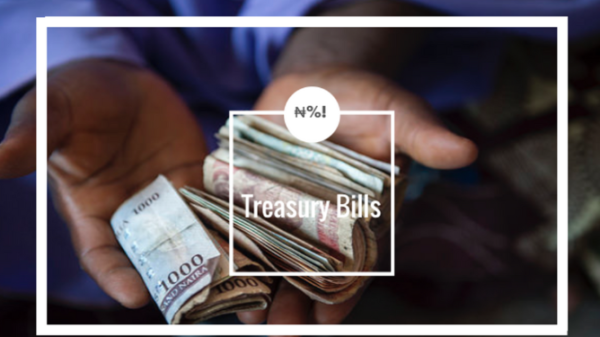
Nigerian Treasury Bills (NTBs), and
-
Promissory Notes (P-Notes).
The Q2 borrowing figure represents a 2.26% increase compared to the previous quarter, marking continued fiscal pressures as the government seeks resources to finance budget deficits and critical expenditures.
Debt Service Burden Intensifies
Nigeria’s external debt service costs remain elevated. Nairametrics earlier reported that the country spent $932.1 million on external debt servicing in Q2 2025 alone.
A breakdown from the DMO shows that:
-
Multilateral lenders received $629.38 million—roughly 68% of all external debt service payments.
-
Bilateral creditors, including JICA, China Development Bank (CDB), and Agence Française de Développement (AFD), were paid $41.18 million collectively.
-
Commercial lenders, such as Eurobond holders and Unicredit SPA, received a total of $261.55 million.
The data highlights the mounting pressure of debt servicing on Nigeria’s already constrained revenue base.
Growing Concerns Over Debt Sustainability
Economic and capital-market experts continue to sound the alarm over Nigeria’s growing debt load. Speaking at the Capital Market Academics of Nigeria (CMAN) Q4 2025 Virtual Symposium, analysts warned that the country’s public debt profile is approaching unsustainable territory.
They noted that despite the government’s insistence that Nigeria’s debt-to-GDP ratio remains within global limits, the real challenge lies in:
-
weak and insufficient government revenues,
-
rising interest and debt-service obligations, and
-
persistent structural bottlenecks that limit fiscal flexibility.
These factors, experts caution, could erode Nigeria’s long-term financial stability and complicate future borrowing efforts.

Emmanuel Bassey is a Financial Expert that has worked in the Banking and Finance Industry for over 15+ years across different banks in Nigeria


