



























Nigeria’s drive to reposition gas at the centre of its industrial and energy transition received a major boost as the Federal Government announced that the Midstream and Downstream Gas Infrastructure Fund (MDGIF) has invested more than N287 billion across critical national gas projects. This substantial commitment has not only accelerated infrastructure development but also unlocked $500 million in additional financing through strategic partnerships aimed at expanding the country’s gas value chain.
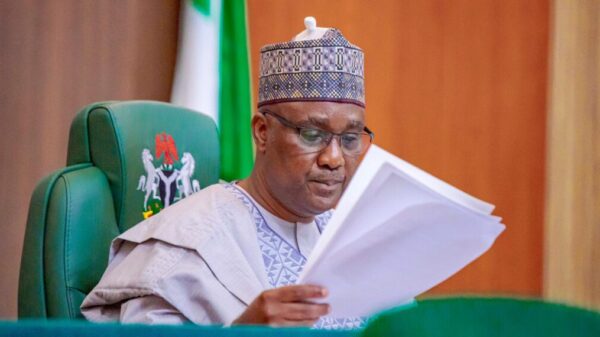
The disclosure was made by Mr. Farouk Ahmed, Chief Executive of the Nigerian Midstream and Downstream Petroleum Regulatory Authority (NMDPRA), during the maiden Energy Correspondents Association of Nigeria (ECAN) Conference in Abuja. The event marked four years of implementing the Petroleum Industry Act (PIA)—the transformative legislation designed to modernize Nigeria’s petroleum sector. Ahmed, represented by the Authority’s Legal Adviser and Secretary, Dr. Joseph Tolorunse, outlined the progress achieved since the PIA came into effect.
Strategic Investment to Catalyse Nigeria’s Gas Future
According to Ahmed, the MDGIF’s N287 billion investment was deployed across 62 strategic gas infrastructure projects, implemented in partnership with 16 companies. These projects are designed to stimulate industrial growth, improve nationwide energy access, and enhance gas processing and transportation systems. The scale of the investment reflects the government’s commitment to positioning gas as the country’s primary transition fuel, in line with global decarbonisation trends and Nigeria’s industrialization objectives.
The Authority’s collaboration with the African Export-Import Bank (Afreximbank) has also attracted $500 million in complementary funding. Ahmed noted that such partnerships are key to de-risking sector investments and crowding in private capital for long-term gas development. The MDGIF’s catalytic role, he said, is central to unlocking Nigeria’s vast gas reserves, strengthening industries that depend on reliable energy supply, and positioning the nation as a regional gas hub.
Four Years of Regulatory and Operational Progress Under the PIA
Ahmed highlighted significant achievements recorded since the implementation of the PIA, describing the last four years as a period of regulatory consolidation, improved operational efficiency, and enhanced transparency in the midstream and downstream sector.
Among the key milestones:
-
18 new regulations have been fully gazetted, providing legal clarity and strengthening the sector’s governance framework.
-
Several processes within the NMDPRA have been automated to support the Federal Government’s ease-of-doing-business reforms.
-
Daily crude allocation to domestic refineries has expanded from 20,000 barrels per day in 2023 to over 40,000 barrels per day in 2025 — a critical step toward reducing dependence on imported refined products.
These reforms have had measurable outcomes. For instance, local production of Premium Motor Spirit (PMS) rose sharply from 1.3 billion litres in 2024 to 3.8 billion litres in 2025, demonstrating improved refinery performance and better feedstock supply.
Ahmed also cited major PIA-supported projects, including:
-
UTM Offshore Floating LNG project
-
NLNG Train 7 expansion
-
Ajaokuta–Kaduna–Kano (AKK) gas pipeline
-
OB3 gas pipeline
-
Indorama fertilizer complex
-
Waltersmith modular refinery expansion
-
Supertech methanol plant
These projects, spanning gas processing, LNG production, petrochemicals, and energy transition infrastructure, are expected to deepen gas utilisation and support industries such as fertilizers, manufacturing, refining, and power generation.
Accelerating Gas Distribution and Refining Capacity
Under the PIA framework, the NMDPRA has also intensified efforts to grow pipeline capacity and expand domestic refining. The Authority has:
-
Issued 10 gas distribution licences covering 692 km of pipeline network with a combined capacity of 712 million standard cubic feet per day (mmscfd).
-
Granted 23 refinery establishment licences, expected to add over 850,000 bpd to Nigeria’s refining capacity once fully operational.
These developments indicate a strategic push toward achieving energy security and reducing import dependency.
What You Should Know
Earlier this year, NMDPRA approved licences for three new refineries in Abia, Delta, and Edo States, with a combined capacity of 140,000 barrels per day. These include:
-
Eghudu Refinery Ltd (Edo State) – 100,000 bpd
-
MB Refinery and Petrochemicals Ltd (Delta State) – 30,000 bpd
-
HIS Refining and Petrochemical Co. Ltd (Abia State) – 10,000 bpd
Together, these investments signal aggressive progress in Nigeria’s journey toward becoming a refining and gas-development powerhouse.

Emmanuel Bassey is a Financial Expert that has worked in the Banking and Finance Industry for over 15+ years across different banks in Nigeria


