































CBN’s Fixed Income Market Overhaul Triggers Regulatory Friction Amid N4.8 Trillion Bank Earnings Boom
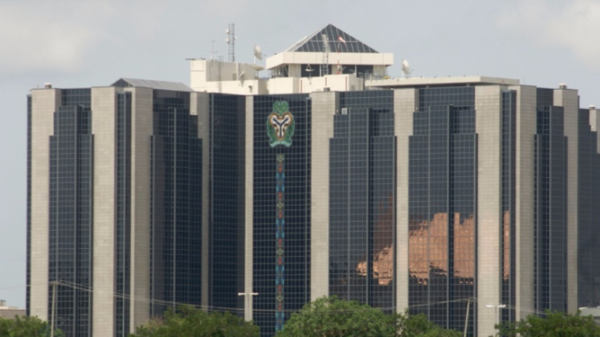
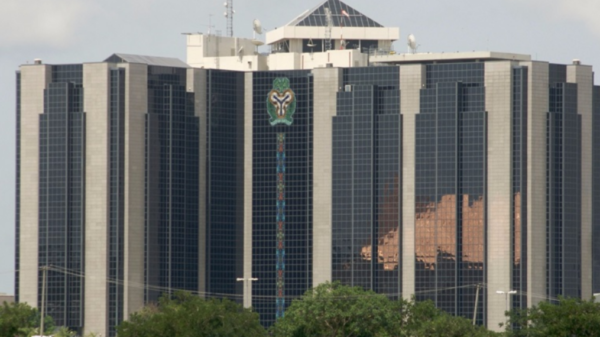
The Central Bank of Nigeria’s (CBN) latest move to assume direct control over the nation’s fixed-income trading and settlement framework has sparked a wave of regulatory tensions and institutional pushback within Nigeria’s financial ecosystem.
The apex bank, in a circular issued in late September 2025, announced its intention to migrate fixed-income market operations — including trading and settlement — from the FMDQ Securities Exchange, which is regulated by the Securities and Exchange Commission (SEC), to its proprietary Real-Time Gross Settlement (RTGS) and Scripless Securities Settlement System (S4). The policy, expected to commence in November, marks a fundamental shift in how Nigeria’s government securities market will be managed.
While the CBN argues that the change will improve transparency, efficiency, and data integrity within the financial system, analysts and market participants warn that it could blur the regulatory boundaries between the CBN and SEC, risking a conflict of jurisdiction and market confidence.
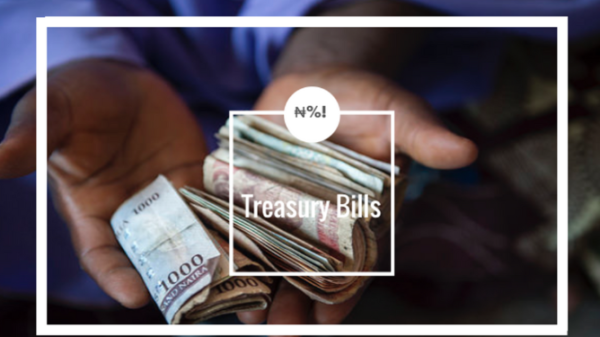
Banks Reap N4.8 Trillion from Fixed-Income Investments
Behind the policy battle lies a staggering financial statistic: Nigeria’s largest banks — collectively referred to as the FUGAZ group (First HoldCo, UBA, GTCO, Access Corporation, and Zenith Bank) — have heavily concentrated their assets in fixed-income instruments.
According to financial disclosures to the Nigerian Exchange (NGX), the five banks collectively invested N49.152 trillion in securities and treasury bills during the first nine months of 2025, up from N42.204 trillion recorded at the end of 2024 — a 16.5% increase.
Interest income from these investments surged to N4.8 trillion, a sharp rise from N3.6 trillion earned in the same period last year.
A breakdown of their returns shows:
-
Access Corporation: N1.3 trillion
-
Zenith Bank: N1.14 trillion
-
UBA: N1.03 trillion
-
FBN HoldCo: N720.15 billion
-
GTCO: N570.23 billion
These figures underscore how heavily banks depend on risk-free, government-backed assets for earnings, rather than expanding credit to the private sector.
Conservative Lending and Risk Aversion
Despite rising deposits, loan-to-deposit ratios among the FUGAZ banks remain conservative, reflecting the industry’s caution in an unstable macroeconomic climate.
Zenith Bank’s loan-to-deposit ratio slipped from 43% to 40%, while Access Corporation’s remained static at 41.2%. UBA’s ratio fell slightly to 28.2%, and GTCO’s rose marginally to 27%. In contrast, First HoldCo stood out by raising its ratio from 60% to 68%, indicating a more aggressive credit posture.
The trend highlights how most banks prefer the safety of government debt securities, particularly amid currency volatility, inflationary pressure, and heightened credit risk.
Legal and Regulatory Concerns
Critics say the CBN’s proposed takeover of fixed-income settlement functions challenges the Investments and Securities Act (ISA 2025), which grants exclusive oversight of securities markets and trading venues to the SEC.
Legal experts contend that while the CBN Act empowers the apex bank to operate payment and settlement systems, it does not extend to managing or regulating securities exchanges.
Dr. Akin Olaniyan, CEO of Charterhouse Limited, warned:
“If the CBN implements its plan without SEC coordination, we risk dual regulation, confusion among market operators, and a potential loss of investor confidence.”
Similarly, Dr. Walker Ogogo, pioneer Registrar of the Institute of Capital Markets Registrars, cautioned that combining trading, settlement, and monetary policy roles under one institution could “create conflicts of interest and deter foreign investors.”
Mixed Market Reactions
Market stakeholders remain divided. Some, like David Adonri, CEO of Highcap Securities Limited, argue that the CBN is within its rights to manage primary market operations — such as auctions for Treasury bills and Federal Government bonds — but that the secondary market should remain under SEC’s purview.
Adonri suggested the CBN’s dissatisfaction with FMDQ’s transparency and trade reporting may have driven the change:
“This move seems aimed at improving visibility and control over transactions that the CBN believes are underreported.”
Others, including Tajudeen Olayinka, CEO of Wyoming Capital and Securities Limited, believe the reform could improve oversight and data reliability if properly integrated with existing systems.
“The reform could democratize access and ensure data integrity, provided both FMDQ and NGX retain equal access to the CBN’s settlement infrastructure,” he said.
Currently, FMDQ exclusively accesses the CBN’s S4 system, giving it dominance in the fixed-income space. Under the new model, both FMDQ and NGX may gain equal access, potentially reducing concentration and fostering competition.
The Road Ahead
The CBN’s fixed-income overhaul represents one of the most significant structural shifts in Nigeria’s financial market in decades. While its promise of transparency and efficiency appeals to many, it also tests the limits of the CBN’s legal authority and Nigeria’s regulatory balance.
Its success — or failure — will depend on whether collaboration, not control, defines the next phase of Nigeria’s financial sector reform.

Emmanuel Bassey is a Financial Expert that has worked in the Banking and Finance Industry for over 15+ years across different banks in Nigeria


