
























President Bola Ahmed Tinubu has formally requested the Senate’s approval for a new ₦1.15 trillion domestic loan to help finance Nigeria’s 2025 federal budget deficit, marking another major step in the administration’s efforts to balance fiscal responsibility with developmental priorities.
The request was conveyed in a letter addressed to Senate President Godswill Akpabio and read aloud during Tuesday’s plenary session. In the correspondence, Tinubu explained that the proposed borrowing would form a critical component of the government’s 2025 fiscal plan, aimed at bridging funding gaps and ensuring the smooth execution of high-impact projects across various sectors of the economy.
According to the president, the loan would serve as part of the federal government’s broader medium-term debt management strategy, which emphasizes the use of domestic borrowing to finance infrastructure, stimulate job creation, and enhance social welfare programs without overly exposing the country to foreign exchange risks.
“The proposed domestic borrowing will enable the government to meet its financial obligations for ongoing and new projects under the 2025 fiscal framework,” Tinubu stated. “It aligns with our commitment to responsible debt management, inclusive growth, and sustainable development.”
After reading the president’s letter, Senate President Akpabio referred the request to the Senate Committee on Local and Foreign Debt, chaired by Senator Haruna Manu, for in-depth review. The committee has been directed to submit its report within one week, after which the Senate will deliberate and vote on the request.
A Fiscal Strategy Rooted in Domestic Financing
The proposed ₦1.15 trillion domestic loan reflects the Tinubu administration’s ongoing shift toward domestic borrowing as a more sustainable financing option. Economists argue that such borrowing helps mitigate external vulnerabilities, particularly those linked to global interest rate volatility and currency depreciation.
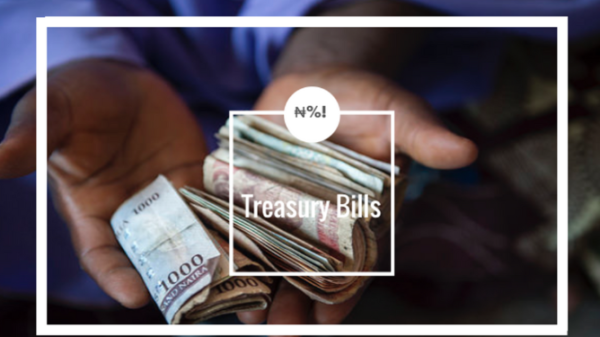
Domestic loans are typically raised through government securities such as treasury bills, bonds, and sukuk instruments, which are purchased primarily by local institutional investors including pension funds, banks, and insurance firms.
By relying more on the domestic market, the federal government aims to strengthen Nigeria’s capital market depth while simultaneously supporting the growth of long-term investment instruments.
However, critics caution that the government’s growing dependence on debt to fund recurrent and capital expenditure continues to strain Nigeria’s fiscal stability, especially amid sluggish revenue performance and rising debt service costs.
Legislative and Economic Context
President Tinubu’s latest request follows several major borrowing approvals in recent months. In October 2025, the House of Representatives approved a $2.35 billion external borrowing request and a $500 million sovereign sukuk issuance to help finance portions of the 2025 budget and diversify Nigeria’s access to global capital markets.
Earlier in July 2025, the Senate had approved a $21.5 billion external borrowing plan covering 2025–2026. The plan focuses on infrastructure, power, agriculture, education, and healthcare. Additionally, the Senate authorized the issuance of a ₦757 billion Federal Government Bond to clear outstanding pension arrears under the Contributory Pension Scheme (CPS) as of December 2023.
Nigeria’s total public debt has continued to rise, reaching ₦149.39 trillion as of March 31, 2025, according to data from the Debt Management Office (DMO). This represents an increase of ₦27.72 trillion, or 22.8%, compared to ₦121.67 trillion recorded in March 2024.
In the same period, the DMO reported that it successfully raised ₦1.39 trillion through the issuance of domestic Sukuk bonds, which have been directed toward critical infrastructure projects, particularly roads and bridges across the federation.
Implications of the New Borrowing
Analysts note that President Tinubu’s ₦1.15 trillion borrowing request underscores the ongoing fiscal pressures facing Nigeria as it seeks to balance expenditure commitments with constrained revenue flows. The federal government’s 2025 budget, estimated at over ₦38 trillion, includes substantial allocations to defense, infrastructure, education, and social protection programs.
While borrowing remains a necessary tool for budget execution, the continuous rise in debt levels has fueled debate over Nigeria’s debt sustainability and repayment capacity. According to fiscal experts, more than 60% of government revenues are now devoted to debt servicing, leaving limited fiscal space for development initiatives.
Nonetheless, domestic borrowing presents certain advantages. It reduces exposure to currency risks since repayment obligations are denominated in naira. It also deepens local capital market participation, provides investment opportunities for pension funds, and helps the government manage liquidity cycles more effectively.
However, experts also warn that excessive domestic borrowing could crowd out private sector access to credit, driving up lending rates and slowing business expansion. The government’s challenge, therefore, lies in striking a delicate balance between borrowing for growth and maintaining fiscal prudence.
Looking Ahead
The Senate Committee on Local and Foreign Debt is expected to scrutinize the proposed ₦1.15 trillion facility in the coming days, focusing on the cost of borrowing, repayment terms, and the specific projects the funds are intended to support.
As Nigeria grapples with persistent fiscal pressures, declining oil revenues, and global economic uncertainty, the Tinubu administration’s fiscal strategy will be closely watched — not only for its impact on economic growth but also for its implications for debt sustainability and public accountability.

Emmanuel Bassey is a Financial Expert that has worked in the Banking and Finance Industry for over 15+ years across different banks in Nigeria


