












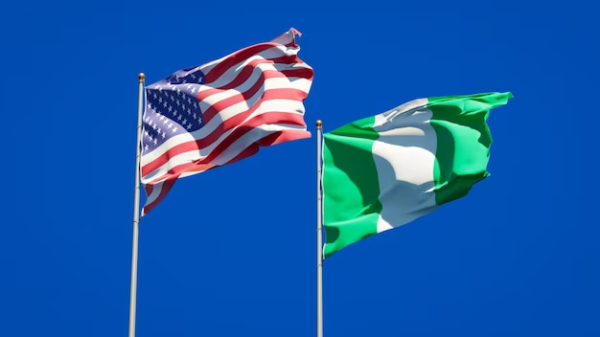










Nigeria is set to re-enter the international debt market this week with plans to issue $2.3 billion in Eurobonds, its first major foreign borrowing in nearly a year. The move comes at a delicate time, as global investors assess geopolitical tensions following U.S. President Donald Trump’s recent threat of military action against Islamist militants in Nigeria — comments that briefly rattled investor confidence and caused a short-term dip in Nigerian assets.
According to a Bloomberg report citing individuals familiar with the process, the Nigerian government intends to issue 10-year Eurobond notes, alongside either 15- or 30-year securities, depending on final approval from the Federal Ministry of Justice. The issuance marks a significant step in Nigeria’s return to international capital markets after a cautious period of fiscal consolidation and domestic borrowing.
Despite the geopolitical noise, Nigeria’s decision signals confidence in global appetite for emerging-market debt, especially as investors seek higher yields amid expectations that the U.S. Federal Reserve may begin cutting interest rates in the coming quarters.
Tapping Global Capital Markets
Nigeria’s Eurobond plan aligns with a broader wave of African sovereigns returning to the international bond market in 2025. Kenya and Angola have already raised funds this year, taking advantage of improved global sentiment toward frontier economies and a narrowing of African debt spreads.
According to JPMorgan Chase & Co., the average spread on African sovereign bonds over U.S. Treasuries has tightened to about 367 basis points, roughly half of what it was in April — an indication that investors are regaining confidence in African debt markets.
If successfully executed, the sale would be Nigeria’s first international bond issuance since December 2024, when the government raised $2.2 billion. The upcoming issuance, expected to close within days, had initially been delayed after Trump’s comments accusing Nigeria of religious persecution and threatening to withdraw U.S. aid.
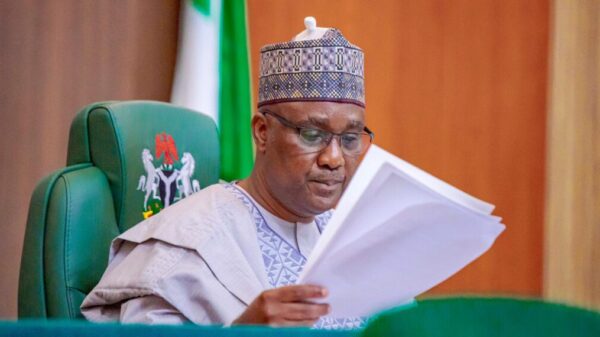
The remarks triggered a temporary selloff in Nigerian bonds and currency markets, but President Bola Ahmed Tinubu quickly moved to reassure investors, rejecting Trump’s claims and reaffirming Nigeria’s commitment to religious freedom.
“Nigeria is a secular nation with constitutional guarantees for all faiths,” Tinubu posted on X (formerly Twitter). “Our democracy stands firm on equality, tolerance, and justice.”
The Eurobond Managers and Structure
The federal government has appointed a consortium of top investment banks as joint lead managers for the transaction. These include Chapel Hill Denham, JPMorgan Chase & Co., Standard Chartered Plc, Citigroup Inc., and Goldman Sachs Group Inc., while FSDH Merchant Bank Ltd. serves as the financial adviser.
The deal structure will likely include tranches of different maturities to attract a broad range of investors — from pension funds and insurance companies to sovereign wealth funds. According to market analysts, strong participation is expected given Nigeria’s improving fiscal fundamentals and reforms under the Tinubu administration.
Nigeria’s National Assembly had already approved plans to raise $2.3 billion in foreign debt before year-end, in addition to a $500 million sukuk issuance, signaling legislative alignment with the government’s financing strategy.
Globally, emerging-market governments have raised over $245 billion in dollar- and euro-denominated bonds this year — the highest issuance volume since 2014, according to Bloomberg data.
Meanwhile, Nigeria’s existing 2051 Eurobond fell slightly by about one cent to 91.05 cents on the dollar in recent days, pushing yields up to 9.14%, though still far below the 12.11% peak recorded in April.
Reform Momentum and Investor Confidence
Since assuming office in May 2023, President Tinubu’s administration has pursued a string of market-oriented reforms designed to restore macroeconomic stability and rebuild investor confidence. These include the removal of fuel subsidies, tax system restructuring, and the liberalization of the naira exchange rate.
These measures, though initially painful for consumers, have been lauded by international institutions and credit rating agencies. In a notable show of confidence, Moody’s Ratings upgraded Nigeria’s sovereign credit rating from Caa1 to B3, citing “significant improvements in external balances, fiscal management, and reform implementation.”
The upgrade placed Nigeria back on the radar of global institutional investors, many of whom had reduced exposure during years of policy uncertainty.
Nigeria’s Debt Outlook
Nigeria’s Eurobond issuance is also part of a broader strategy to manage upcoming debt maturities. The country faces two key repayment obligations by the end of 2025 — a $1.12 billion Eurobond maturing in November 2025, and a ₦100 billion sukuk bond issued to finance critical infrastructure projects.
The 7.625% Eurobond, issued in November 2018, represents a significant portion of Nigeria’s external debt portfolio and was originally used to support foreign reserves and capital projects in transport, power, and housing sectors.
Analysts view the new $2.3 billion Eurobond as both a refinancing tool and a liquidity booster, helping Nigeria strengthen its reserves while funding priority projects outlined in the 2025 budget. However, they caution that continued external borrowing could expose the country to exchange-rate risks if oil revenues underperform.
Looking Ahead
Nigeria’s return to the Eurobond market underscores its balancing act between raising foreign capital and safeguarding fiscal stability. The Tinubu administration hopes that steady policy implementation, coupled with global investor optimism toward African debt, will support a successful issuance despite recent geopolitical turbulence.
As global markets watch closely, the success of this Eurobond sale will serve as a litmus test of investor confidence in Nigeria’s economic trajectory — and its ability to navigate complex political and financial headwinds.

Emmanuel Bassey is a Financial Expert that has worked in the Banking and Finance Industry for over 15+ years across different banks in Nigeria


