








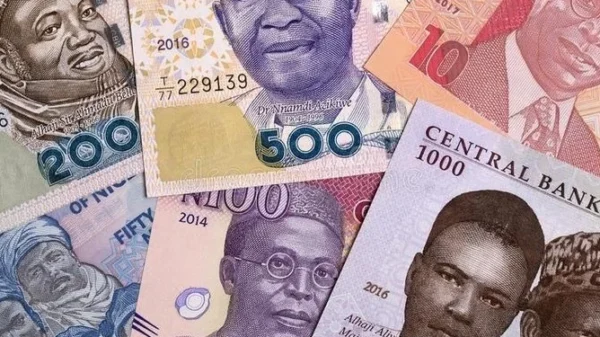














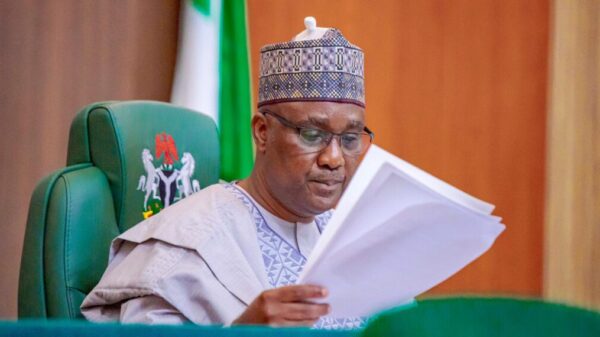


The Federal Government of Nigeria has taken a major step toward closing the country’s persistent electricity metering gap, securing approximately ₦700 billion from the Federation Account Allocation Committee (FAAC) to fund the deployment of 1.1 million prepaid meters nationwide by December 2025. The initiative, announced by the Minister of Power, Adebayo Adelabu, at the 2025 Nigerian Energy Forum (NEF) held in Lagos, underscores the administration’s renewed commitment to improving transparency, revenue assurance, and service delivery within the electricity sector.
Speaking at the forum themed “Powering Nigeria through Investment, Innovation, and Partnership,” Adelabu explained that the ₦700 billion fund forms part of the Presidential Metering Initiative (PMI) — a comprehensive national program designed to eliminate estimated billing and ensure accurate energy accounting across all electricity distribution companies (DisCos). According to him, this latest funding complements the ongoing World Bank-supported Distribution Sector Recovery Programme (DISREP), which targets the procurement and installation of 3.2 million meters. Combined, both programs are expected to significantly reduce Nigeria’s metering gap within the next five years.
Leveraging Global Partnerships and Development Financing
Minister Adelabu emphasized that the Federal Government is adopting a blended financing model that leverages both domestic and international resources. Beyond the FAAC allocation, the government has attracted more than $2 billion in development finance over the past two years from strategic initiatives such as the World Bank’s DARES project, the Nigeria Sovereign Investment Authority’s (NSIA) RIPLE program, and support from the Japan International Cooperation Agency (JICA). These partnerships are accelerating the expansion of electricity access — particularly in underserved communities, schools, hospitals, and public institutions — while also promoting renewable energy adoption.
He further disclosed that agreements finalized at the 2025 Nigerian Renewable Energy Innovation Forum are set to add nearly 4 gigawatts of solar manufacturing capacity annually, representing about 80% of Nigeria’s current grid generation capacity. “With this level of renewable production, Nigeria is firmly on track to meet its domestic energy transition targets and strengthen its role in regional power markets,” Adelabu noted.
Strengthening Policy and Market Reforms
Adelabu highlighted that the Electricity Act 2023 has revolutionized the Nigerian power landscape by enabling states to establish subnational electricity markets. So far, fifteen states have obtained regulatory autonomy, with one already fully operational. “We are ensuring better coordination between wholesale and retail electricity markets to drive efficiency and fairness,” the minister explained.
The minister also noted that tariff reforms implemented over the past two years have yielded positive outcomes — improving supply reliability, reducing industrial power costs, and boosting sectoral revenues from ₦1 trillion in 2023 to ₦1.7 trillion in 2024, with projections to exceed ₦2 trillion in 2025. To further stabilize the sector, President Bola Tinubu has approved a ₦4 trillion bond issuance to offset verified debts owed to generation companies (GenCos) and gas suppliers. The bond is complemented by a targeted subsidy mechanism aimed at protecting vulnerable consumers while ensuring that utilities remain financially viable.
Accelerating Meter Deployment and Reducing Billing Inefficiencies
In a related development, the Nigerian Electricity Regulatory Commission (NERC) recently approved the disbursement of ₦28 billion to DisCos under the Meter Acquisition Fund (MAF) Tranche B scheme. This initiative aims to accelerate the rollout of prepaid meters to unmetered customers at no upfront cost while providing DisCos with a sustainable revenue recovery framework.
According to NERC’s 2025 Second Quarter Report, DisCos installed 225,631 meters during Q2 2025 — a 20.55% increase compared to the 187,161 meters installed in Q1. Of these, 147,823 units were deployed under the Meter Asset Provider (MAP) scheme, 65,315 under the MAF, 12,259 through the Vendor Financed model, and 234 under the DisCo Financed framework. Despite this progress, only 6.42 million of the 11.82 million active customers within the Nigerian Electricity Supply Industry (NESI) have been metered, translating to a 54.33% metering rate.
The Road Ahead
Adelabu reaffirmed the government’s commitment to fostering a robust partnership with the private sector to unlock stranded generation capacity, modernize infrastructure, and deliver sustainable power solutions. “Through sustained investment, innovation, and collaboration, Nigeria can build a more resilient, transparent, and inclusive electricity sector,” he said.
If executed as planned, the ₦700 billion meter deployment initiative could mark a turning point in Nigeria’s electricity reform journey — reducing losses, improving customer trust, and laying the groundwork for a smarter, more efficient power ecosystem by the end of 2025.

Emmanuel Bassey is a Financial Expert that has worked in the Banking and Finance Industry for over 15+ years across different banks in Nigeria


