




















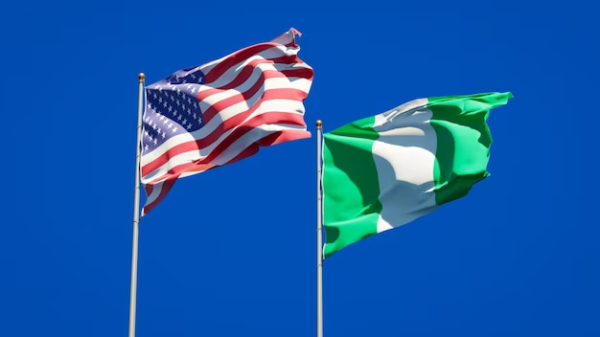













A few years ago, a Nigerian man visiting the United States shared an experience that perfectly captures the contrast between wealth and comfort in two very different worlds. After arriving at a friend’s home in the U.S., they were hungry after a long trip but quickly realized there was no cook, no errand boy, and no one to help. His friend sighed, “This is why I miss Naija.”
Despite living in America for nearly two decades and running a successful business, his friend admitted that life there lacked the everyday luxuries that were easy to enjoy back home — affordable domestic staff, help on demand, and a lifestyle built on convenience rather than systems.
Comfort vs. Structure
In Nigeria, someone earning ₦1.5 million monthly (roughly $1,000) lives comfortably by local standards. That income can cover rent, groceries, a driver, and even private schooling. Yet in the United States, that same $1,000 barely stretches through a week. It’s equivalent to a part-time income, far below the national minimum wage, barely enough to pay for fuel and basic food items.
This sharp difference reflects how societies are structured. In the U.S., wages are higher because workers are paid fairly for their time, and the system ensures that essential services — health, transport, education, and power — are built into daily life. In Nigeria, those same systems are weak, forcing individuals to self-finance their comfort. Generators replace power grids, private schools fill in for weak education systems, and boreholes stand in for unreliable water supply.
The True Cost of Cheap Labour
Nigeria’s affordability is both a blessing and a curse. A driver might earn ₦80,000 monthly, a nanny ₦50,000, and a plumber ₦20,000 per job — figures that make life easy for the middle class but highlight a deeper economic imbalance. The country’s comfort is often built on the back of low-paid labour. This means that while middle-class Nigerians enjoy conveniences unavailable to many Americans, the system remains fragile and unequal.
Meanwhile, in the U.S., manual workers like electricians and plumbers can earn far more. NVIDIA’s CEO, Jensen Huang, once noted that such skilled professionals are becoming modern-day millionaires — a reflection of how valuable technical labour has become in economies that reward productivity.
Wealth Without Systems
The paradox becomes clear: Nigeria offers comfort without infrastructure, while the U.S. provides structure without personal luxury. A ₦1.5 million earner may appear rich but must pay privately for every essential service. Conversely, an American living on $1,000 might not own much, but they benefit from consistent systems — steady power, reliable healthcare, and a functioning society.
When viewed through this lens, wealth becomes relative. The Nigerian’s lifestyle looks richer, but the American’s stability represents a deeper form of wealth — one based on dependable institutions rather than personal spending power.
Building Balance Between Comfort and Functionality
The recent push to raise Nigeria’s minimum wage is a step forward, but inflation and weak productivity continue to undermine real progress. What Nigeria needs is not just higher pay but a shift from comfort built on inequality to prosperity driven by productivity.
True development would mean a country where comfort and structure coexist — where people enjoy good living not because labour is cheap, but because systems work. Until then, the Nigerian earning ₦1.5 million may appear wealthier, but the American earning $1,000 arguably lives better.

Emmanuel Bassey is a Financial Expert that has worked in the Banking and Finance Industry for over 15+ years across different banks in Nigeria


