




































President Bola Ahmed Tinubu has announced that the Economic and Financial Crimes Commission (EFCC) recovered over ₦500 billion and secured more than 7,000 convictions within the first two years of his administration.
Tinubu made the disclosure during his keynote address at the 7th EFCC–National Judicial Institute (NJI) Capacity Building Workshop for Justices and Judges, held on October 20, 2025, in Abuja. The event, themed “Enhancing Justice in the Fight Against Economic and Financial Crimes,” focused on strengthening collaboration between the judiciary and anti-corruption agencies.
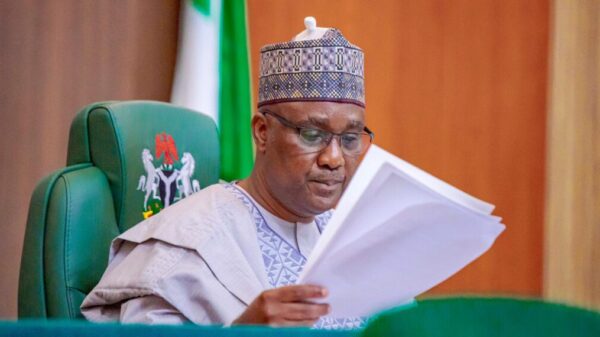
Represented by Vice President Kashim Shettima, the President commended EFCC Chairman Ola Olukoyede for his leadership and results-driven approach. He said the achievements reflect his administration’s efforts to promote transparency, accountability, and independence in Nigeria’s anti-corruption institutions.
“We have prioritized public accountability by empowering anti-corruption agencies and granting them the independence needed to perform their duties effectively,” Tinubu said. “The EFCC, for instance, has secured over 7,000 convictions and recovered assets exceeding ₦500 billion in the past two years. These recovered funds are being reinvested into the economy to support critical programs such as the Students’ Loan Scheme and the Consumer Credit initiative.”
Strengthening the anti-corruption framework
Tinubu emphasized that the judiciary remains central to the success of Nigeria’s anti-corruption efforts. He urged judicial officers to remain firm, fair, and independent in adjudicating financial crime cases.
“A Nigeria free of corruption is achievable if we all do what is right within our spheres of influence,” he said. “A strong, impartial judiciary is vital for sustaining the progress we’ve made in fighting corruption. No one, including judges, is immune to the consequences of corruption.”
He further called for collaboration between all branches of government to create a more effective and unified anti-corruption framework that promotes peace, stability, and development.
EFCC Chairman highlights judiciary’s role
In his remarks, EFCC Chairman Ola Olukoyede acknowledged the judiciary as the cornerstone of Nigeria’s anti-graft fight, noting that its role in enforcing the rule of law ensures accountability and fairness.
Olukoyede highlighted the challenges posed by prolonged court processes, which often delay justice in high-profile corruption cases. He stressed the need for judicial efficiency and procedural reforms to sustain the EFCC’s momentum in combating financial crimes.
By the numbers
According to the EFCC’s latest performance report, the agency recovered ₦364.5 billion, $326.5 million, and other assets, while securing 4,111 convictions across various courts in a single year.
Public engagement also surged, with 15,724 petitions received and 12,928 investigations conducted, resulting in 5,081 cases filed in court—a 48% increase in filings and a 53% rise in convictions compared to 2023.
Recovered assets included over 750 luxury properties, parcels of land, vehicles, cryptocurrency wallets, and other high-value assets linked to financial crimes.
The EFCC has pledged to surpass its 2024 performance through greater professionalism, integrity, and inter-agency collaboration—further reinforcing the Tinubu administration’s anti-corruption agenda.

Emmanuel Bassey is a Financial Expert that has worked in the Banking and Finance Industry for over 15+ years across different banks in Nigeria


