Creator
  • Type:
  • Genre:
  • Duration:
  • Average Rating:
Log In
 
  • Marketplace
Log In
 
  • Type:
  • Genre:
  • Duration:
  • Average Rating:
  • Marketplace

Investors

How to Invest in Nigeria Based on Your Financial Goals

  • dollaers
  • December 26, 2025
  • Investors
  • 0 comments

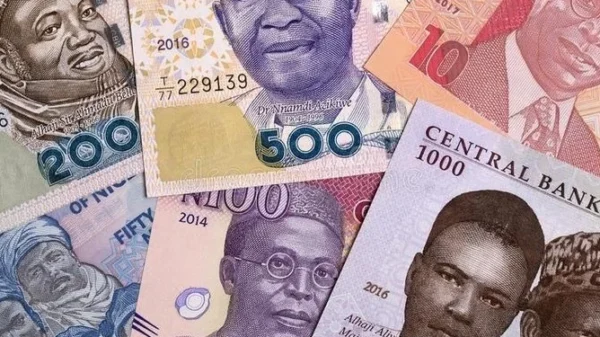
One of the most common questions Nigerian investors ask is simple but powerful: “I have some spare money—what should I invest in?” The instinct to look for the “best” investment is understandable, especially in an environment shaped by inflation, currency volatility, and uneven growth. But the more useful question is not what to buy—it is why you are investing in the first place.

Smart investing in Nigeria, or anywhere else, starts with objective-based investing. This approach recognises that no investment is inherently superior to another. What matters is how well an investment aligns with your financial goals, risk tolerance, time horizon, and need for liquidity. An asset that is perfect for one person may be entirely wrong for another.

Below are common investor scenarios in Nigeria and practical guidance on what may fit each situation. This is not investment advice, but a framework to help you think clearly about matching goals to instruments.

Investing Based on Economic Outlook

If you believe Nigeria’s economy will significantly improve over time, equities become attractive. Buying Nigerian shares before a broad economic upswing allows you to participate in future growth at relatively lower prices. While you can buy individual stocks directly, collective investment vehicles such as mutual funds, unit trusts, and ETFs offer instant diversification and professional management. These products reduce single-stock risk and are often more cost-effective for long-term investors. Ensure that any fund or product you choose is approved by the Securities and Exchange Commission (SEC) Nigeria and listed on recognised platforms such as the Nigerian Exchange.

If, however, you believe the economy will stagnate or grow slowly, capital preservation becomes more important than aggressive growth. In this case, Nigerian money market funds are often a better fit. These funds invest in short-term instruments such as bank fixed deposits and commercial papers, offering relatively stable returns with lower risk than equities. Bank-issued instruments are generally safer, with deposits insured by the Nigeria Deposit Insurance Corporation up to ₦5 million per bank, though returns may be lower than those from non-bank issuers.

If your outlook is more pessimistic and you expect conditions to worsen, timing and currency exposure matter. Nigerian dollar-denominated bonds may offer better yields in the future as issuers raise coupons to attract investors. If you want immediate exposure, USD money market funds allow you to convert naira to dollars and earn in foreign currency, reducing local currency risk. Always confirm whether returns and redemptions are paid in dollars.

Matching Investments to Life Needs

Money needed for a specific, near-term obligation—such as rent due next year—should not be exposed to risk. Funds like this belong in bank fixed deposits or money market funds, prioritising the return of capital rather than the return on capital. The same conservative logic applies to retirees, particularly those above 70. At this stage, portfolios should lean heavily toward FGN Savings Bonds and bank deposits, with only a small allocation to high-dividend equities. Annuities from strong insurance companies may also provide predictable income.

For business owners and professionals, it is important to understand that a business itself is not a retirement plan. Your business generates income, but retirement security comes from consistently investing part of that income elsewhere. Setting aside even 10% of profits into a Retirement Savings Account (RSA) or diversified unit trust creates a long-term safety net that compounds independently of your business risks.

Alternatives, Risk, and Reality Checks

Illiquid or informal investments—such as transport businesses or trading ventures—require active involvement. If you cannot supervise daily operations, debt-style investments may be safer than equity participation. Real estate can be a solid hedge against inflation if liquidity is not a concern, but only when title and location are clear and verified.

High-risk assets like Bitcoin appeal to investors willing to accept volatility and the possibility of loss. These instruments are speculative, not substitutes for structured investing, and should only be considered with money you can afford to lose.

For those seeking absolute simplicity and peace of mind, holding foreign currency in insured offshore instruments offers stability, albeit with lower returns. Sometimes, peace is the real return.

Final Thought

The most important principle to remember is this: you invest to meet objectives, not just to chase returns. When your goals are clear, your investment choices become easier—and smarter. Always speak with a qualified investment professional before making decisions, and let your personal circumstances, not market noise, guide your strategy.

Larry Ellison Bolsters Paramount’s Warner Bros. Discovery Bid with $40 Billion Personal Guarantee

  • dollaers
  • December 23, 2025
  • Entertainment, Investors
  • 0 comments

Paramount Pictures has significantly raised the stakes in its pursuit of Warner Bros. Discovery after securing a massive $40.4 billion personal financial guarantee from billionaire technology mogul Larry Ellison. The move marks a dramatic escalation in one of the most closely watched takeover battles in the global media industry and signals Paramount’s determination to prevail in an increasingly competitive bidding war.

In a statement released on Monday, Paramount confirmed that Ellison, co-founder of Oracle, has agreed to provide an “irrevocable personal guarantee” to support the equity portion of Paramount’s proposed $108 billion acquisition of Warner Bros. Discovery. The guarantee is designed to reinforce confidence in Paramount’s financing structure at a time when rival bidders and Warner Bros. Discovery’s board have raised concerns about execution risk and funding certainty.

According to the company, Ellison has further committed not to revoke the Ellison family trust or transfer its assets in any way that could undermine the transaction while negotiations and regulatory reviews are ongoing. This assurance directly addresses reservations previously expressed by Warner Bros. Discovery, which had questioned whether the Ellison family trust would remain fully aligned with Paramount’s offer throughout what is expected to be a complex and lengthy approval process.

The strengthened bid follows a recent filing by Warner Bros. Discovery with the U.S. Securities and Exchange Commission, in which the media group noted that the Ellison family trust had “no obligation” to cooperate with Paramount’s takeover proposal. However, the filing also acknowledged that a binding personal guarantee from Larry Ellison himself would be sufficient to allay those concerns. Paramount’s revised offer appears tailored precisely to meet that condition.

In its amended proposal, Paramount also increased the transaction’s breakup fee to $5.8 billion, up from the original $5 billion. The higher breakup fee is intended to compensate Warner Bros. Discovery shareholders if the deal fails to close due to regulatory, legal, or financing hurdles, further underscoring Paramount’s confidence in its ability to complete the acquisition.

Ellison’s involvement adds considerable weight to the bid. With an estimated net worth of $242.7 billion as of Monday, he ranks among the wealthiest individuals in the world and remains a dominant figure in both technology and media investment circles. His son, David Ellison, serves as chief executive of Paramount Skydance, strengthening the strategic and financial ties between Ellison and Paramount’s leadership. Market analysts say this family connection, combined with Larry Ellison’s personal financial backing, could enhance Paramount’s credibility in the eyes of investors and regulators alike.

The Paramount offer remains in direct competition with a rival deal led by Netflix, which earlier in December announced an $82.7 billion agreement to acquire key Warner Bros. assets through a mix of cash and stock. Warner Bros. Discovery’s board has publicly expressed support for the Netflix transaction, describing it as more structured and less risky given Netflix’s established balance sheet and dominant position in the global streaming market.

Nevertheless, Paramount’s aggressive counteroffer, now fortified by Ellison’s $40.4 billion guarantee, reflects the intensifying consolidation sweeping through the entertainment industry. As traditional media companies grapple with declining linear television revenues and rising content costs, large-scale mergers are increasingly seen as a pathway to survival and long-term competitiveness in streaming.

Industry observers note that Ellison’s backing also highlights a broader trend of ultra-wealthy individuals deploying personal capital to influence landmark corporate transactions. By combining financial firepower with strategic oversight, such investors are reshaping how major deals are structured and financed. If completed, the Paramount–Warner Bros. Discovery deal would rank among the largest media buyouts in history, with far-reaching implications for content ownership, distribution, and the balance of power in the global entertainment ecosystem.

Ultimately, the decision rests with Warner Bros. Discovery shareholders, who must weigh the relative merits of Paramount’s Ellison-backed proposal against Netflix’s competing bid. Factors such as financing certainty, regulatory risk, strategic alignment, and long-term value creation will be central to that assessment. Analysts expect the coming months to be decisive, as further regulatory filings, negotiations, and possibly revised offers shape the outcome of this high-profile corporate showdown.

Otedola Raises FirstHoldCo Stake to 17.56% With ₦14.8bn Share Purchase

  • dollaers
  • December 19, 2025
  • Investors
  • 0 comments

Billionaire investor Olufemi Otedola has further consolidated his position in First HoldCo Plc after an entity linked to him acquired shares worth ₦14.8 billion, lifting his combined ownership in the banking group to 17.56 percent.

The latest acquisition was disclosed in a filing published on the Nigerian Exchange (NGX), which revealed that Calvados Global Services Limited—a company owned by Otedola—purchased 369,986,122 ordinary shares of First HoldCo at an average price of ₦40.06 per share.

The transaction, tagged NGFBNH000009, was executed on December 18, 2025, and significantly boosted market activity in the stock. Total trading volume for the day surged to 385.6 million shares, highlighting strong investor attention and heightened liquidity around First HoldCo.

Strengthening influence in a systemically important bank

The purchase further strengthens Otedola’s influence in one of Nigeria’s largest and most systemically important financial institutions. Based on the group’s most recent shareholding disclosures, Otedola already held a substantial stake through a combination of direct and indirect holdings accumulated steadily over the past two years.

According to the company’s books, he owns 3,251,346,245 shares directly, representing 7.76 percent of First HoldCo’s issued share capital. In addition, he holds 3,491,125,586 shares indirectly—equivalent to 8.34 percent—through related entities.

Following the latest acquisition by Calvados Global Services Limited, Otedola’s indirect holdings are expected to rise to approximately 3,861,111,708 shares, or 9.22 percent. This brings his combined official ownership to about 17.56 percent, placing him firmly among the most influential shareholders in the group and giving him considerable leverage in shaping its long-term strategic direction.

Ownership consolidation and internal shifts

Market analysts note that Otedola’s rising ownership stake has coincided with a more assertive operational posture within the First HoldCo group, particularly around balance-sheet discipline and asset quality.

In recent months, First Bank has intensified loan recovery efforts, tightened credit monitoring processes, and demonstrated reduced tolerance for long-standing non-performing loans that had previously weighed on the balance sheet. While the bank has not publicly linked these measures to shareholder influence, the timing has drawn attention in market circles.

The pattern mirrors Otedola’s track record in previous investments, where increased ownership concentration was followed by tighter financial controls, a sharper focus on cash generation, and a more conservative approach to risk management. Analysts say such shifts often signal a push toward sustainable profitability rather than balance-sheet expansion at all costs.

Recapitalisation backdrop adds urgency

Otedola’s continued accumulation of First HoldCo shares comes at a critical time for Nigeria’s banking sector, which is approaching the end of the Central Bank of Nigeria’s recapitalisation deadline set for early 2026.

Banks across the system are under pressure to shore up capital buffers, strengthen asset quality, and position early for equity raises in what is expected to be a crowded and competitive capital-raising environment. Against this backdrop, early action is increasingly viewed as a strategic advantage.

Market sources indicate that First HoldCo is close to completing a private placement as part of its broader capital-raising plans ahead of the deadline. The move is reportedly aimed at bolstering capital early, improving balance-sheet resilience, and reducing execution risk before the wider recapitalisation window opens.

Recent insider-linked share purchases appear to reinforce this strategy. Since the release of the group’s nine-month financial results in late October 2025, two other notable transactions have been recorded. These include a ₦2 billion acquisition by a company linked to First Bank chairman Ebenezer Olufowose, as well as a ₦33.96 million purchase by an entity associated with Group Managing Director Adebowale Oyedeji.

Market reaction

Investor response to the flurry of insider and strategic buying has been swift. First HoldCo shares are up 29 percent in December alone, pushing month-to-date gains to 37.36 percent. Total trading volume for the month has reached approximately 657 million shares, reflecting renewed interest from both institutional and retail investors.

The stock is currently trading at ₦42.65, having rebounded strongly from a brief dip to ₦31.05 in November. Rising demand, insider accumulation, and expectations surrounding sector-wide recapitalisation have combined to restore bullish sentiment around the lender.

With ownership consolidation accelerating and capital-raising plans taking shape, market watchers believe First HoldCo is positioning itself early for the next phase of Nigeria’s banking sector transformation—one in which scale, capital strength, and governance discipline will increasingly define long-term winners.

Forgot Password
Please enter your email address or username below.
*
 
Login
*
*
Lost Your Password
Dont have account? Signup