






































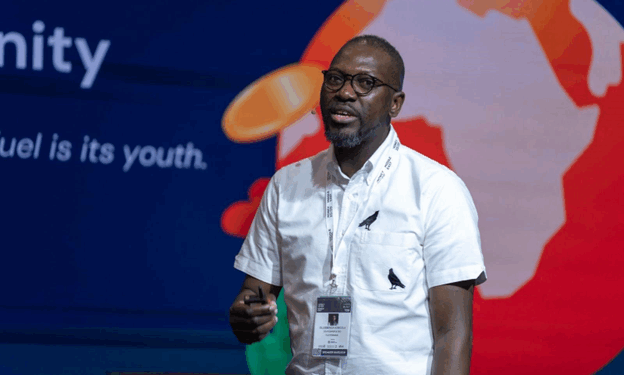
Flutterwave’s founder and CEO, Olugbenga “GB” Agboola, is placing a strong bet on stablecoins, framing them as the backbone of Africa’s next financial transformation. Speaking at Money 20/20 Middle East and the Fluidity 2025 summit in Riyadh, Agboola said the company’s focus is shifting toward making stablecoin payments a mainstream tool for businesses and individuals across the continent.
According to him, the time is right for Africa to take this leap. The continent’s youthful, digitally savvy population has already powered a $1 trillion mobile money economy, and that same demographic is now fueling the adoption of stablecoins. “Africa’s youth are early adopters, digital natives, and entrepreneurial by nature,” Agboola told the audience, describing them as the driving force behind fintech innovation.
Youth at the Heart of Africa’s Digital Finance Growth
The CEO argued that Africa’s young population is not just a demographic advantage but a core driver of global financial change. He tied stablecoin adoption directly to this group, pointing to Nigeria, South Africa, Ethiopia, and Kenya as markets where young entrepreneurs and consumers are leading the shift.
“Africa’s youth demographic is a dividend that requires proactive support from all stakeholders,” he said. “The continent’s economic growth is directly tied to the success of its young people.” Agboola drew a clear line between the mobile money boom of 2024, valued at over $1 trillion, and the current surge in stablecoin transactions.
Building Infrastructure for Tomorrow’s Money
To support this trend, Flutterwave is rolling out new tools and integrations aimed at reducing friction in payments. The company previewed enhancements to the Flutterwave Dashboard, which will make cross-border business payments simpler and faster. Its Send App is also being upgraded to streamline remittances for individuals and families across Africa.
Beyond products, Flutterwave is forging partnerships that embed it more deeply into the global financial system. The company is a founding member of the Circle Payments Network for USDC stablecoins and has struck a deal with Global Remit to enable stablecoin conversions for cross-border transfers.
Agboola described these moves as part of Flutterwave’s vision to build “Africa’s largest infrastructure for tomorrow’s money,” ensuring businesses and consumers can transact seamlessly in digital currencies.
Positioning in Global Policy and Partnerships
Flutterwave is also strengthening its voice in global fintech policy debates. In Riyadh, Agboola joined a roundtable on the G20 Cross-Border Payments Targets and spoke on panels moderated by leaders such as Nicole Valentine, FinTech Director at the Milken Institute.
He also engaged in discussions on public-private partnerships alongside Kashifu Inuwa Abdullahi, Director General of Nigeria’s National Information Technology Development Agency (NITDA). These appearances highlight Flutterwave’s strategy of shaping both the technology and the policy environment for Africa’s digital future.
From Mobile Money to Stablecoins
Stablecoins, according to Agboola, are the logical next step in Africa’s fintech evolution. They promise faster, cheaper, and more reliable cross-border payments, particularly in regions where currency volatility and transaction costs remain barriers to growth. By reducing friction for entrepreneurs, securing remittances, and enabling seamless trade, stablecoins could replicate — and surpass — the impact of mobile money.
For Flutterwave, this isn’t just about betting on a trend. It is about embedding itself at the heart of Africa’s financial infrastructure at a time when the world is rethinking money. With a young population eager for digital-first solutions, Agboola believes stablecoins can help power Africa’s next trillion-dollar opportunity.

Emmanuel Bassey is a Financial Expert that has worked in the Banking and Finance Industry for over 15+ years across different banks in Nigeria


