












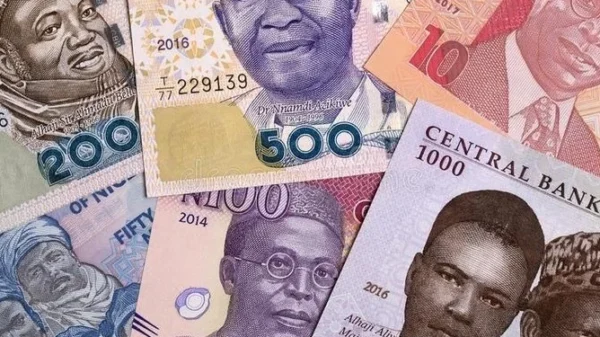



















Nigeria’s currency, the naira, began trading in 2026 on a softer note, depreciating marginally to ₦1,431 per dollar at the official foreign exchange market on the first trading day of the year. The mild pullback comes after the currency closed 2025 with a strong rally, underscoring cautious sentiment among market participants as trading resumed after the New Year holiday.
Data tracked from the Nigerian Foreign Exchange Market (NFEM) shows that the naira weakened slightly on Friday, January 2, 2026, compared with its last recorded position of ₦1,429/$1 on Wednesday, December 31, 2025, which marked the final trading session of the previous year. Although the movement was modest, it represented a pause in the appreciation trend that characterised the closing days of 2025.
A closer look at the figures indicates that the naira depreciated by ₦2 on a day-on-day basis, translating to a marginal decline of about 0.14 percent. Market watchers say such early-year adjustments are not unusual, particularly after extended holidays, when delayed demand for foreign exchange tends to resurface once markets reopen.
Recent trading pattern
Despite the slight dip, recent trading sessions point to notable resilience in the naira toward the end of last year. On Tuesday, December 30, 2025, the currency traded at ₦1,445/$1, while it stood at ₦1,446.4/$1 on Monday, December 29. Going further back, the naira exchanged at ₦1,451/$1 on December 24, highlighting a gradual but consistent appreciation as the year drew to a close.
This steady strengthening in the final weeks of 2025 helped cushion the impact of the mild depreciation seen at the start of 2026, reinforcing the view that the currency has entered the new year from a relatively stronger position.
Bigger picture
On an annual basis, the naira recorded a solid performance in 2025. At ₦1,429/$1 on December 31, the currency appreciated by about 7.4 percent compared with the ₦1,535/$1 rate recorded on the final trading day of 2024. Analysts attribute this improvement to a combination of sustained foreign exchange reforms, better price discovery at the official market, and intermittent inflows from exporters and foreign portfolio investors.
Another key factor supporting the currency was the improved alignment between official and parallel market rates toward the end of the year, which helped reduce arbitrage opportunities and speculative pressures. This convergence played a role in restoring some confidence among investors and market participants.
From a longer-term perspective, the naira’s current level still represents a marked improvement from where it started in 2025. Data shows that on the first trading day of last year, January 2, 2025, the currency traded at ₦1,538.50/$1 at the official market, highlighting the scale of appreciation achieved over the past twelve months.
What this means for 2026
Market analysts say the modest depreciation at the start of 2026 does not fundamentally alter the outlook for the naira in the near term. According to Dotun Adedira, early-year softness often reflects pent-up demand following public holidays rather than a shift in underlying fundamentals.
“The naira’s relative stability in recent weeks suggests that volatility could remain limited in the short term,” he noted, adding that much will depend on policy consistency and foreign exchange supply dynamics.
Looking ahead, the currency’s performance is expected to be influenced by the policy stance of the Central Bank of Nigeria, trends in global oil prices, and the pace of foreign exchange inflows from exports and portfolio investments. Analysts believe that if FX supply improves and reforms at the official market are sustained, the naira could maintain its recent stability in the early months of 2026.
Overall, while the naira has started the year with a slight pullback, its strong finish in 2025 provides a relatively solid foundation as Nigeria navigates the new trading year.

Emmanuel Bassey is a Financial Expert that has worked in the Banking and Finance Industry for over 15+ years across different banks in Nigeria


