

































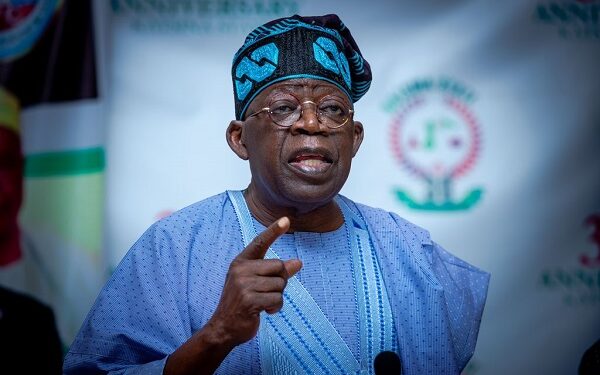
President Bola Ahmed Tinubu has firmly reiterated the Federal Government’s resolve to implement Nigeria’s newly enacted tax laws according to the original timeline, dismissing mounting calls from critics and interest groups for a suspension or delay. The President made his position clear in a message shared on X (formerly Twitter) on Tuesday, signalling that his administration views consistency and policy certainty as essential pillars of economic reform.
According to Tinubu, the tax reforms—some of which took effect on June 26, 2025, while others are scheduled to commence on January 1, 2026—are central to rebuilding Nigeria’s fiscal architecture and will not be halted by public pressure or political controversy. He stressed that the reforms are not designed to impose additional burdens on Nigerians, but rather to correct long-standing structural weaknesses in the country’s tax system.
The President described the reforms as a long-term intervention aimed at fairness, competitiveness, and sustainability, arguing that Nigeria must modernise its tax framework to meet current economic realities. He characterised the exercise as a “once-in-a-generation opportunity” to reset the tax system and strengthen the fiscal foundation of Africa’s largest economy.
What the President is saying
In his statement, Tinubu emphasised that the administration has carefully sequenced the reforms, with two of the laws already in effect and the remaining ones slated for implementation from January 1, 2026. He made it clear that this schedule would be maintained.
“The new tax laws, including those that took effect on June 26, 2025, and the remaining acts scheduled to commence on January 1, 2026, will continue as planned,” the President said.
He further explained that the objective of the reforms is not to raise tax rates arbitrarily, but to harmonise Nigeria’s fragmented tax system, eliminate inefficiencies, and strengthen the social contract between the government and citizens. According to him, a fairer and more transparent tax regime would ultimately protect human dignity while ensuring that government has the resources needed to deliver public goods.
Tinubu acknowledged the ongoing public discourse and criticism surrounding alleged changes to certain provisions of the tax laws. However, he maintained that no substantial issue has been identified that justifies halting or reversing the reform process.
“Our administration is aware of the public discourse surrounding alleged changes to some provisions of the recently enacted tax laws. No substantial issue has been established that warrants a disruption of the reform process,” he said, adding that trust in governance is built through consistent, well-considered decisions rather than reactive policy reversals.
What this means for Nigeria
The President’s firm stance sends a strong signal to investors, businesses, and international partners that Nigeria is committed to policy continuity, even in the face of domestic criticism. Analysts note that such consistency is often viewed as critical for boosting investor confidence, particularly at a time when Nigeria is seeking to attract capital and stimulate economic growth.
By insisting on proceeding with the reforms, the Tinubu administration is positioning the tax overhaul as a cornerstone of its broader economic agenda—one focused on shared responsibility, fiscal discipline, and long-term prosperity. While debates around specific provisions of the laws are likely to continue, the government appears determined to address concerns through engagement and implementation reviews rather than outright suspension.
What you should know
The controversy centres on four major pieces of legislation: the Nigeria Tax Act, 2025; the Nigeria Tax Administration Act, 2025; the Joint Revenue Board of Nigeria (Establishment) Act, 2025; and the Nigeria Revenue Service (Establishment) Act, 2025. These laws were signed by President Tinubu on June 26, 2025, and collectively represent the most comprehensive overhaul of Nigeria’s tax system in decades.
With full implementation scheduled from January 1, 2026, the reforms are expected to reshape tax administration, improve coordination among revenue authorities, and lay the groundwork for a more efficient and inclusive fiscal system—one the government believes is essential for Nigeria’s long-term economic stability and growth.

Emmanuel Bassey is a Financial Expert that has worked in the Banking and Finance Industry for over 15+ years across different banks in Nigeria


