















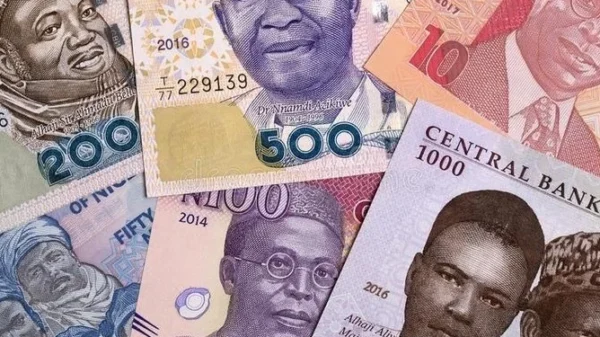


















Nigeria’s gross oil revenue underperformed budgetary expectations in the first half of 2025, with significant shortfalls recorded in both the first and second quarters, underscoring the persistent challenges confronting the country’s oil-dependent public finances. Data contained in the Q1 and Q2 2025 Budget Implementation Reports released by the Budget Office of the Federation reveal that actual oil receipts fell well below the prorated quarterly benchmarks set in the 2025 Appropriation Act.
The reports show that while oil revenue posted year-on-year improvements compared with 2024, collections remained far short of the levels assumed in the budget. At the same time, non-oil revenue performance was mixed—missing targets in the first quarter but showing modest improvement in the second—while net distributable revenue available to the federal, state, and local governments remained substantially below projections.
Oil revenue gaps persist despite year-on-year gains
In the first quarter of 2025, Nigeria recorded gross oil revenue of N4.55 trillion. This represented a massive shortfall of N8.21 trillion, or 64.35 percent, compared with the prorated quarterly budget target of N12.76 trillion. Despite the gap, the figure marked an improvement of N1.20 trillion, or 35.82 percent, over the N3.35 trillion generated in the corresponding period of 2024, reflecting some recovery in oil receipts year on year.
Non-oil revenue in Q1 also underperformed expectations. Gross non-oil revenue stood at N4.71 trillion, which was N1.34 trillion, or 22.18 percent, below the quarterly projection of N6.05 trillion. After accounting for statutory deductions, the total net distributable revenue shared among the three tiers of government amounted to N8.06 trillion. This was N8.79 trillion, or 52.16 percent, lower than the amount envisaged in the budget.
The trend continued into the second quarter of the year. In Q2 2025, gross oil revenue rose slightly to N4.77 trillion but still missed the quarterly target by N7.99 trillion, representing a 62.62 percent shortfall. Compared with the second quarter of 2024, oil revenue improved by N1.59 trillion, or 33.33 percent, from N3.18 trillion, reinforcing the picture of gradual recovery that nonetheless remains insufficient to meet fiscal assumptions.
Non-oil revenue shows mild improvement in Q2
Unlike oil receipts, non-oil revenue performance improved modestly in the second quarter. Gross non-oil revenue increased to N4.46 trillion, delivering a positive variance of N404.26 billion, or 6.68 percent, above the quarterly estimate. However, even with this improvement, overall revenue remained constrained.
Net distributable revenue for the three tiers of government stood at N9.85 trillion in Q2, but this figure was still N7.01 trillion, or 41.58 percent, below budget expectations. The persistent shortfalls in distributable revenue continue to limit fiscal space for subnational governments, many of which rely heavily on monthly allocations from the Federation Account to meet salary and infrastructure obligations.
What the numbers mean for fiscal stability
The sustained gap between actual oil revenue and budget projections highlights ongoing structural weaknesses in Nigeria’s oil sector. Production constraints, crude oil theft, pipeline vandalism, operational inefficiencies, and price volatility have continued to weigh on output and revenue remittances. Although oil revenue has improved on a year-on-year basis, the pace of recovery has not matched the ambitious assumptions embedded in the 2025 budget.
These revenue pressures come at a time of rising expenditure commitments, including higher debt servicing costs, expanded social spending, and increased recurrent expenditure. The combination of weaker-than-expected revenues and growing spending needs places additional strain on fiscal management and raises concerns about borrowing requirements in the second half of the year.
Production challenges remain
Data from the Organization of the Petroleum Exporting Countries (OPEC) further illustrate the challenges facing Nigeria’s oil sector. OPEC’s latest report shows that Nigeria’s crude oil production rose marginally to 1.436 million barrels per day (bpd) in November 2025, up from 1.401 million bpd in October. Despite the increase, Nigeria failed to meet its OPEC-assigned production quota for the fourth consecutive month, with July 2025 being the last time it met its target.
OPEC data also indicate that Nigeria averaged 1.444 million bpd in the third quarter of 2025, down from 1.481 million bpd in Q2 and 1.468 million bpd in Q1, pointing to a gradual decline in output over the year.
Adding another layer to the outlook, recent federal government data show that Nigeria’s daily petrol consumption declined to an average of 52.9 million litres per day in November 2025, signalling shifting domestic fuel demand patterns that could affect downstream revenue dynamics.
Outlook
Overall, the first-half performance of Nigeria’s oil revenue in 2025 underscores the urgent need for more realistic budget assumptions, stronger production management, and sustained reforms in revenue administration. Without significant improvements in output and remittance efficiency, oil revenue is likely to continue lagging expectations, reinforcing the importance of accelerating non-oil revenue mobilization to stabilize public finances.

Emmanuel Bassey is a Financial Expert that has worked in the Banking and Finance Industry for over 15+ years across different banks in Nigeria


