






























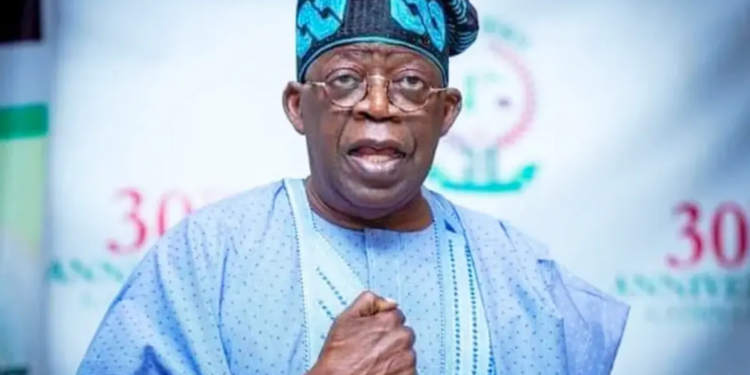
President Bola Ahmed Tinubu is set to present the 2026 Appropriation Bill to the National Assembly on Friday, December 19, even as the Federal Government has yet to publish a performance report on the implementation of the 2025 budget. The development has reignited concerns around fiscal transparency, accountability, and legislative oversight in Nigeria’s public finance management.
The disclosure was made on Thursday by BudgIT, a leading civic technology organisation focused on public finance reforms. In a post shared on its verified X handle, @BudgITng, the organisation stated that the 2026 budget would be presented without Nigerians having access to information on how the current year’s budget has performed.
“The 2026 budget is almost here, yet we don’t know how the 2025 budget performed. No report. No accountability,” BudgIT wrote, warning that the absence of a performance review undermines public confidence and weakens democratic accountability.
Why the performance report matters
According to BudgIT, budget implementation and performance reports are a critical accountability tool that should precede the presentation of any new budget proposal. Such reports provide insights into how approved revenues were generated, how funds were spent, and whether spending translated into tangible economic and social outcomes.
Without this information, lawmakers are left to debate and approve a new budget without a clear understanding of implementation gaps, funding shortfalls, or policy failures from the outgoing fiscal year. For the civic organisation, this practice weakens legislative scrutiny and erodes public trust, particularly at a time when Nigeria faces mounting fiscal pressure, rising debt service costs, and persistent development challenges.
BudgIT has also recently expressed concern over a government directive instructing Ministries, Departments and Agencies (MDAs) to roll over unimplemented capital projects into the next fiscal year. The group warned that annual budgets are not designed to be carried forward wholesale, arguing that such practices blur fiscal timelines and reduce accountability.
Three budgets running simultaneously
The concerns are further compounded by what analysts describe as Nigeria’s increasingly irregular budgeting practice, where multiple budgets effectively run at the same time.
In recent years, the Federal Government has operated main budgets alongside supplementary budgets while carrying over uncompleted projects from previous years. As a result, Nigeria is currently implementing the 2025 budget, parts of the 2024 supplementary budget, and outstanding components of the 2024 main budget.
This overlap amounts to three concurrent budgets within a single fiscal year, a situation analysts say points to serious weaknesses in budget execution, cash management, and revenue forecasting.
What you should know
Last week, the Federal Government issued a circular directing MDAs to carry over 70 percent of their approved 2025 capital allocations into the 2026 budget. Under the directive, MDAs are required to base their 2026 capital proposals largely on funds already approved for 2025, with no room for new capital projects.
Under the new framework:
-
Only 30 percent of 2025 capital allocations will be disbursed this year.
-
The remaining 70 percent will form the backbone of the 2026 capital budget.
-
Recurrent (overhead) spending must remain within 2025 ceilings, despite rising inflation and cost pressures.
The government argues that this approach will reduce duplication, curb wasteful spending, and ensure better value for money in the face of constrained revenues.
However, the policy has raised critical questions, especially given recent reforms such as fuel subsidy removal, record tax collections, exchange-rate liberalisation, and increased domestic and external borrowing.
The bigger picture
Nigeria’s National Assembly approved a revised budget of ₦54.9 trillion for 2025, with ₦14.85 trillion earmarked for capital expenditure covering infrastructure, power, transportation, and other development projects. Analysts question why capital spending is being deferred when official figures suggest revenue performance has improved significantly.
According to BudgIT’s publication, How FG’s Finances Performed in 2024, federal government revenue rose sharply from about ₦3 trillion in 2020 to roughly ₦20.98 trillion in 2024, driven by higher VAT collections, customs receipts, and subsidy savings. Over the same period, however, total expenditure surged from about ₦10 trillion to ₦34 trillion.
Fiscal analysts argue that Nigeria’s core challenge is not revenue generation but unchecked expenditure growth. This view reinforces BudgIT’s call for timely budget performance reports and greater transparency as the country prepares to debate yet another record-sized budget.

Emmanuel Bassey is a Financial Expert that has worked in the Banking and Finance Industry for over 15+ years across different banks in Nigeria


