




























The Nigerian Customs Service has intercepted undeclared foreign currencies valued at approximately N2.28 billion from an Austrian national at the Murtala Muhammed International Airport (MMIA), Lagos, in a development that underscores Nigeria’s intensified crackdown on illicit financial flows at its international borders.
The suspect, identified as Mr. Kavlak Onal, was arrested while attempting to board a Dubai-bound flight operated by Emirates Airlines. Customs officials disclosed that the interception occurred during routine outbound passenger checks, as part of ongoing enforcement of foreign exchange and anti-money-laundering regulations.
Briefing journalists in Lagos on Tuesday, the Customs Area Controller of the MMIA Command, Comptroller Chidi Nwokorie, said officers of the command’s Anti-Money Laundering Unit apprehended the passenger on Saturday, December 13, after he failed to declare the large sums of cash in his possession. According to Nwokorie, the traveller was specifically asked whether he was carrying foreign currency in excess of the legal threshold, but he reportedly answered in the negative.
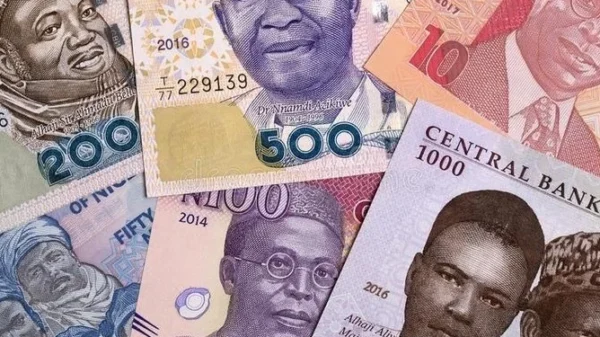
Following the denial, customs officers conducted a thorough search of the passenger’s luggage. The search uncovered 651,505 euros and 800,575 United States dollars concealed inside the travelling bag. When converted to naira, the combined amount was valued at about N2.28 billion, far exceeding the legally permitted declaration limit of $10,000 or its equivalent for outbound travellers.
Nwokorie explained that while carrying large sums of foreign currency is not automatically an offence under Nigerian law, failure to properly declare such funds constitutes a serious violation. “The offence is not in carrying the money, but in failing to declare it or making a false declaration,” he said, adding that customs officers acted strictly within the confines of the law.
He cited several legal provisions underpinning the seizure, including Section 12 of the Foreign Exchange (Monitoring and Miscellaneous Provisions) Act of 1995, Sections 3(3–5) of the Money Laundering (Prevention and Prohibition) Act of 2022, and Section 55(1) of the Nigeria Customs Service Act of 2023. These statutes, he noted, empower customs authorities to intercept undeclared funds and prevent the illegal movement of capital across Nigeria’s borders.
The comptroller further revealed that officers resisted attempts at compromise during the operation, stressing that professionalism and integrity guided the successful interception. He urged travellers to comply fully with currency declaration requirements at designated desks within airport arrival and departure halls to avoid legal consequences.
The case has since been referred to the Economic and Financial Crimes Commission (EFCC) for further investigation. Speaking at the briefing, Assistant Commander of the EFCC, Mr. Richard Adejumo, commended the Nigeria Customs Service for what he described as effective inter-agency collaboration.
“We will pick up the investigation from where the Nigeria Customs Service stopped,” Adejumo said. “We will ensure a thorough investigation is carried out and that justice is served. I appreciate the synergy that led to the interception of this huge sum of undeclared foreign currencies.”
The interception highlights the growing focus of Nigerian authorities on monitoring high-value cash movements, particularly at international airports, amid concerns over money laundering, terrorism financing, and capital flight. In recent months, customs and anti-graft agencies have recorded several similar seizures involving undeclared dollars, euros, pounds sterling, and other foreign currencies.
Under Nigeria’s foreign exchange laws, travellers are required to declare any amount above $10,000 or its equivalent before departure or upon arrival. Failure to do so, or making false or incomplete declarations, can result in prosecution and forfeiture of the funds under existing anti-money-laundering statutes.
As enforcement tightens, authorities say the message is clear: transparency in cross-border financial movements is non-negotiable. The Customs Service has reiterated its commitment to strengthening border controls and collaborating with other security agencies to safeguard Nigeria’s financial system and prevent illicit funds from entering or leaving the country undetected.

Emmanuel Bassey is a Financial Expert that has worked in the Banking and Finance Industry for over 15+ years across different banks in Nigeria


