

































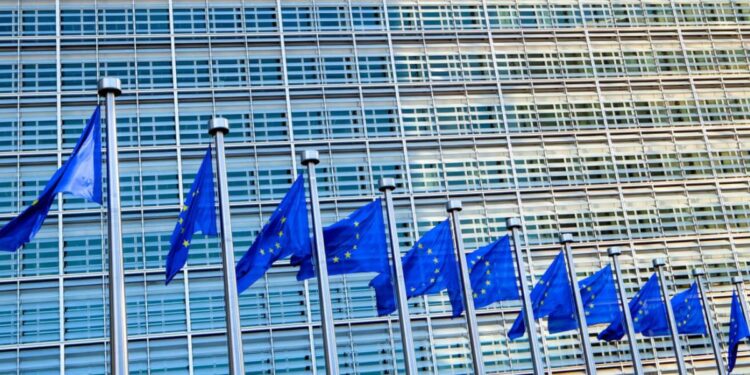
The European Union has launched a €12 million regional security initiative designed to strengthen maritime safety, enhance port infrastructure, and improve operational efficiency across major sea ports in West and Central Africa. The programme, titled SCOPE Africa – Securing Corridors, Ports and Exchanges in Western and Central Africa, was formally inaugurated in Lomé, Togo, and will run for a period of four years.
The launch comes at a time when African coastal economies are increasing efforts to secure critical maritime corridors, boost crisis–response capabilities, and deepen regional collaboration to address evolving threats in the Gulf of Guinea and along strategic international trade routes. With African ports handling a growing share of the continent’s trade and energy exports, the EU says the initiative reflects its long-term commitment to strengthening maritime security governance and supporting sustainable economic development across the region.
Strengthening the Maritime Ecosystem
According to programme organisers, SCOPE Africa is designed to reinforce the competitiveness of African ports by aligning their operations with international safety and security standards, while also advancing digital innovation and capacity-building for port authorities. The project is jointly funded by the European Union and implemented by Expertise France and Enabel, two organisations with a long history of technical support to African governments.
The initiative will support actions aimed at:
-
Improving port compliance with global maritime safety protocols
-
Strengthening emergency and crisis-response systems
-
Enhancing professional skills, training, and certification for port workers
-
Deepening cooperation among regional ports to share information in real time
-
Facilitating institutional partnerships that improve cybersecurity and maritime intelligence
-
Supporting the integration of African ports into global standards on shipping, logistics and environmental protection
Officials at the launch highlighted the importance of the programme in ensuring that West and Central African ports are not only secure, but also efficient and commercially competitive in the rapidly changing global maritime landscape.
Selected Ports Across Strategic Corridors
The EU and the African Union identified priority transport corridors and selected ports that serve as critical gateways for trade, oil and gas exports, minerals, and agricultural goods. Beneficiary ports include:
-
Lomé (Togo)
-
Lagos (Nigeria)
-
Douala and Kribi (Cameroon)
-
Dakar (Senegal)
-
Praia (Cape Verde)
-
Monrovia (Liberia)
-
Abidjan (Côte d’Ivoire)
-
Libreville (Gabon)
-
Pointe-Noire (Republic of Congo)
These ports represent some of the busiest maritime hubs in West and Central Africa and serve as entry points for 70% of the region’s seaborne trade. They are also strategic locations for combating piracy, illegal fishing, trafficking, and other transnational crimes in the Gulf of Guinea.
During the launch event, officials from beneficiary countries, port authorities, and private-sector partners participated in a high-level seminar. Discussions centred on modernising port operations, building resilience against maritime risks, and improving coordination between national and regional maritime organisations. A Memorandum of Understanding was also signed with the Regional Maritime University in Accra, which will facilitate professional training and knowledge transfer in the maritime and port sectors.
Part of a Broader Investment Agenda
The SCOPE Africa programme is not an isolated initiative. It forms part of the EU’s broader economic and security cooperation with Africa under the Global Gateway Strategy, which aims to support strategic investments in infrastructure, renewable energy, transport, and digital connectivity across the continent.
Just months ago, the EU announced a €545 million renewable energy package to accelerate clean energy deployment in nine African countries. The funding supports high-voltage power projects in Côte d’Ivoire, rural electrification schemes in Cameroon and Madagascar, large-scale renewable energy development in Somalia and Mozambique, and early-stage solar projects in Ghana. Smaller funding windows are being allocated to access-to-energy programmes in the Republic of Congo, as well as wind and hydroelectric development in Lesotho.
Together, these initiatives underline the EU’s increasing focus on Africa’s infrastructure and energy transition, positioning maritime security as a critical pillar for sustainable trade, investment flows, and economic development. The EU notes that secure ports and protected trade corridors are essential to the functioning of global supply chains and the economic stability of African nations that rely on maritime commerce to drive growth.

Emmanuel Bassey is a Financial Expert that has worked in the Banking and Finance Industry for over 15+ years across different banks in Nigeria


